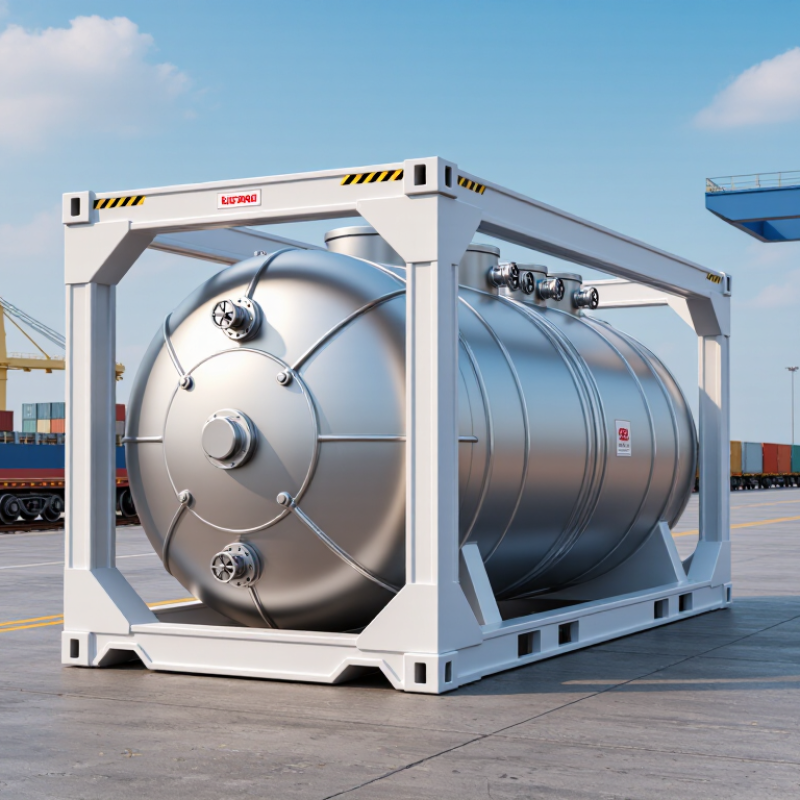
| 1. Preparation | Loading facility or cleaning depot | The tank, held inside a protective ISO frame, is inspected and prepared for the intended cargo. | Inspection area; cleaning or maintenance equipment when needed | Check cleanliness, condition, valves, seals, and suitability for the cargo. |
| 2. Filling and securing | Shipper’s loading site | Liquid or gas cargo is loaded through the tank’s designated connections. Openings are closed and secured before departure. | Pumps, hoses, loading connections, and weighing equipment as required | Verify cargo details, fill limits, closure integrity, and required transport documents. |
| 3. First-mile road movement | Loading site to rail terminal or seaport | The complete unit is carried on a suitable road chassis; the cargo remains inside the tank. | Tractor unit and tank-container chassis | Confirm the frame is secured to the chassis and that applicable road and cargo rules are met. |
| 4. Terminal transfer | Rail yard or port terminal | The tank container is lifted from one transport mode and positioned for the next, without unloading the cargo. | Container crane, compatible spreader, or suitable reach stacker | Use the frame’s designated lifting points and follow the equipment’s safe-working procedures. |
| 5. Long-distance transport | Rail network or container vessel | The framed tank travels as an intermodal unit by rail or ship. The same tank can continue across modes while its cargo stays contained. | Rail wagon or container vessel; securing arrangements appropriate to the mode | Check transport documentation, unit identification, securing, and any cargo-specific requirements. |
| 6. Final-mile delivery | Destination terminal to consignee’s site | After terminal release, the tank is placed on a road chassis and delivered to the receiving facility. | Tractor unit and tank-container chassis | Confirm delivery instructions, access arrangements, and safe unloading connections. |
| 7. Unloading and return | Consignee’s site, then a cleaning depot or next loading location | Cargo is discharged using the appropriate connection and procedure. The tank is then inspected and, where necessary, cleaned before reuse. | Transfer pump or site system; cleaning equipment when required | Follow cargo-specific handling procedures and confirm the tank’s condition before its next use. |