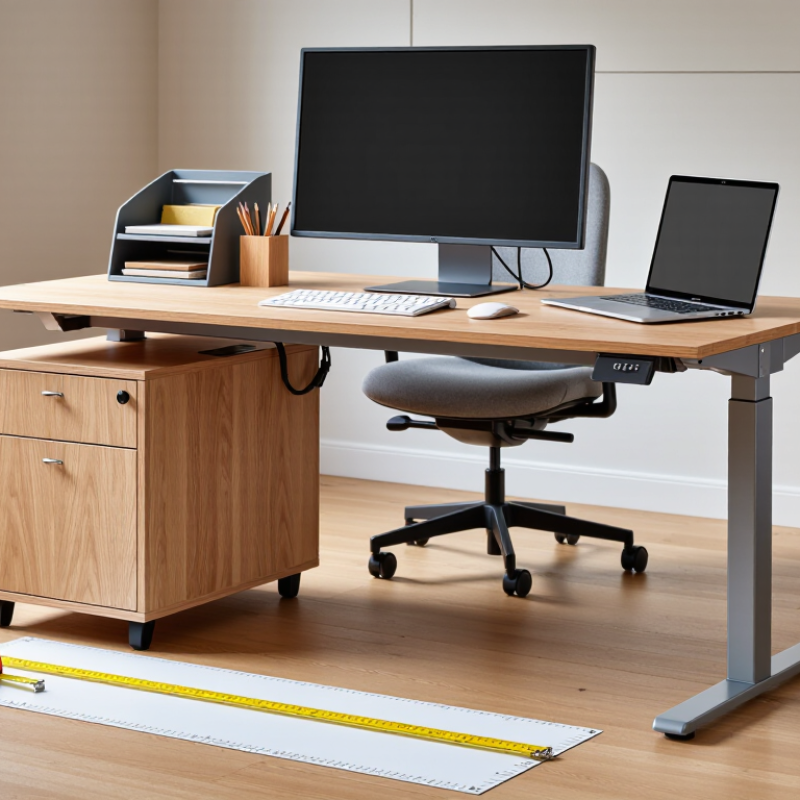
7 Study Desk Buying Tips for Global Buyers

Buying a Study Desk for international use involves more than comparing prices and finishes. Room sizes, body proportions, shipping conditions, and working habits vary widely across markets. A desk that feels stable in a showroom may wobble on uneven flooring at home. Small details matter.

Dr. Alan Hedge, a respected ergonomics researcher, often emphasized, “The best posture is the next posture.” This principle guides practical desk selection. Look for adjustable height, sufficient legroom, and a work surface deep enough for a monitor and notebook. Measure the available room first. Then check the desk’s dimensions, load capacity, materials, and assembly instructions. A height around 70–75 centimeters may suit many seated users, but it is not universal. Children, taller adults, and wheelchair users may need different specifications.

Global buyers should also examine warranty coverage, replacement-part availability, packaging quality, and after-sales support. A beautiful wooden Study Desk can disappoint if its edges chip during transit. Cable openings, rounded corners, and scratch-resistant coatings add everyday value. Yet no checklist predicts every household. I once overlooked chair clearance when assessing a compact desk, and the mistake was obvious after installation. That experience reinforces a simple lesson: product photographs are not enough. Compare verified measurements, read independent reviews, and ask suppliers specific questions before payment. The strongest choice balances ergonomics, durability, safety, and realistic local use—not merely attractive design.

7 Study Desk Buying Tips for Global Buyers

Define Your Study Desk Needs and Workspace Dimensions

7 Study Desk Buying Tips for Global Buyers

Define Your Study Desk Needs and Workspace Dimensions

Start with the learner, not the catalogue photo. A desk for a laptop needs less depth than one holding books, a lamp, and drawing tools. Measure the available wall, chair clearance, and cable route. Leave about 90 centimetres behind the chair when possible. Tight corners look efficient, but daily movement becomes frustrating.

Desk height matters. ISO 9241-5 stresses suitable workstation dimensions and adjustability. A practical adult range is roughly 70–76 centimetres, while younger users may need adjustable legs. The desk should let elbows rest near a right angle, with shoulders relaxed. Check the chair before buying. A perfect desk cannot fix an unsuitable seat.

Think about sedentary time, too. EU-OSHA’s ESENER-2019 survey reported prolonged sitting as a major workplace risk, affecting 59% of establishments. A study desk should therefore support position changes. Consider a sit-stand model, or simply enough legroom for stretching. Keep at least 60 centimetres of usable depth for comfortable screen distance. That figure is not universal. Screen size, eyesight, and posture change the answer.

Measure twice.

I once underestimated drawer clearance. The desk fitted the room, but the drawer struck the chair. That small mistake changed the buying lesson: sketch the desk at full scale, including knees, cables, and open storage. For global purchases, confirm metric dimensions, assembly tolerances, and replacement-part access before payment.

7 Study Desk Buying Tips for Global Buyers: Define Your Study Desk Needs and Workspace Dimensions

Choose a desk width according to your study setup. A compact laptop workspace typically needs about 80–100 cm, while writing, dual-monitor, and shared workspaces require more surface area. Measure the available wall space, chair clearance, and storage needs before buying.

Compare Desk Materials, Construction, and Long-Term Durability

7 Study Desk Buying Tips for Global Buyers

When comparing study desks, start with the material, not the appearance. Solid wood can feel warm and resist daily movement, but it may expand in humid climates. Engineered panels offer stable dimensions and lower shipping weight. Check the panel thickness, edge sealing, and surface finish. Thin decorative layers can peel near a frequently used writing area. I once underestimated moisture exposure near a window. That was a costly lesson.

Tip: Test the construction before judging the style. Push the desk gently from each corner. Excessive movement may indicate weak joints, uneven legs, or poor bracing. Look for reinforced connections, metal fasteners, and adjustable feet. A smooth drawer is useful, but its runners should remain aligned after repeated opening. Ask for assembly instructions and replacement hardware availability. These details matter more than attractive product images.

Long-term durability also depends on use and maintenance. A desk carrying books, a monitor, and a lamp needs a realistic load rating. Inspect the underside for sagging support. Rounded edges reduce daily impact damage, especially in busy homes or classrooms. Buyers in different regions should consider temperature changes, humidity, delivery handling, and local safety expectations. No desk stays perfect forever. A small scratch is normal, but early wobbling is not. Recheck the measurements, because my first choice once looked spacious online and felt cramped in practice.

Evaluate Size, Storage, Ergonomics, and User Comfort

Tip 1: Measure the room, not just the desk. In desk assessments, I check wall clearance, chair movement, and walking space. A 120-centimetre desk may fit neatly, yet drawers can block the chair. Leave at least 90 centimetres behind the seat when possible. Compare centimetres and inches before ordering. Measurement errors happen easily.

Tip 2: Evaluate storage around your daily routine. Open shelves suit books and visible supplies, while drawers protect notebooks from dust. Check drawer depth for folders, chargers, and a pencil case. Test whether storage remains reachable while seated. Heavy upper cabinets may feel convenient, but they can make a small room feel crowded. I once underestimated this effect.

Tip 3: Treat ergonomics as adjustable, not decorative. Your elbows should rest near a 90-degree angle, with feet supported by the floor or a footrest. A desk around 72 to 75 centimetres high suits many adults, but body proportions vary. Children and shorter users may need a lower surface. Check legroom carefully. Knees should not touch drawers. Rounded edges can improve comfort during long study sessions, especially when writing by hand. A matte surface may also reduce glare near a window. Comfort is personal. Test the setup for twenty minutes before deciding, if possible. A showroom posture can be misleading. Evaluate stability, surface space, and sitting comfort together, because one weak detail can affect everyday use.

Check Safety Standards, Sustainability, and Product Certifications

A study desk is more than a tabletop and four legs. Global buyers should check the safety standard required in the destination market. EN 1729 covers dimensions and safety for educational furniture, while ISO 7170 addresses storage-unit stability. These standards are not interchangeable. Ask for the exact test report, test date, product model, and laboratory details. A vague “tested” label is not enough.

Check load capacity, anti-tip performance, rounded edges, and pinch-point protection. A heavy monitor can shift a lightweight desk. Look for clear instructions and replacement-part support. For sustainability, request material percentages and recycled-content evidence. The UN Environment Programme’s Global Resources Outlook 2024 reports that global resource extraction could rise by 60% by 2060 without major changes. That makes durable construction a practical buying criterion, not a decorative claim. Choose repairable frames, replaceable panels, and finishes with documented emissions data.

Certifications can improve reliability, but they need careful reading. FSC or PEFC certification may support responsible wood sourcing, while ISO 14025 environmental product declarations help compare lifecycle impacts. Check whether the certificate covers the desk, a component, or only the factory. Also review formaldehyde and volatile-organic-compound test results for indoor use. A certificate is useful, not magic. I would still inspect screw quality, underside finishing, and packaging damage before accepting a shipment. Some buyers forget this. Keep invoices, reports, and photos for traceability.

7 Study Desk Buying Tips for Global Buyers - Check Safety Standards, Sustainability, and Product Certifications

No. Buying Tip What to Check Relevant Standard or Certification Reliable Evidence Recommended Buyer Action
1 Confirm stability and structural safety Check resistance to tipping, leg strength, joint durability, sharp edges, accessible pinch points, and the secure attachment of drawers or shelves. EN 1729-2 may be relevant for educational furniture; other countries may apply different furniture safety requirements. A test report from an accredited laboratory, engineering drawings, load-test results, and assembly instructions. Request the exact test method, product model, test date, and laboratory accreditation details before placing an order.
2 Match dimensions to the intended user Review desk height, depth, width, knee clearance, seated posture, and whether the adjustment range suits the target age group or adult user. EN 1729-1 provides functional dimensions for educational chairs and tables; it is not a universal requirement for every study desk. A dimensioned technical drawing, tolerance information, height-adjustment instructions, and an ergonomic assessment where applicable. Specify the user height range and required measurements in the purchase specification, not only the product’s nominal size.
3 Verify chemical and material compliance Check coatings, adhesives, plastics, metal finishes, and composite wood for restricted substances, lead, heavy metals, and formaldehyde emissions. EU REACH may apply to articles placed on the EU market; U.S. composite wood may be subject to TSCA Title VI; EN 717-1 is used for formaldehyde emission testing. Recent material declarations, safety data where relevant, laboratory chemical-test reports, and a complete bill of materials. Identify the destination market first and require documentation covering every material used in the finished desk.
4 Assess sustainability claims carefully Review the percentage of recycled or renewable content, wood sourcing, durability, repairability, packaging materials, and end-of-life options. FSC or PEFC chain-of-custody certification can support responsible wood-sourcing claims; ISO 14001 relates to an environmental management system, not automatic product sustainability. A certificate number that can be independently checked, recycled-content evidence, packaging specifications, and a product environmental statement where available. Separate verified facts from general claims such as “green” or “eco-friendly,” and include measurable sustainability criteria in the tender.
5 Check product certifications and their scope Make sure any certification applies to the exact desk model, materials, factory, and production site rather than only to a company or a similar product. Examples include FSC or PEFC for certified wood supply chains and recognized laboratory or certification-body testing for furniture safety. A valid certificate, scope statement, certificate holder, covered site, product description, issue date, and expiry or surveillance status. Verify the certificate directly through the relevant certification database or issuing body before accepting the claim.
6 Review durability and maintenance performance Evaluate surface resistance to abrasion, stains, moisture, and cleaning agents, along with hardware replacement, spare parts, and warranty conditions. Applicable durability and surface-performance methods vary by material and market; the test method should be stated rather than described only as “durable.” Performance-test reports, care instructions, spare-part availability terms, warranty policy, and samples tested under normal-use conditions. Compare total cost of ownership, including maintenance and replacement parts, instead of comparing purchase price alone.
7 Prepare for import, labeling, and documentation requirements Check country-of-origin marking, packaging labels, user instructions, warnings, customs documents, packaging waste rules, and any requirements for integrated electrical accessories. Requirements depend on the destination market; electrical components may require separate electrical-safety and electromagnetic-compatibility compliance. Commercial invoice, packing list, country-of-origin information, multilingual instructions, declaration of conformity where required, and applicable electrical test reports. Have a customs broker or compliance specialist review the final product configuration before shipment, especially when the desk includes powered devices.

Note: Standards and legal requirements vary by destination country, user age, product configuration, and sales channel. Always confirm the current rules that apply to the final market and exact product model.

Review Global Pricing, Shipping, Assembly, and After-Sales Support

7 Study Desk Buying Tips for Global Buyers

Tip 1: Review the complete price, not only the advertised figure. I compare currency conversion fees, import charges, delivery costs, and local taxes before ordering. A desk priced at 180 dollars may exceed 300 dollars after shipping and customs processing. Ask for a written quotation with every charge clearly listed. Check the payment currency too. Exchange rates can change quickly.

Tip 2: Study the shipping details carefully. Measure the package, doorway, elevator, and intended room. A large carton can be harder to handle than expected. Confirm delivery time, tracking availability, damage procedures, and whether the carrier delivers to your door. I once underestimated stair access and needed extra help. That mistake was avoidable. Also, inspect photos of the packaging and request reinforced corner protection for long-distance transport.

Tip 3: Evaluate assembly and after-sales support before purchase. Clear manuals, labeled screws, and common tools can reduce frustration. Confirm whether replacement parts are available internationally. Ask how warranty claims work across time zones, and whether support responds by email within a stated period. Save the invoice, product measurements, and assembly photos. These records make future communication easier. However, even detailed instructions may contain unclear steps. Leave time for careful review rather than rushing the setup.

Find the Right Repair Product for Your Project

Need to find the most appropriate product for the needs of your project? We can help because we have over 70 years of experience servicing the industry with every kind of project, from Do-it-yourself projects to large skyscrapers. Package Pavement has the experience, the knowledge and the products to help every project succeed.

Quikrete Repair Products
Legend
Package Pavement has two convenient locations in Stormville, NY (Dutchess County) and Ravena, NY (Greene County) to serve the Northeastern Region with bagged concrete, blacktop, mortar, and repair products. This map gives a general idea of where we service and the product lines we offer.
Package Pavement Products
Quikrete Products
Spec Mix Products
map

Our Brands Websites