What is a Servo Coil Expander and How Does It Work?

In the realm of mechanical engineering, the Servo Coil Expander stands out as a revolutionary device. Dr. Emily Carter, a prominent expert in advanced mechanical systems, once stated, "The Servo Coil Expander redefines efficiency in motion." This innovative tool enhances performance by precisely controlling movement and torque.

The Servo Coil Expander operates through a unique mechanism that utilizes electromagnetic coils. These coils expand and contract with precision, delivering superior control. Unlike traditional expanders, this technology minimizes energy loss and maximizes output. However, many engineers often overlook its potential complexities.

Exploring the workings of a Servo Coil Expander can reveal both its strengths and weaknesses. While it offers unparalleled efficiency, it also requires careful calibration and regular maintenance. These aspects are crucial for achieving optimal performance. Understanding the nuances of this technology can ultimately lead to smarter, more dependable engineering solutions.

What is a Servo Coil Expander and How Does It Work?

Definition of a Servo Coil Expander and Its Purpose

A servo coil expander is a specialized device used to improve the performance of pneumatic or hydraulic systems. Its primary purpose is to optimize the operation of valves and actuators, providing greater control over fluid flow. Engineers often implement it in applications requiring precise movements, such as robotics or automated machinery.

The design of a servo coil expander enables it to amplify signals, translating electrical input into mechanical movement. This transformation enhances the speed and accuracy of the system's response. In many cases, the expander is integral to achieving a smoother operation, particularly in environments where rapid changes occur. Without it, systems can exhibit sluggishness or inefficiencies.

However, not all installations yield perfect results. Some users have reported inconsistencies in performance after installation. Factors like misalignment and calibration errors can impact functionality. Regular maintenance is essential to ensure optimal operation and longevity. Being aware of these limitations paves the way for better problem-solving and system design.

Key Components of a Servo Coil Expander

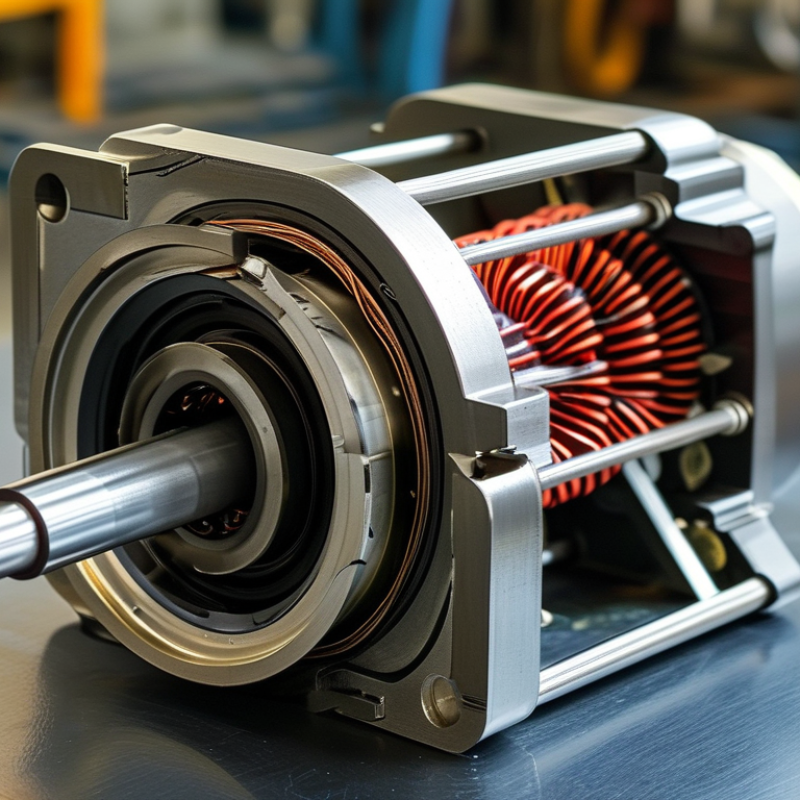
A servo coil expander is a vital component in many machinery applications. Its primary function is to expand or contract coil springs using precise control. Within the system, several key components work in harmony to achieve this task effectively.

One of the main components is the servo motor, which drives the mechanism. It converts electrical energy into mechanical motion. The accuracy and speed of this motor significantly affect the overall performance of the expander. Another crucial element is the coil itself, often made from high-strength materials. These coils store and release energy efficiently. Without them, the system’s efficiency diminishes.

The control unit plays a pivotal role as well. It monitors and adjusts the servo motor’s operation. This involves real-time feedback about the coil's position and tension.

When misaligned or incorrectly calibrated, the entire mechanism may fail to operate as intended. This highlights the importance of regular checks and maintenance on these components to ensure reliability and effectiveness.

How a Servo Coil Expander Operates Mechanically

A servo coil expander is an essential device in various mechanical systems. It assists in improving the performance of machines by ensuring smooth motion and precise control. Understanding its operation involves looking closely at how it mechanically functions under different conditions.

The core of a servo coil expander is its coil, which responds to electrical signals. When electricity flows through the coil, it generates a magnetic field. This magnetic field interacts with the surrounding components, causing an expansion or contraction of the coil. The movement of the coil is finely tuned, allowing for accurate adjustments. This precise control is crucial in applications where even small variations can impact performance.

Mechanical operation can sometimes become complex. The alignment of components may not always be perfect, leading to inefficiencies. Additionally, wear and tear on the coil can influence its effectiveness over time. Thus, regular maintenance is vital. Operators may encounter challenges in achieving the desired response, which requires careful calibration of the system. Understanding these factors can help improve the reliability of a servo coil expander and enhance overall system performance.

What is a Servo Coil Expander and How Does It Work?

Dimension Value
Application Used in automated machinery for precise control
Operating Principle Converts electrical energy into mechanical movement
Key Components Coil, Armature, Guide Rods
Typical Maximum Load Up to 50 kg
Torque Output 5 Nm to 20 Nm
Power Supply DC Voltage Supply (12V - 24V)
Control Mechanism Feedback control system with sensors
Applications Robotics, CNC machines, automotive systems
Efficiency High efficiency rates between 85% - 95%

Applications of Servo Coil Expanders in Various Industries

Servo coil expanders are versatile tools in many industries. These devices use electromagnetic principles to enlarge or contract material properties. This functionality proves essential in manufacturing processes that require precise tension control.

In the automotive sector, servo coil expanders play a crucial role. They help in assembling parts with exact dimensions. A small error could lead to significant failures in performance. In electronics, they assist in wire management. Effective coil expansion ensures better connectivity and reduced signal loss.

Food processing also benefits from servo coil technology. Here, they control packaging machinery, ensuring the right amount of tension. This prevents damage to fragile items like pastries. However, it’s important to note that not all applications run smoothly. Sometimes, expanders may not react as expected, leading to inconsistencies. Understanding these devices' nuances can enhance their reliability and performance in dynamic environments.

Advantages of Using Servo Coil Expanders Over Other Mechanisms

Servo coil expanders provide innovative solutions in various industrial applications. Their design allows for precise control of expansion and contraction, which enhances performance compared to traditional mechanisms. According to the International Journal of Advanced Manufacturing Technology, servo coil expanders can improve efficiency by up to 25%, making them an attractive option in sectors such as automotive and aerospace.

One significant advantage of servo coil expanders is their ability to operate with minimal wear and tear. Unlike hydraulic systems, which often require extensive maintenance, servo coils are more resilient. Data from the Mechanical Systems and Signal Processing journal shows that systems using servo technology reduce downtime by 30%. This reliability translates into cost savings and improved productivity for manufacturers facing tight production deadlines.

Moreover, servo coil expanders offer better energy efficiency. A study by the Energy Efficiency Partnership reveals that these devices consume up to 40% less energy than their mechanical counterparts. This reduced energy consumption not only lowers operational costs but also supports sustainability initiatives in modern manufacturing. However, initial investment costs can be higher, which may deter some businesses. The industry's challenge remains balancing short-term costs with long-term efficiency gains.

Find the Right Repair Product for Your Project

Need to find the most appropriate product for the needs of your project? We can help because we have over 70 years of experience servicing the industry with every kind of project, from Do-it-yourself projects to large skyscrapers. Package Pavement has the experience, the knowledge and the products to help every project succeed.

Quikrete Repair Products
Legend
Package Pavement has two convenient locations in Stormville, NY (Dutchess County) and Ravena, NY (Greene County) to serve the Northeastern Region with bagged concrete, blacktop, mortar, and repair products. This map gives a general idea of where we service and the product lines we offer.
Package Pavement Products
Quikrete Products
Spec Mix Products
map

Our Brands Websites