





2026 How to Prepare the Perfect Cement Mix for Your Projects?

Creating the perfect cement mix is crucial for any construction project. A well-prepared cement mix ensures durability and strength, making it essential for various applications. Whether you are pouring a patio, building a wall, or setting posts, the right cement mix can make all the difference.

Mixing cement involves precise ratios of sand, gravel, and water. A common mistake is not measuring these materials accurately. Too much water can weaken the mix, while too little can make it too dry. It is important to find the right balance to achieve optimal results. Experimenting with different ratios may be necessary to determine what works best for your specific project.

Visualizing your mix can help. Picture the texture you want to achieve. A workable consistency is key, but not all projects require the same texture. Reflection on past mixes can also guide you. Review any challenges faced and learn from them. Creating the perfect cement mix is a process that requires patience and practice. With attention to detail and careful adjustments, you can enhance the quality of your projects significantly.

2026 How to Prepare the Perfect Cement Mix for Your Projects?

Understanding the Different Types of Cement for Your Mix

2026 How to Prepare the Perfect Cement Mix for Your Projects?

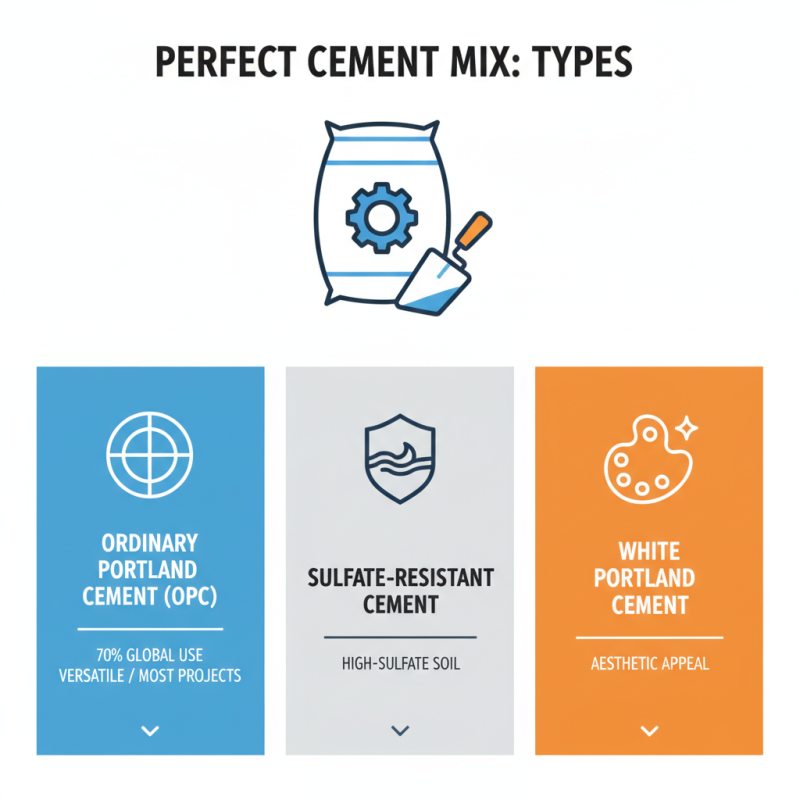
When preparing a perfect cement mix, understanding the different types of cement is crucial. Common types include Ordinary Portland Cement (OPC), which comprises about 70% of global usage. OPC is versatile and suitable for most projects. However, different applications may require specialized cement. For instance, Sulfate-Resistant Cement is vital in areas with high sulfate content in soil. Similarly, White Portland Cement is used when aesthetic appeal matters.

Knowing your project's requirements is half the battle. Not every cement type will suit your needs. For example, many overlook the importance of choosing the right type for outdoor projects. Using a cement mix without considering environmental factors can lead to premature failure. According to industry reports, nearly 20% of infrastructure failures result from inappropriate material selection. This hints at the pressing need for informed choices in cement types.

Tips: Always check local environmental conditions before mixing. If working on a project exposed to water, opt for water-resistant cement. Choosing the right additives can also enhance durability and workability. Remember, not all mixes are created equal; experimentation with small batches can lead you to the optimal solution.

Essential Ingredients for the Perfect Cement Mix Ratio

To create the perfect cement mix, understanding its essential ingredients is key. The primary components are cement, sand, gravel, and water. Each of these plays a vital role in achieving the desired strength and durability. A common mix ratio for general purposes is 1 part cement, 2 parts sand, and 3 parts gravel. Adjustments can be made based on the specific needs of your project.

Tips: Always use clean materials. Contaminants can weaken the mix. Consider the climate! Hot weather may require more water, while cold weather could need additives. Mixing the components thoroughly is crucial. Inadequate mixing can lead to dry patches or weak areas.

In practice, achieving the perfect mix may require some trial and error. Pay attention to the texture. A mix that is too dry may not bond well. Conversely, a mixture that is too wet can result in structural weaknesses. Keep an eye on the consistency. If it doesn’t flow easily but holds its shape, you are on the right track.

2026 How to Prepare the Perfect Cement Mix for Your Projects? - Essential Ingredients for the Perfect Cement Mix Ratio

Ingredient Recommended Ratio Purpose
Cement 1 part Main binding ingredient
Sand 2 parts Aggregates for stability
Gravel 3 parts Strength and durability
Water 0.5 to 1 part Activates cement
Admixtures As needed Enhances performance

Step-by-Step Guide to Mixing Cement Properly

Mixing cement is a crucial step in any construction project. Start by gathering the right materials: cement, sand, gravel, and water. Ensure your workspace is clear and organized. Use a sturdy mixing container or a wheelbarrow for convenience. This setup helps avoid spills and keeps everything contained.

Begin with dry ingredients. Combine three parts sand and two parts gravel with one part cement. This ratio ensures a strong mix. Stir the dry ingredients thoroughly, aiming for a uniform color. Next, slowly add water. Watch the consistency; it should be workable but not too runny. A common mistake is adding too much water too quickly. This can weaken the final product.

As you mix, feel free to adjust. The perfect mix can sometimes feel elusive. If the mixture is too dry, add small amounts of water. If it's too wet, more dry ingredients may be needed. Always remember to mix thoroughly until you achieve a consistent texture. Mixing cement isn't always perfect; practice and careful adjustments are key.

Tips for Achieving the Right Consistency in Your Cement Mix

2026 How to Prepare the Perfect Cement Mix for Your Projects?

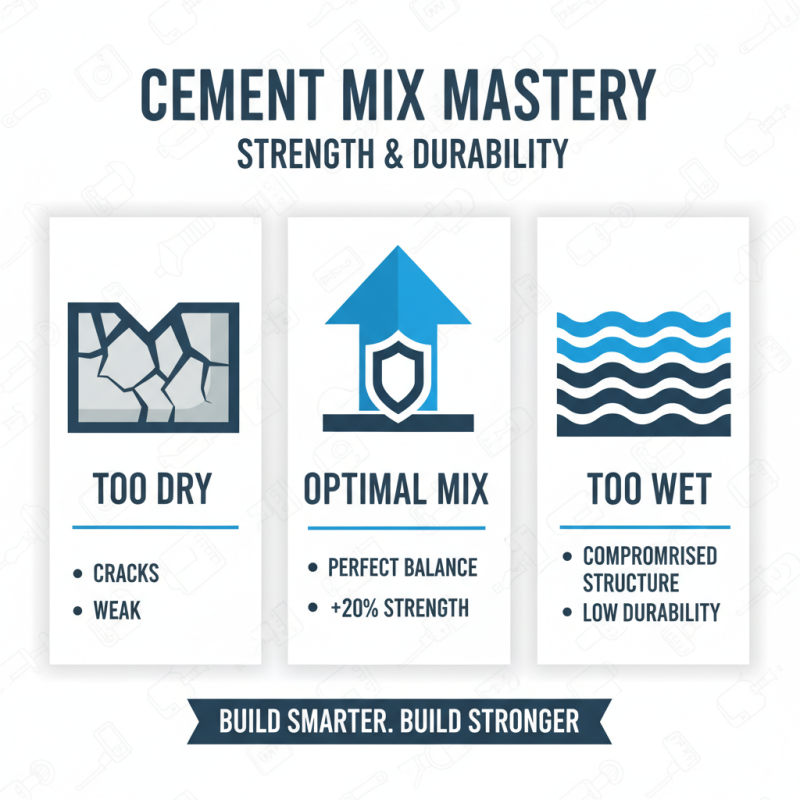
Achieving the right consistency in a cement mix is crucial for any construction project. Research indicates that a well-balanced mix can improve strength and durability by as much as 20%. The ideal cement mix should be neither too dry nor too wet. A mix that is overly dry may lead to cracks, while an excessively wet mix can compromise structure integrity.

To ensure the perfect consistency, monitoring water-to-cement ratio is essential. A ratio of 0.4 to 0.6 is generally recommended. Using a consistent measuring cup helps keep ratios accurate. Avoiding guesswork will yield better results. Oddly, many mix failures arise from improper measurements that professionals overlook. A small error in this area can lead to significant issues later on.

Employing additives can also enhance mix quality. For example, using a plasticizer can increase workability without adding water. However, over-reliance on additives can create a false sense of security. It is important to conduct field tests. These tests help ensure the mix meets project requirements. Adjustments may be necessary when things don't go as planned. Consistent evaluation can lead to better outcomes.

Common Mistakes to Avoid When Preparing Cement Mix

When preparing a cement mix, common mistakes can lead to poor results. One mistake is not measuring ingredients accurately. Using too much water can weaken the mix. Always use a scale for precise measurements. Ignoring the weather conditions is another pitfall. Mixing cement in extreme heat or cold can affect its curing process.

Another frequent issue is the inadequate mixing time. Rushing through this step can result in uneven consistency. A well-mixed cement should have a uniform texture. Don't forget to check the tools as well. Using dirty tools can introduce contaminants, compromising the mix’s integrity.

Curing is crucial and often overlooked. Skipping this step can cause cracks. Proper curing requires time and moisture. If you’re neglectful in this regard, your project may suffer significantly. Reflect on each of these aspects as you prepare your cement mix. Even small oversights can lead to substantial problems later on.

Cement Mix Preparation - Common Mistakes to Avoid

Find the Right Repair Product for Your Project

Need to find the most appropriate product for the needs of your project? We can help because we have over 70 years of experience servicing the industry with every kind of project, from Do-it-yourself projects to large skyscrapers. Package Pavement has the experience, the knowledge and the products to help every project succeed.

Quikrete Repair Products
Legend
Package Pavement has two convenient locations in Stormville, NY (Dutchess County) and Ravena, NY (Greene County) to serve the Northeastern Region with bagged concrete, blacktop, mortar, and repair products. This map gives a general idea of where we service and the product lines we offer.
Package Pavement Products
Quikrete Products
Spec Mix Products
map

Our Brands Websites