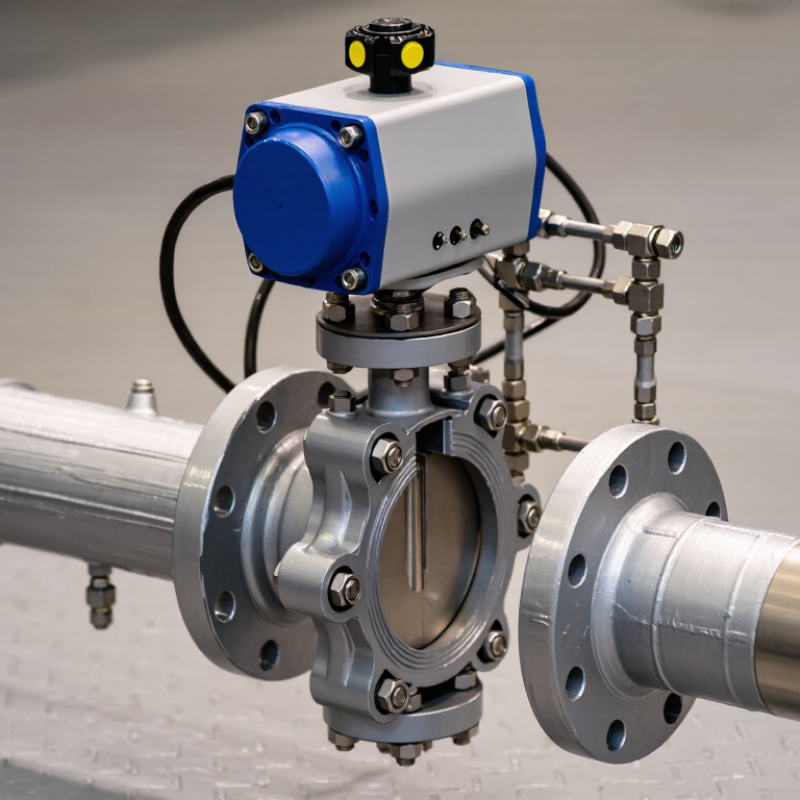
| 1 | Match the valve to the service | Confirm nominal size, pressure and temperature limits, process medium, flow direction, shutoff requirement, and connection type. Check the body, disc, stem, and seat materials against the fluid and site conditions. | Compare the quoted pressure-temperature limits with the project design conditions. Ask for the applicable test and design standards, plus documentation showing the offered configuration. | A suitable seat and material combination can reduce leakage, premature wear, and replacement costs. A lower purchase price is not a saving if the valve is unsuitable for the medium or operating conditions. |
| 2 | Size the pneumatic actuator correctly | Request the actuator torque calculation for the specific valve size, seat, differential pressure, and operating conditions. Confirm the available instrument-air pressure and whether the required action is double-acting or spring-return. | Compare required valve torque with the actuator’s available output torque at the minimum available air pressure. Include the stated safety factor and fail position in the calculation. | An undersized actuator may fail to operate reliably; an unnecessarily oversized actuator can add purchase, air-consumption, and installation costs. Check whether solenoid valves, positioners, limit switches, and air-filter regulators are included. |
| 3 | Compare shipping on a packed basis | Obtain packed gross weight and outer dimensions, including pallets, crates, actuators, accessories, and protective packaging. Confirm the origin, destination, delivery address, and transport mode. | Compare the same Incoterm, shipment scope, and delivery point across quotations. For air freight, carriers commonly assess chargeable weight using the greater of actual gross weight and dimensional weight; the dimensional divisor is carrier- and service-specific. | Freight, handling, insurance, customs clearance, duties, and local delivery can materially change landed cost. Ask for separate line items and verify who is responsible for export packing and import clearance. |
| 4 | Check delivery time and shipment readiness | Separate manufacturing lead time from inspection, packing, export documentation, transit, customs clearance, and final delivery. Confirm whether the quoted schedule starts after drawing approval or order confirmation. | Request a written schedule with milestones and confirm which documents can be supplied, such as packing list, commercial invoice, certificate of origin where applicable, and inspection or test records. | Unclear lead-time assumptions can create expediting, storage, or production-delay costs. Compare delivery dates on the same basis and include any charges for special packing or staged shipments. |
| 5 | Plan maintenance around the application | Review the maintenance instructions for seat and seal inspection, actuator checks, air-filter regulator service, and any lubrication requirements. Consider cycle frequency, dust, moisture, corrosion, and access for maintenance. | There is no universal maintenance interval for every pneumatic butterfly valve. Use the manufacturer’s instructions and the site’s inspection program; record operating cycles, air quality, leakage, and observed wear to set suitable intervals. | Estimate labor, spare parts, planned downtime, and the cost of access or isolation. Clean, dry instrument air and condition-appropriate materials can help limit avoidable maintenance, but do not replace scheduled inspection. |
| 6 | Compare spare parts and repairability | Identify the replaceable items, such as seats, seals, actuator kits, solenoids, and positioner components. Confirm part references, availability, storage conditions, and whether field replacement requires special tools or training. | Request a recommended spare-parts list for the project quantity and operating duty. Compare quoted prices, expected replenishment lead times, and the documentation available for maintenance personnel. | Long replacement lead times can increase downtime or require a larger inventory. Include spare-parts procurement and maintenance labor in the ownership comparison, not only the initial valve price. |
| 7 | Calculate total cost of ownership | Use the same service life, operating assumptions, currency, and cost scope for each offer. Include purchase, freight, duties, installation, air supply, inspections, spares, downtime, and disposal where relevant. | Simple comparison: Total ownership cost = purchase price + landed cost + installation + maintenance and spares + operating costs + downtime costs. Label estimates separately from confirmed quotation values. | A valve with a higher initial price may have a lower total cost if it reduces maintenance, air-system demand, or downtime. Test the comparison under realistic operating and freight scenarios before selecting a supplier. |