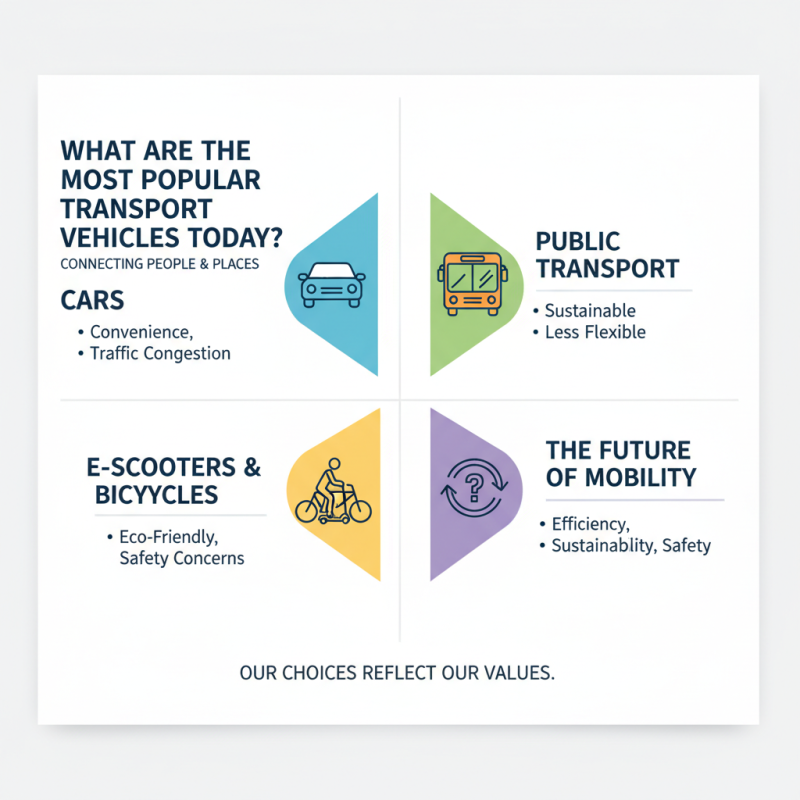
What Are the Most Popular Transport Vehicles Today?

Transport vehicles play a crucial role in our daily lives. They connect people to places, allowing for commerce and social interaction. Today, various options exist, from cars and buses to bicycles and electric scooters. Each vehicle type offers unique advantages, influencing how we commute.

In urban areas, cars dominate the landscape. They provide convenience but contribute to traffic congestion. On the other hand, public transport vehicles like buses offer a sustainable alternative. However, they may lack the flexibility that some commuters desire. Electric scooters and bicycles are gaining popularity as eco-friendly options, yet they sometimes face safety concerns.

Every choice of transport vehicle has its pros and cons. As we navigate our transportation needs, it’s vital to reflect on efficiency, sustainability, and safety. The most popular transport vehicles today reflect our values and priorities as a society, raising questions about the future of mobility.

What Are the Most Popular Transport Vehicles Today?

Types of Transport Vehicles in Use Today

Transport vehicles have evolved significantly in recent years, catering to various needs. From public buses to electric scooters, they play a crucial role in urban mobility. Bicycles remain popular, offering an eco-friendly way to travel short distances. Motorcycles provide speed and agility, making them a favorite for those who seek thrills.

Electric vehicles are gaining traction. Many cities now have charging stations, making it easier for users. The ongoing development of autonomous cars is another exciting trend. These vehicles promise increased safety and efficiency. However, there are still hurdles to overcome, such as regulations and public acceptance.

Tips: Consider your daily commute. Choose a transport vehicle that suits your lifestyle and needs. Evaluate the environmental impact of your choices. Sometimes, less popular options can offer unique benefits. Don’t hesitate to explore. Each vehicle type has pros and cons. Adapt and find what works best for you.

Electric Vehicles and Their Growing Popularity

Electric vehicles (EVs) are becoming increasingly popular. Many people embrace them for their eco-friendliness. The reduction in carbon emissions is a significant draw. Cities are installing more charging stations, making EVs more convenient for daily use. However, the charging time can still be a hassle. Some models take longer than expected to charge fully.

The rise of EVs has led to innovations in battery technology. Better batteries mean longer ranges and faster charging. Many consumers are weighing these advances when considering a new vehicle. Yet, not all EVs are affordable for everyone. Price remains a barrier for many potential buyers. There is also concern about the disposal of old batteries, which is a growing environmental issue.

Public perception is shifting slowly. People are starting to see EVs as a viable alternative. But there are still questions about performance and range. Many fear that they won't meet their driving needs. This hesitation may be rooted in unfamiliarity. Education and exposure to EVs can shatter these doubts.

Public Transport Systems: Buses, Trains, and Subways

Public transport systems like buses, trains, and subways are essential for many cities. They offer a reliable way for people to commute daily. Buses connect various neighborhoods and provide access to important areas. Trains, especially in urban centers, can move large numbers of passengers quickly. Meanwhile, subways enable efficient travel underground, avoiding street-level congestion.

Despite their popularity, these systems face significant challenges. Delays and overcrowding often frustrate passengers. Many users feel unsafe during peak hours. Buses may not have enough routes, leaving some areas underserved. Trains can be delayed due to maintenance issues. The reliability of these systems is crucial for user trust. Improvements must be constant to meet growing demands.

However, public transport can be a green alternative. Fewer cars mean less pollution. Still, cities need to address accessibility. Not everyone can reach a bus stop easily. Enhancing service for those with disabilities is vital. Planning future systems wisely will require input from various communities. Balancing efficiency and inclusivity is a complex task.

The Rise of Ride-Sharing and On-Demand Services

In recent years, ride-sharing and on-demand services have changed urban transport. People now prefer apps to traditional taxis. This shift offers convenience but also challenges. Riders can request a ride from anywhere. Within minutes, a vehicle arrives. That seems perfect, yet it raises questions about safety and reliability.

As these services grow, many still face issues. Drivers often work long hours for low pay. It's not sustainable. Passengers sometimes encounter cancellation or surge pricing. These frustrations can detract from the convenience. We must ask ourselves: Is this the best way to travel?

Moreover, while ride-sharing reduces the need for personal cars, it also impacts public transit. As more people use apps, bus and train ridership may decline. Urban planners must reflect on this shift. Balancing convenience with community needs is crucial. It’s a complex puzzle, but necessary to solve.

Most Popular Transport Vehicles Today

This bar chart illustrates the percentage usage of various transport vehicles today. As seen, private cars dominate the transportation landscape, followed by public buses and bicycles. The rise of ride-sharing services is notable, indicating changing consumer preferences in transportation.

Comparative Analysis of Fuel Efficiency Across Transport Modes

Fuel efficiency plays a crucial role in choosing transport vehicles today. Different modes of transport have distinct fuel consumption rates. For instance, cars often consume more fuel compared to bikes or electric scooters. Personal vehicles, especially in urban areas, can be particularly inefficient. They contribute significantly to greenhouse gas emissions and traffic congestion.


Public transport systems like buses and trains typically offer better fuel efficiency. They can transport many passengers in a single trip, reducing the average emissions per person. However, their effectiveness can vary based on the availability and frequency of services. In many regions, public transit options may lack adequate coverage or may not meet the needs of commuters. Therefore, some people hesitate to rely on these modes.


Electric vehicles present a promising alternative. They produce fewer emissions and typically have lower running costs. Nonetheless, the sourcing of battery materials raises ethical and environmental questions. People must reflect on the overall impact of their transport choices. Ultimately, a balance between convenience and sustainability remains a challenge for modern transport.

Find the Right Repair Product for Your Project

Need to find the most appropriate product for the needs of your project? We can help because we have over 70 years of experience servicing the industry with every kind of project, from Do-it-yourself projects to large skyscrapers. Package Pavement has the experience, the knowledge and the products to help every project succeed.
Quikrete Repair Products
Legend
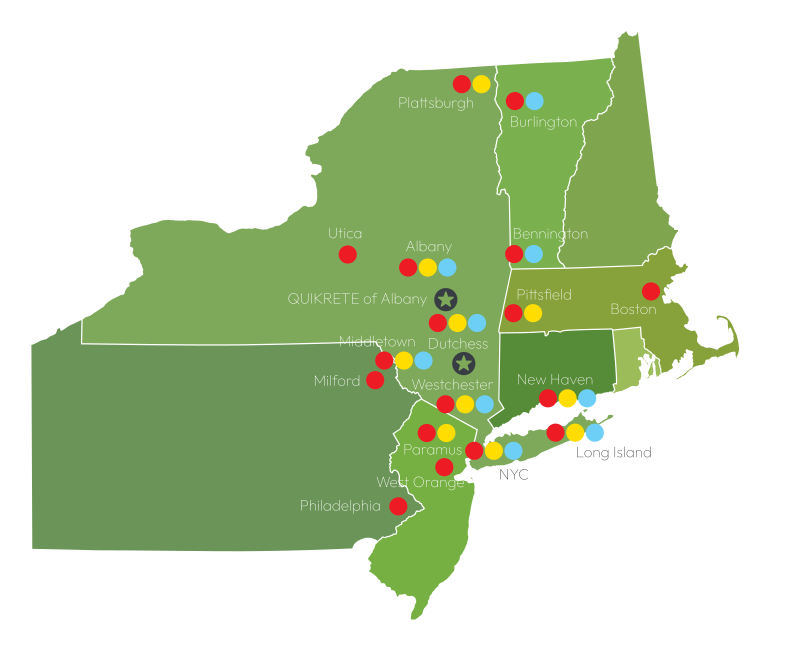
Package Pavement has two convenient locations in Stormville, NY (Dutchess County) and Ravena, NY (Greene County) to serve the Northeastern Region with bagged concrete, blacktop, mortar, and repair products. This map gives a general idea of where we service and the product lines we offer.
Package Pavement Products
Quikrete Products
Spec Mix Products
map

Our Brands Websites