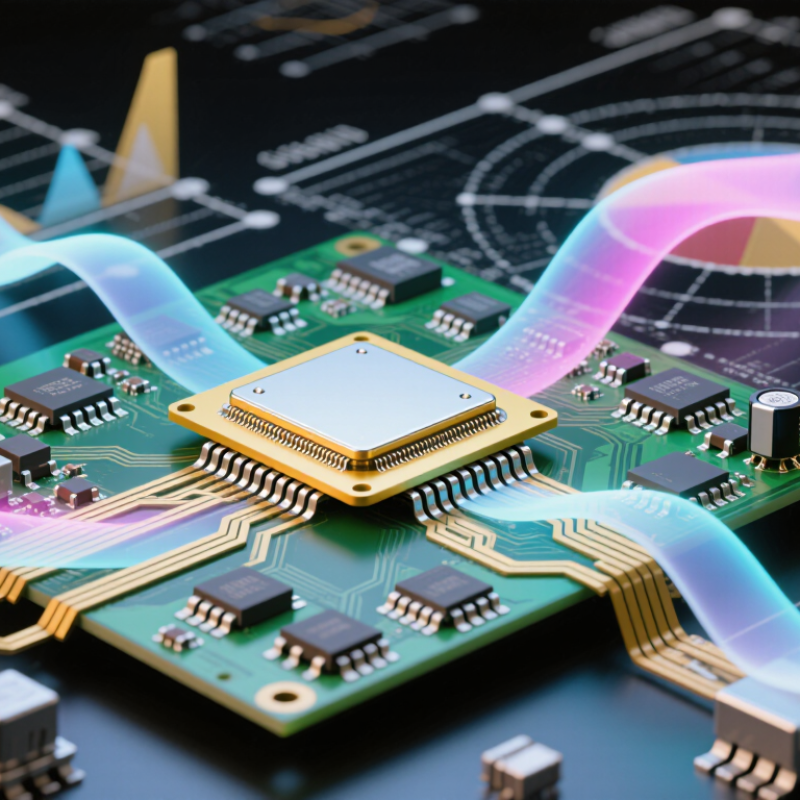
| Definition | A millimeter wave (mmWave) amplifier is an electronic circuit that increases the power or amplitude of signals at very high radio frequencies. | It helps a weak signal reach the power level needed for transmission, processing, or measurement. |
| Typical frequency range | The term mmWave commonly refers to frequencies from 30 to 300 GHz, corresponding to wavelengths of approximately 10 to 1 millimeter in free space. | Short wavelengths support compact antennas and can enable wide bandwidth, but signals are more sensitive to blockage and propagation loss. |
| Primary role | An amplifier raises signal power while operating over a specified frequency range and within its rated input and output limits. | Amplification can compensate for losses in cables, components, antennas, or a radio link. |
| Common amplifier positions | A power amplifier is commonly placed near a transmitter output; a low-noise amplifier is commonly placed near a receiver input. | Transmitters need sufficient output power, while receivers benefit from boosting weak signals before later stages add more noise. |
| Key performance measures | Typical specifications include operating frequency range, gain (dB), output power (often dBm), noise figure (dB), bandwidth, and linearity. | These measures help determine whether an amplifier fits a system’s coverage, signal-quality, and power requirements. |
| Gain | Gain describes how much an amplifier increases signal power or voltage under specified measurement conditions; it is commonly reported in decibels (dB). | Higher gain is not always better: excessive gain can cause distortion or overload a following circuit. |
| Noise figure | Noise figure indicates how much a component degrades the signal-to-noise ratio. It is especially important for receiver-side amplifiers. | A lower noise figure helps preserve the quality of weak signals, all else being equal. |
| Linearity and saturation | Linearity describes how faithfully an amplifier reproduces signals. At high input levels, an amplifier can approach compression or saturation. | Operating with adequate headroom helps limit distortion, particularly for signals with changing amplitude. |
| Common technologies | Implementations can use semiconductor technologies such as silicon, silicon-germanium, gallium arsenide, or gallium nitride, depending on frequency and performance needs. | Different technologies involve trade-offs in output power, efficiency, integration, cost, and operating frequency. |
| Example application frequencies | Examples include 60 GHz links, 76–81 GHz automotive radar, and systems operating near 94 GHz. | These frequencies are used in applications such as high-capacity communications, radar, imaging, and scientific measurement. |
| Design considerations | Designers account for matching networks, heat dissipation, packaging, interconnect losses, stability, and antenna integration. | At mmWave frequencies, even small physical structures and layout details can significantly affect circuit performance. |