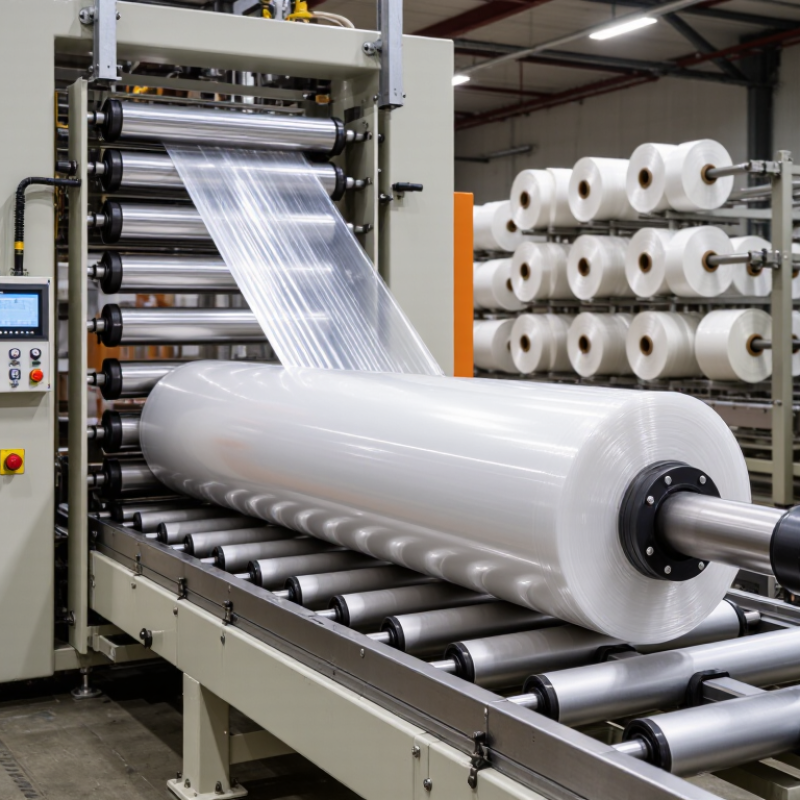
Insulation Wrapping Machine manufacturers sit at the intersection of energy efficiency and practical factory production. The demand context is substantial: the International Energy Agency reports that buildings use about 30% of global final energy and contribute roughly 26% of energy-related emissions. These figures describe the buildings sector, not machine sales. They help explain why reliable insulation production matters.
Energy-efficiency expert Amory Lovins is widely associated with the principle, “The cheapest energy is the energy you don't use.” For manufacturers, that principle reaches the factory floor: stable film tension, consistent overlap, and fewer rejected insulation sections can reduce waste. Small details matter. A poorly aligned roll can wrinkle around a pipe; a slow changeover can idle an entire line. Buyers comparing top manufacturers worldwide should examine usable line speed, supported product diameters, control-system access, safety features, spare-parts availability, and local service response. A polished brochure is not a production trial.
Public market reports often group wrapping machinery with broader packaging or insulation equipment, so their market-size figures may not compare cleanly. That limitation deserves attention. This overview therefore focuses on verifiable capabilities and manufacturer selection factors, rather than treating a single market estimate as definitive. The strongest supplier is not always the one with the highest advertised speed. It is the one whose machine consistently fits the material, shifts, and maintenance skills of the plant.
Top Insulation Wrapping Machine Manufacturers Worldwide
In coil and cable production, insulation wrapping machines apply controlled layers around conductors, windings, and formed coils. The process protects copper from heat, moisture, abrasion, and electrical breakdown. A typical line unwinds tape, controls tension, sets overlap, and guides the product through a rotating wrapping head. Some systems also manage heating, adhesive activation, and final take-up.
The need is growing with grid expansion. The International Energy Agency reported in Electricity Grids and Secure Energy Transitions that annual grid investment must exceed 600 billion dollars by 2030. That pressure reaches cable factories. Higher output alone is not enough. Stable insulation quality matters. A small overlap change can create a weak point after bending or thermal cycling.
Modern machines use sensors to monitor tension, speed, alignment, and tape consumption. Manufacturers increasingly connect these readings with production software. The goal is fewer stoppages and clearer traceability. The electrical insulation materials market is also expanding, according to Grand View Research, driven by power equipment, renewable energy, and industrial electrification.
Still, automation is not magic. A clean-looking wrap may hide uneven pressure underneath. Dust, tape stiffness, and operator adjustments can affect results. In my view, the best equipment combines accurate controls with practical access for inspection. Otherwise, maintenance becomes slow, and small defects may travel through an entire coil batch.