| Prepare the foundation | Clean, rigid mounting surface; sound grout or structural support where applicable. | Remove dirt, burrs, and loose material. Confirm the foundation and base are suitable for the motor’s weight and operating loads. | A weak or uneven foundation can cause movement, vibration, and alignment changes. |
| Position the motor | Shaft orientation, access for maintenance, ventilation, and cable entry. | Place the motor so the shaft and driven equipment can be aligned, and keep cooling-air passages clear. Follow the motor’s installation instructions for permitted mounting positions and clearances. | Correct positioning supports cooling, safe access, and reliable coupling or belt installation. |
| Check soft foot | Whether all motor feet sit evenly on the base before final tightening. | Check each foot with a feeler gauge while loosening and retightening one hold-down bolt at a time. Correct gaps with clean, full-foot shims; use the equipment or site’s specified acceptance limit. | Soft foot can distort the motor frame when bolts are tightened and upset shaft alignment. |
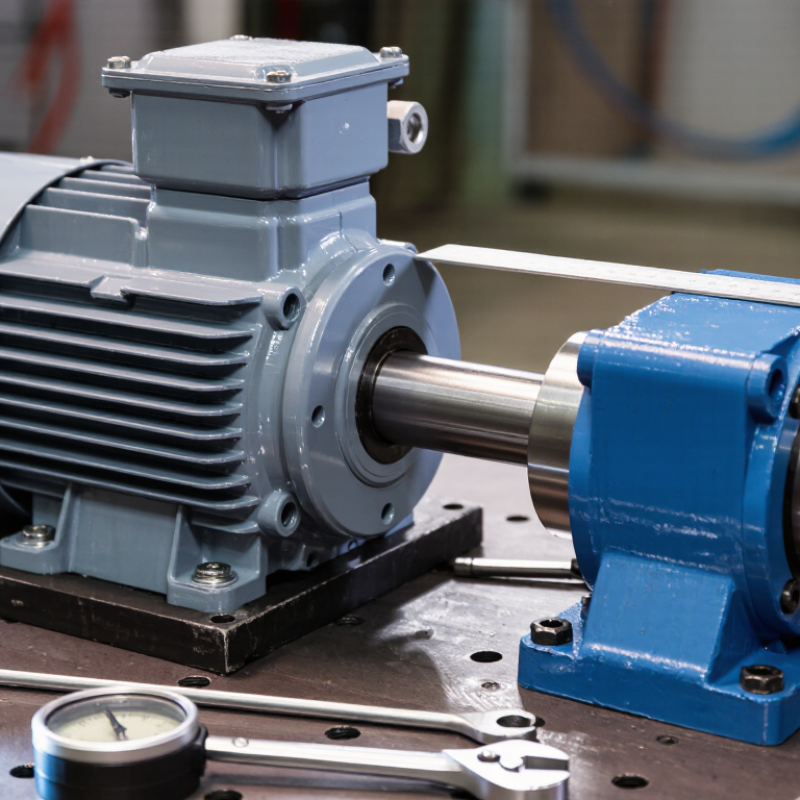
| Align the shafts | Parallel offset and angular misalignment at the coupling. | Use a dial indicator or laser alignment tool. Adjust motor position horizontally and with shims vertically. Meet the coupling or driven-equipment manufacturer’s tolerance, accounting for operating temperature where required. | Misalignment increases bearing and coupling loads and can lead to vibration, heat, or premature failure. |
| Secure the motor | Correct bolts, washers, threads, and tightening sequence. | Use fasteners of the specified size and grade. Tighten evenly to the equipment or engineering specification; do not apply a universal torque value. | Even, specified clamping force helps prevent movement without damaging threads or motor feet. |
| Recheck after tightening | Shaft alignment and foot contact after all hold-down bolts are tightened. | Repeat the alignment measurements after tightening. If adjustment is needed, loosen, reposition or shim, retighten, and measure again. | Tightening can shift the motor or introduce frame distortion. |
| Inspect before startup | Coupling guard, electrical connections, grounding, rotation direction, and clearances. | Follow site lockout and electrical-safety procedures. Install guards before operation and verify that the motor and driven equipment are ready for a controlled test run. | A final safety and readiness check helps prevent contact hazards and damage during startup. |
| Monitor during operation | Unusual vibration, noise, temperature, or movement. | Run the equipment under the approved procedure and compare observations with established site limits. Stop and investigate abnormal conditions. | Operating checks can reveal problems that were not apparent during static installation. |