| Wall inspection | Check the wall condition | Look for loose plaster, flaking paint, damp patches, mold, cracks, and protruding fixings. Resolve moisture problems before covering the wall. | Panels should not conceal active leaks, dampness, or unstable surfaces. |
| Surface preparation | Clean and dry the surface | Remove dust, grease, and loose material. Allow the wall to dry fully after cleaning. | A clean, dry surface helps adhesives or battens perform as intended. |
| Surface preparation | Make the wall reasonably even | Scrape off high spots and repair holes or damaged areas. Use a suitable straightedge to identify significant unevenness. | A flatter backing reduces gaps and helps panels align evenly. |
| Planning | Measure and mark the layout | Measure the wall height and width, note openings and corners, and mark a level reference line for the first panel. | Accurate layout helps avoid narrow end pieces and crooked panel runs. |
| Acclimation | Condition the panels | Store panels flat in the installation room and follow the product instructions for acclimation time and temperature. | Allowing materials to adjust to room conditions can help limit movement after fitting. |
| Measuring tools | Tape measure, pencil, and level | Use these to measure panel positions, mark cut lines, and check that the starter line and installed panels are level or plumb as required. | Consistent measurements improve alignment and reduce cutting errors. |
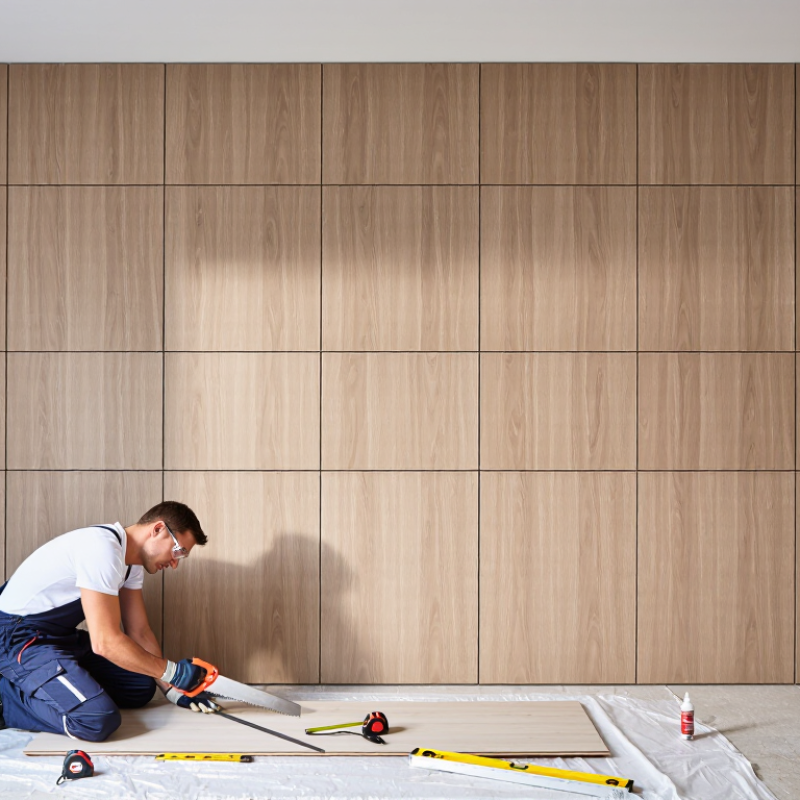
| Cutting tools | Fine-tooth saw or suitable power saw | Choose a blade suitable for the panel material and make cuts on a stable, supported work surface. Follow the panel maker’s cutting guidance. | A suitable blade and steady support help produce cleaner, more controlled cuts. |
| Fitting tools | Drill/driver and compatible fixings | Use fixings appropriate for the wall construction and the installation method. Check for hidden pipes or cables before drilling. | The correct fixing method supports secure installation and helps avoid damage to concealed services. |
| Safety equipment | Safety glasses, dust mask, and hearing protection | Wear suitable protective equipment when cutting, drilling, or sanding, and keep the work area ventilated. | Cutting and drilling can create dust, debris, and noise. |
| Before installation | Confirm the installation method | Check the panel instructions for approved adhesives, battens, clearances, expansion gaps, and fixing locations before starting. | Requirements vary by panel design and wall type; product instructions take priority. |