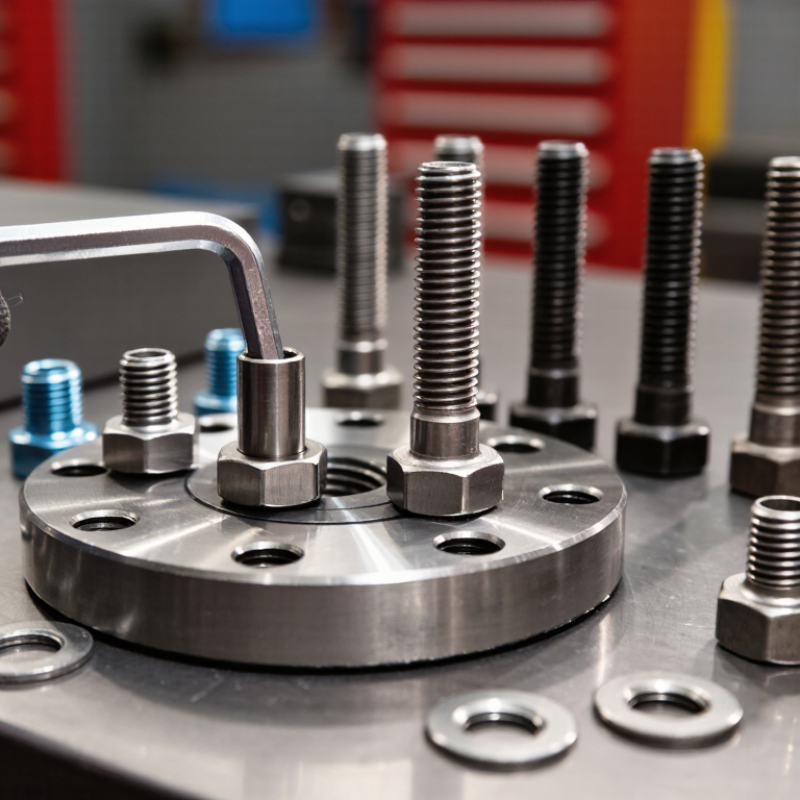
Choosing the right hex socket bolt starts with the load, not the socket size. Separate tensile, shear, impact, and fatigue loads before selecting a diameter. Include joint separation and vibration in the calculation. ISO 898-1:2013 lists minimum tensile strengths of 800 MPa for property class 8.8 and 1,000 MPa for class 10.9. These values are not allowable loads. Reduce them using safety factors, temperature limits, and thread-area calculations. VDI 2230 provides a recognized method for checking preload, stiffness, and fatigue behavior.
Fit requires equal attention. Match the bolt diameter, thread pitch, length, and mating material. ISO 4762 covers hexagon socket head screws, while ISO 965 defines metric thread tolerances. Check whether the bolt engages fully without bottoming in a blind hole. Confirm clearance-hole dimensions against ISO 273. The socket must seat deeply and squarely. A shallow or worn tool can damage the recess before the joint reaches preload. Small details matter.
Installation conditions can change the result dramatically. VDI 2230 uses the torque relationship T = KFd, where K represents friction. If K changes from 0.10 to 0.20, calculated preload nearly doubles at the same torque. Lubricant, coating, surface finish, and tool calibration all affect K. NASA Fastener Design Manual, NASA-RP-1228, also treats torque as an indirect preload method. I have seen sound calculations fail after an unrecorded lubricant change. Recheck torque settings, use calibrated tools, and inspect thread engagement. Perfect assumptions are rare.