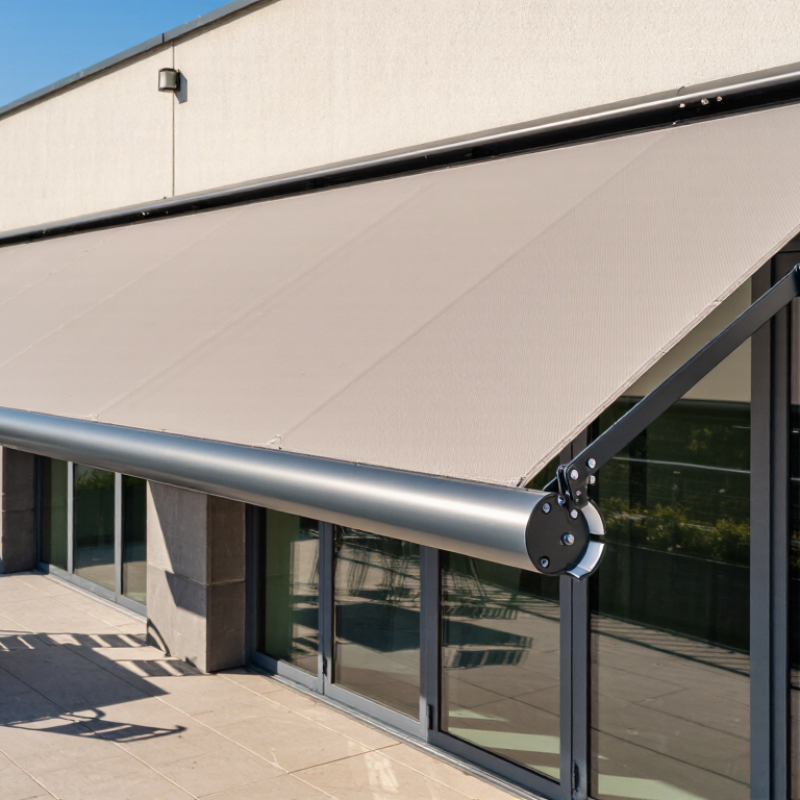
| Awning Fabric | Solution-dyed acrylic | Pigment is added before the fibers are formed; commonly used for outdoor awnings; good color stability and UV performance. | Comfortable appearance, breathable construction, good resistance to sunlight and fading. | Usually costs more than standard polyester; may not provide complete waterproofing during prolonged heavy rain. | Fiber type, fabric weight, water-repellent treatment, UV test method, colorfastness rating, and warranty terms. |
| Awning Fabric | PVC-coated polyester | Polyester base fabric coated with polyvinyl chloride; generally offers a more water-resistant surface. | Good resistance to rain, easy cleaning, suitable for applications requiring stronger water protection. | Can be heavier and less breathable; surface temperature may rise more in direct sunlight. | Coating thickness, hydrostatic water-pressure result, weld or seam quality, mildew resistance, and cold-temperature flexibility. |
| Awning Fabric | Coated polyester | Polyester fabric with acrylic, polyurethane, or similar protective coating; performance depends strongly on coating quality. | Lightweight, economical, and available in many colors and patterns. | Often has lower long-term color and UV durability than higher-grade solution-dyed fabrics. | Fabric mass per square meter, coating composition, UV exposure test, tear strength, and expected service environment. |
| Frame Material | Powder-coated aluminum | Lightweight metal with natural corrosion resistance; powder coating adds color and surface protection. | Low maintenance, good corrosion resistance, and easier installation than heavier steel structures. | Lower stiffness than steel of the same size; thin sections may deform under excessive wind load. | Aluminum alloy grade, wall thickness, powder-coating thickness, corrosion test, and connection details. |
| Frame Material | Galvanized or powder-coated steel | Higher strength and stiffness than aluminum, but protective coatings are essential to limit corrosion. | Suitable for larger structures and areas exposed to higher structural loads. | Heavier; scratches, cut edges, and unprotected joints can become corrosion points. | Steel grade, galvanizing method, coating thickness, weld protection, drainage design, and corrosion test documentation. |
| Sun Protection | High-density outdoor fabric | A tightly woven fabric can block a substantial portion of solar radiation; actual performance varies by color, weave, and coating. | Reduces glare and heat beneath the awning while improving outdoor comfort. | A darker or heavier fabric may absorb more heat even when it provides effective glare control. | Solar reflectance, solar transmittance, openness factor, fabric color, and test standard used for the reported values. |
| Rain Protection | Water-repellent fabric | Designed to make water bead and run off; performance can decline because of abrasion, dirt, cleaning, and aging. | Preserves a textile appearance and may provide better breathability than a fully coated membrane. | Water-resistant does not necessarily mean fully waterproof, especially at seams and during wind-driven rain. | Water-column or hydrostatic-pressure results, seam construction, slope requirements, and care instructions. |
| Wind Resistance | Manual folding-arm awning | Wind performance depends on arm design, projection, mounting surface, brackets, installation quality, and operating position. | Simple operation and no electrical control system required. | Must normally be retracted in strong wind; the fabric and arms can be damaged if left open. | Declared wind class or tested wind speed, test configuration, maximum projection, bracket spacing, and retraction guidance. |
| Wind Resistance | Cassette or semi-cassette awning | The cassette protects all or part of the rolled fabric and mechanism when the awning is closed. | Improves protection from dust, rain, and UV exposure during storage; provides a cleaner appearance. | Adds weight, cost, and installation requirements; the cassette itself is not a guarantee of higher wind resistance. | Cassette material, drainage openings, sealing design, mechanism access, structural calculation, and tested wind rating. |
| Drainage Design | Sloped fixed or retractable roof | A continuous slope directs rainwater away from the terrace; the required slope depends on the system and local conditions. | Reduces standing water and limits fabric sagging during rainfall. | Insufficient slope, blocked gutters, or poor sealing can cause leakage and water accumulation. | Minimum recommended pitch, gutter capacity, downspout position, overflow route, and installation tolerances. |
| Motor and Controls | Tubular motor with wind or sun sensor | A sensor can command retraction when measured conditions exceed a preset threshold, but it does not replace maintenance or supervision. | Improves convenience and may reduce the risk of leaving the awning open during changing weather. | Sensors require correct calibration, power, placement, and routine testing. | Motor torque, duty cycle, ingress protection rating, emergency operation, sensor threshold, and replacement availability. |
| Installation | Concrete or masonry mounting | Load must transfer through suitable anchors into a structurally sound substrate; decorative finishes alone may not be adequate. | Provides a reliable fixing base when the wall or slab is properly assessed. | Incorrect anchors, weak substrates, or insufficient bracket spacing can reduce safety and service life. | Anchor type, embedment depth, substrate strength, bracket spacing, installer instructions, and local building requirements. |
| Maintenance | Routine cleaning and inspection | Regular removal of dirt, leaves, and moisture helps reduce staining, mildew, blocked drainage, and mechanism wear. | Extends service life and helps preserve fabric appearance and operating performance. | Abrasive tools, harsh chemicals, and storing wet fabric can damage coatings or encourage mildew. | Approved cleaning method, replacement parts list, lubrication points, inspection schedule, and after-sales support process. |