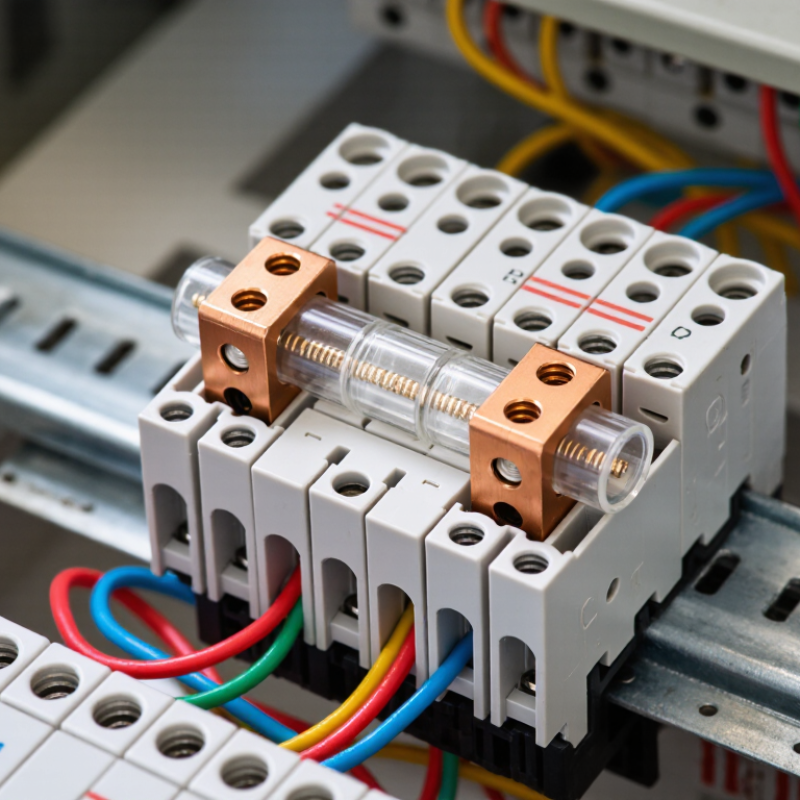
A fuse terminal block combines a wire connection point with a replaceable fuse. If current exceeds the fuse’s rating, its element melts and opens the circuit. This helps limit damage to downstream equipment, but it does not replace correct system protection or careful design.
Common types include standard fuse terminal blocks, disconnect-style blocks, and models with blown-fuse indicators. Standard blocks suit compact control panels, where each sensor or relay branch may need separate protection. Disconnect versions let technicians isolate a circuit for testing or fuse replacement. Indicator models use a small light to show an open fuse, which can save time in a crowded cabinet.
Small detail, big help.
These blocks are common in industrial machinery, HVAC controls, building automation, and instrumentation panels. For example, a panel may protect a low-voltage pressure sensor on its own branch, so a fault does not interrupt unrelated controls.
Selection depends on the fuse format, voltage and current ratings, conductor size, and available fault current. DIN-rail mounting is typical, though layouts vary.
Labels are easy to overlook, yet unclear circuit identification can slow troubleshooting. Check the manufacturer’s ratings and wiring instructions; a familiar-looking block is not automatically suitable for every circuit.