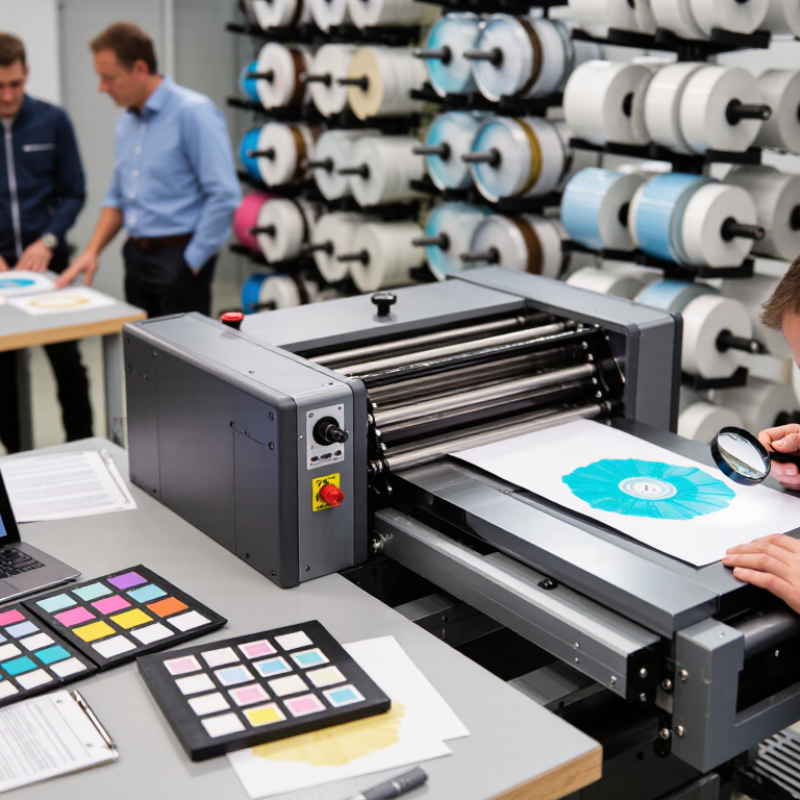
In plate-based printing, first plate proofing is the check made from the first usable impression produced with newly prepared plates. The plates carry the image, text, and other artwork onto the chosen material. A printer runs a small number of sheets, then checks whether the result matches the approved file. Small differences matter. Fine lines may fill in, tiny text can soften, and colors may shift on uncoated stock.
The proof gives the team a chance to catch problems before the full run begins. They inspect color balance, image placement, registration, and details such as barcode edges or small type. A shift of even a fraction of a millimeter can leave colored outlines around letters.
If something looks wrong, the operator can adjust plate position, ink, or press settings and pull another proof. It is not a guarantee. Paper texture, lighting, and later press changes can still affect the finished batch.
A proof viewed under dim room light, for example, may hide a weak contrast that becomes obvious under standard inspection lighting. That is easy to overlook.
Careful review helps reduce waste and rework, while giving the printer and customer a shared, physical reference before production continues.