| 1 | Match the hazardous-area classification | Compare gas or dust risk, zone or division, gas group or dust group, temperature class, and ambient temperature range. | A certificate or technical file that states the complete protection marking for the exact enclosure configuration. | The marking must cover the installation location; a general “explosion proof” statement is not sufficient. | The supplier provides only a marketing label, an incomplete marking, or a certificate for a different model. |
| 2 | Check the applicable certification route | Determine whether the destination requires IECEx, ATEX, UKCA, North American hazardous-location approval, or another local scheme. | Certificate number, issuing body, product scope, protection concept, limitations, and current validity status. | Use the certification route accepted by the authority having jurisdiction at the installation site. | The document is undated, cannot be independently verified, or lists only a similar product family. |
| 3 | Verify the testing standard and scope | Compare the protection concept and relevant standards, such as IEC 60079-0, IEC 60079-1, IEC 60079-7, IEC 60079-31, IEC 60529, or the required national standard. | Test report reference, revision, laboratory identification, sample description, test configuration, and pass or fail results. | The tested sample, materials, cable entries, windows, hinges, and fasteners must match the quotation and final purchase specification. | Only a generic factory inspection sheet is supplied instead of a relevant explosion-protection test record. |
| 4 | Compare enclosure protection and environmental durability | Compare IP rating, corrosion resistance, impact resistance, UV exposure, operating temperature, humidity, and outdoor installation suitability. | IP test report under IEC 60529 or the required local standard, material certificate, coating specification, and temperature limits. | Select an IP rating appropriate to dust and water exposure; IP rating does not by itself prove explosion protection. | The quote combines IP protection and hazardous-area approval as if they were the same test. |
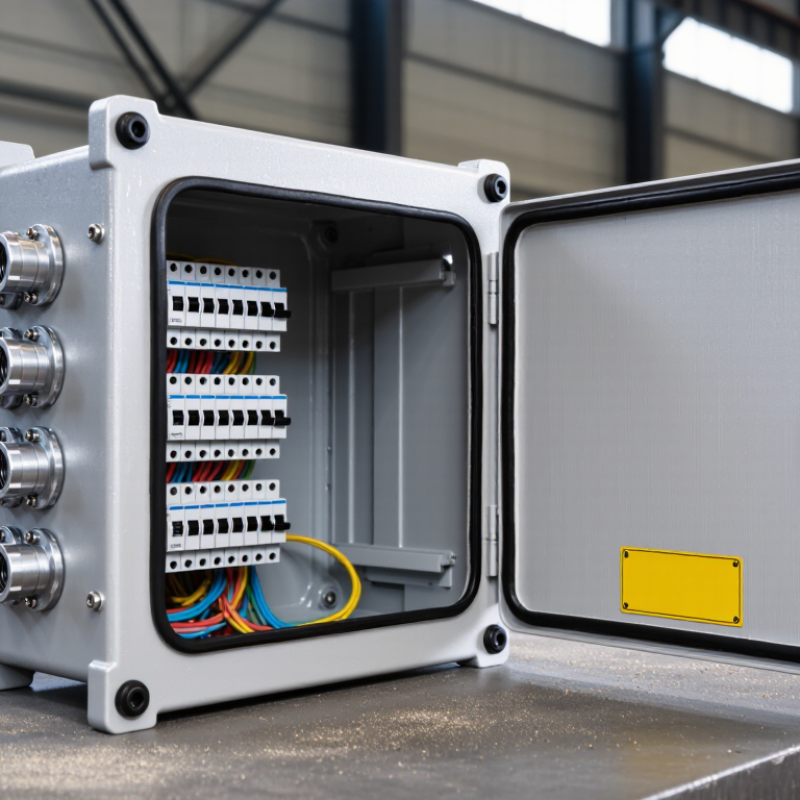
| 5 | Compare construction and usable internal space | Compare enclosure dimensions, internal usable volume, wall thickness, door opening, mounting plate, cable-entry area, terminal capacity, and maximum heat dissipation. | Dimensioned drawing, 3D or 2D file, internal layout, material grade, fastener specification, and approved component list. | Evaluate usable volume rather than external dimensions; confirm that all installed equipment fits without exceeding thermal limits. | The supplier changes wall thickness, hinges, windows, or cable entries without updating the certification documents. |
| 6 | Audit supplier quality and configuration control | Compare quality-system status, incoming-material controls, machining tolerances, assembly inspection, traceability, and change-control procedures. | Quality certificate where applicable, inspection and test plan, lot traceability, calibration records, nonconformance process, and sample inspection report. | Prefer suppliers able to link each delivered unit to drawings, materials, inspection results, and serial or batch records. | The supplier cannot identify the production lot or explain how design changes are approved. |
| 7 | Calculate total landed cost | Compare enclosure price, certified components, cable glands, accessories, engineering, testing, packaging, freight, insurance, duties, taxes, installation, and inspection. | Itemized quotation, Incoterms, shipping weight and dimensions, tariff classification, warranty exclusions, and expected maintenance parts list. | Total landed cost = product and options + logistics + import charges + site acceptance and compliance costs. | A low unit price excludes certification, special entries, documentation, customs charges, or replacement parts. |
| 8 | Confirm lead time and delivery controls | Compare standard production time, engineering approval time, test-document release, inspection hold points, shipping time, and spare-part availability. | Manufacturing schedule, approved drawing, production milestone plan, packing list, inspection release, and shipment tracking procedure. | Separate quoted lead time from transport time and from the time required for document approval. | The promised date starts before technical approval or depends on undocumented component availability. |
| 9 | Evaluate installation and maintenance requirements | Compare gland compatibility, earthing points, torque values, flamepath or gasket care, replacement fasteners, cleaning method, and access requirements. | Installation and maintenance manual, torque chart, approved spare-parts list, grounding instructions, and limitations of use. | Estimate lifecycle labor and downtime, not just purchase price; maintenance must preserve the certified configuration. | The manual permits modifications or replacement parts that are absent from the certification scope. |
| 10 | Assess warranty and after-sales support | Compare warranty duration, response time, remote troubleshooting, replacement policy, field-service coverage, spare-parts support, and document updates. | Written warranty terms, service-level commitment, escalation contacts, return procedure, spare-parts pricing, and technical-support coverage by region. | Score response time, resolution time, and availability of certified replacement parts alongside the warranty period. | Support is limited to sales communication, warranty exclusions are unclear, or replacement parts lack traceability. |