



10 Essential Tips for Effective Pavement Repair You Need to Know?

Pavement repair is essential for ensuring safe and sustainable infrastructure. Research suggests that poorly maintained pavements can lead to accidents, increased vehicle wear, and expensive repairs. A recent industry report highlighted that 70% of urban roads face significant deterioration. This not only affects traffic flow but also economic activity in affected areas.

Effective pavement repair demands more than just quick fixes. Strategies must consider long-term performance and durability. A study found that regions investing in advanced materials and techniques saw a reduction in repair costs by 30% over five years. These improvements lead to smoother roadways, reducing maintenance needs and enhancing user experience.

However, many still overlook the importance of timely repairs. Neglect can compound issues, leading to extensive damage that requires larger investments. It's crucial for decision-makers to reflect on existing methodologies and adapt to emerging technologies in pavement repair. With a proactive approach, we can mitigate future challenges and foster a safer environment for everyone.

10 Essential Tips for Effective Pavement Repair You Need to Know?

Understanding the Different Types of Pavement Damage

Pavement damage can manifest in various forms. Cracks often occur due to moisture infiltration. The freeze-thaw cycle can expand these cracks, worsening the issue. Potholes, on the other hand, typically arise from heavy traffic and water accumulation. They can create serious hazards, especially for vehicles.

Rutting is another common damage type. This usually happens under the stress of heavy loads. It can lead to standing water, which further aggravates the pavement condition. Surface degradation results from UV exposure and chemical spills. This may create rough textures that are not only unsightly but also unsafe.

Recognizing these types early is critical. Neglecting small issues can lead to costly repairs down the line. Repairing small cracks prevents larger ones. However, many overlook minor blemishes until they turn into major problems. Understanding the type of damage you face will guide your repair approach.

Assessing the Extent of Pavement Damage Before Repair

Before starting any pavement repair project, it’s crucial to assess the extent of the damage. Look for cracks, potholes, and uneven surfaces. Small cracks can often indicate larger issues beneath the surface. Observe how wide and deep these cracks are. Consider using a measuring tool for accuracy. Sometimes, the problem spreads further than it appears.

Pay attention to water pooling in certain areas. This often reveals underlying drainage issues. If water collects, it can cause more damage over time. Take notes on different sections of the pavement. Some areas may need more attention than others. Document all findings for future reference. Checking the temperature and weather conditions is essential too. This can affect repair materials and methods.

Remember, repairing without a proper assessment can lead to repeated work. It’s a common mistake to overlook minor issues. Each problem, no matter how small, should be treated seriously. In some cases, a more extensive repair might be required. Reflect on your observations and judgments. This can save time and resources in the long run.

Choosing the Right Repair Materials for Your Pavement

10 Essential Tips for Effective Pavement Repair You Need to Know?

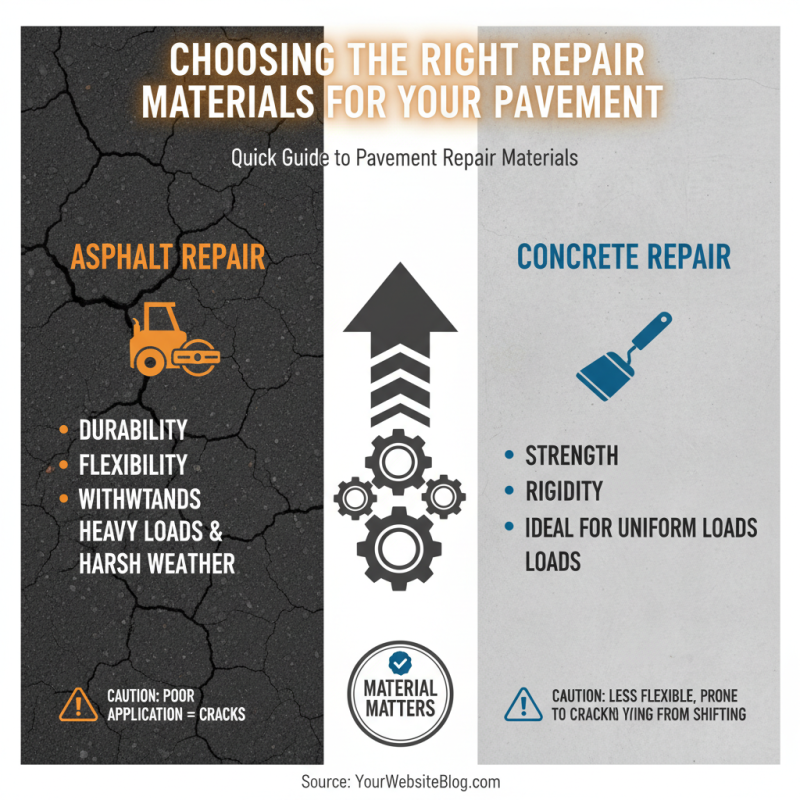
When repairing pavement, choosing the right materials is crucial. Different types of pavement require specific materials for effective repair. Asphalt is often preferred for its durability and flexibility. It can withstand heavy loads and harsh weather. However, if not applied correctly, it might heal poorly or crack under pressure.

Concrete is another common choice. It offers strength and longevity. Yet, it can be expensive, and inexperienced application can lead to significant issues. Using the wrong mix can result in surface defects. This can be frustrating when trying to maintain an attractive pavement.

Consider the area where repair is needed. Some materials work better in specific climates. For instance, cold weather or excessive moisture can impact the effectiveness of your repair. Always test a small area before full application. This can help identify potential problems before they escalate. Each choice impacts the overall quality and longevity of the repair. Make sure to evaluate your options thoroughly.

Step-by-Step Process for Effective Pavement Repair

10 Essential Tips for Effective Pavement Repair You Need to Know?

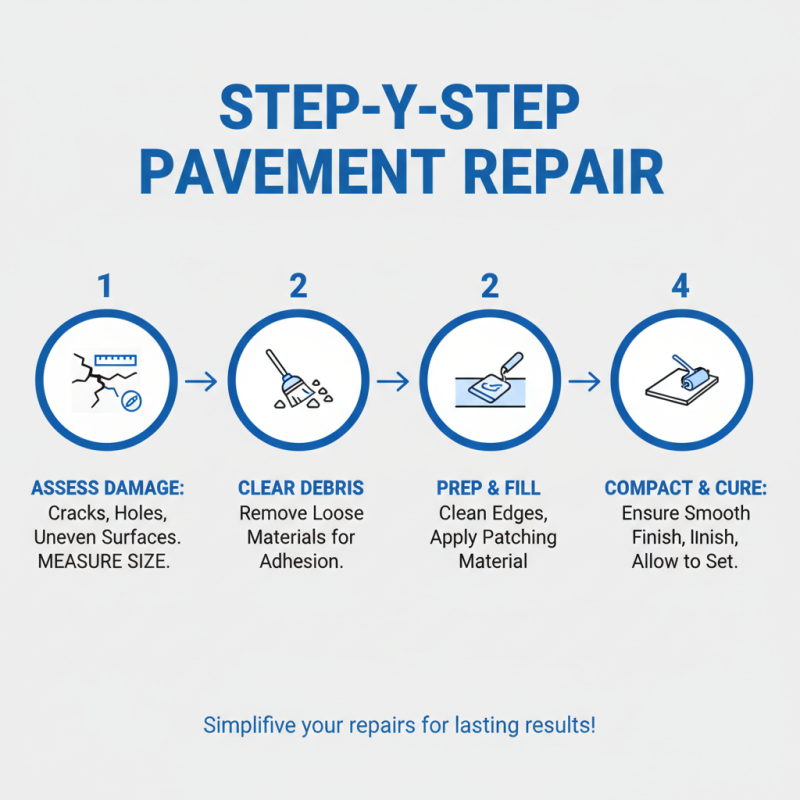
Pavement repair can seem daunting, but a step-by-step approach simplifies the process. Start by assessing the damage. Look for cracks, holes, and uneven surfaces. Measure their size accurately. This initial step helps in deciding what materials you’ll need. Clear the area of debris and loose materials. This is often neglected, but it’s crucial for proper adhesion.

Next, you can begin the actual repair. Fill small cracks with a suitable sealant. For larger holes, patching materials work best. Ensure you apply them evenly. Failure to do so can lead to uneven surfaces later. Once patched, you should compact the area. A roller or tamper can provide the necessary pressure. It’s important to wait for the materials to set properly; this step requires your patience.

After everything is set, you should evaluate your work. Look for any spots that may need a touch-up. It’s easy to miss small details, so take your time. A vibrant surface may look good at first, but inspection reveals imperfections. Regular checks post-repair help maintain the pavement and highlight any immediate issues. Remember, even small repairs matter greatly in maintaining a safe and smooth surface.

Maintenance Tips to Extend the Life of Repaired Pavement

Maintaining repaired pavement can greatly extend its lifespan. Regular inspections help identify issues early. According to the National Asphalt Pavement Association, routine maintenance can increase pavement life by up to 30%. Small cracks, if left unattended, can evolve into larger problems. Routine sealing is often overlooked but is essential for longevity.

Proper drainage is another crucial factor. Water accumulation can undermine the stability of the repaired surface. The Federal Highway Administration states that poor drainage contributes to half of all pavement failures. Simple grading or installing a drainage system can mitigate this risk. Moreover, ensuring adequate weight limits on repaired areas is vital to prevent premature wear.

Timely repairs are critical. If a pothole appears, addressing it quickly can save time and money later. In many cases, preventive measures prove more cost-effective than dealing with extensive damage. A study by the American Society of Civil Engineers emphasizes that proactive maintenance costs significantly less than reactive fixes. Without a clear strategy, pavement repair efforts may feel random.

10 Essential Tips for Effective Pavement Repair

Find the Right Repair Product for Your Project

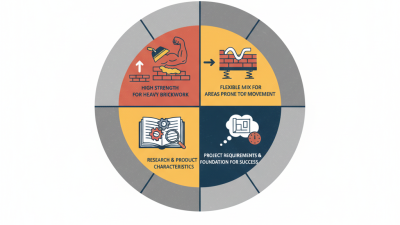
Need to find the most appropriate product for the needs of your project? We can help because we have over 70 years of experience servicing the industry with every kind of project, from Do-it-yourself projects to large skyscrapers. Package Pavement has the experience, the knowledge and the products to help every project succeed.

Quikrete Repair Products
Legend
Package Pavement has two convenient locations in Stormville, NY (Dutchess County) and Ravena, NY (Greene County) to serve the Northeastern Region with bagged concrete, blacktop, mortar, and repair products. This map gives a general idea of where we service and the product lines we offer.
Package Pavement Products
Quikrete Products
Spec Mix Products
map

Our Brands Websites