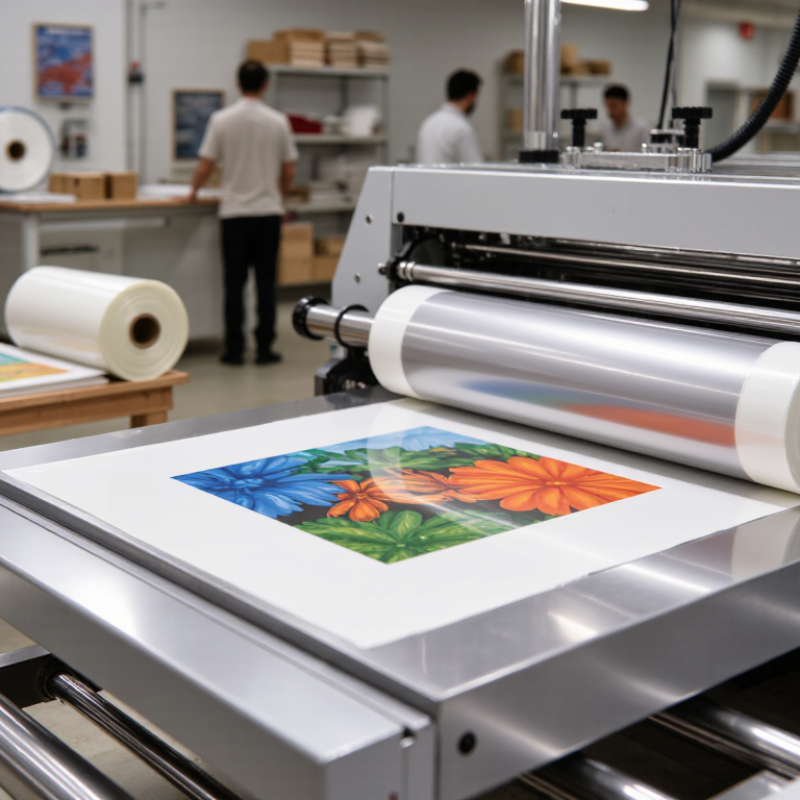
| 1. Prepare the artwork | The design is arranged for the target item. Text and directional graphics are commonly mirrored before printing. | The artwork is prepared so it will read correctly after transfer. | Check the print layout, dimensions, and orientation before printing. |
| 2. Print onto transfer paper | Sublimation ink is printed onto coated transfer paper using a compatible printing system. | The image remains on the paper as dried ink; it has not yet moved into the substrate. | Use paper and ink designed for sublimation, and allow the print to dry as directed. |
| 3. Position the transfer | The printed side of the paper is placed against a suitable substrate, such as polyester fabric or a polymer-coated blank. | The paper holds the image in contact with the surface that will receive it. | Keep the paper and substrate flat and secure to reduce shifting or blurred edges. |
| 4. Apply heat and pressure | A heat press supplies controlled heat and pressure for a specified time. | Heat changes the sublimation dye into vapor. The dye moves from the paper toward the substrate and diffuses into compatible polymer fibers or coatings. | Many applications use roughly 180–200°C (356–392°F) for about 30–60 seconds, but the correct settings depend on the ink, paper, substrate, and equipment. |
| 5. Remove the transfer paper | After pressing, the paper is peeled away according to the process instructions. | The paper is removed; the transferred dye remains within the receptive polymer rather than forming a separate printed film on top. | Some workflows call for cooling before peeling. “Cold” may describe this peel timing; sublimation itself still requires heat. |
| 6. Cool and inspect | The item is allowed to cool, then checked for color, alignment, and image defects. | The dye is held within the substrate’s polymer layer or fibers, producing the finished image. | Results depend on substrate composition, surface coating, temperature, time, pressure, and accurate color settings. |
| Material compatibility | Sublimation works best on polyester textiles and items with a suitable polymer coating. | Natural, untreated cotton does not readily retain sublimation dye because it lacks the required receptive polymer structure. | For blends, image strength can vary with the polyester content. Always follow the substrate supplier’s processing guidance. |
| Typical result | The finished image can have a smooth feel because the dye is integrated into the receptive material rather than applied as a thick surface layer. | Color and durability depend on the substrate and on correct transfer conditions. | A test press is recommended when changing materials or settings. |