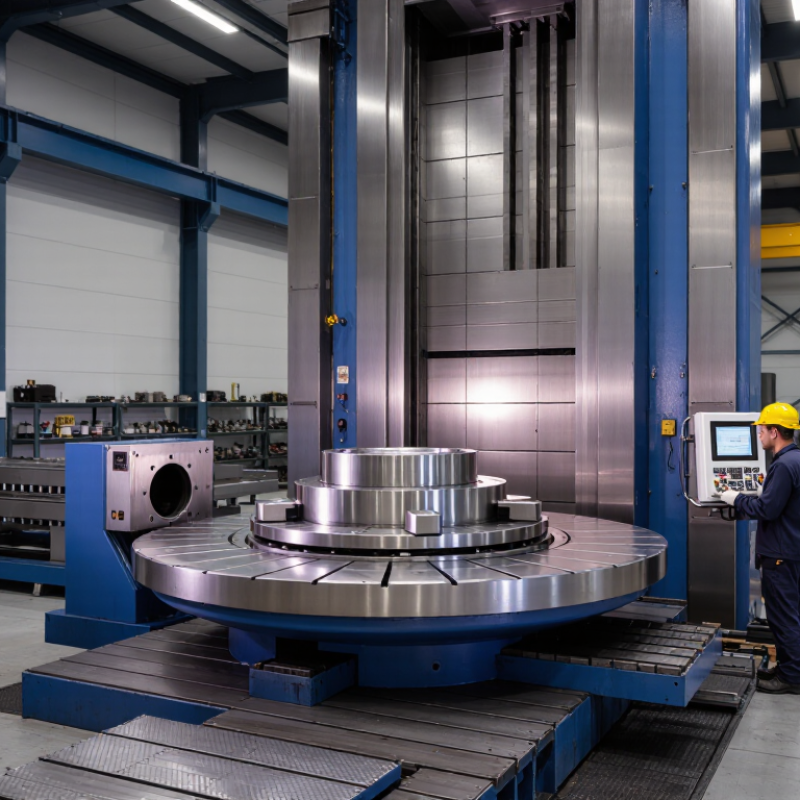
How to Choose a Vertical Boring Machine?
Compare Spindle Power (kW), Torque (N·m), and Speed (r/min)
When comparing vertical boring machines, don’t judge spindle power alone. A 30 kW spindle may cut steadily at low speed, but its torque depends on the speed at which that power is available. Machinery’s Handbook, 31st edition, gives the standard relationship:
torque (N·m) = 9,550 × power (kW) ÷ speed (r/min)
At 120 r/min, 30 kW corresponds to about 2,388 N·m; at 600 r/min, it is about 478 N·m. Same power. Very different cutting feel.
Match the torque curve to the work. Large castings, heavy roughing, and interrupted cuts usually demand strong low-speed torque. Finishing smaller diameters may need higher spindle speed and stable power across the upper range. Ask for continuous-duty power and torque curves, not only maximum ratings. A machine’s peak figure may be available briefly, not throughout a long cut. Check the spindle’s usable speed range against the workpiece diameter and cutting data for its material.
A practical check: compare the curve at your planned cutting speed, then confirm the duty cycle and gearbox limits with the supplier. ISO 14955-1:2017 provides a framework for assessing machine-tool energy use, reminding buyers to consider operating conditions, not just headline ratings. One limitation: published curves may not reflect worn tooling or actual setup stiffness. Request a test cut on a representative workpiece. Numbers help, but the chip tells you more.