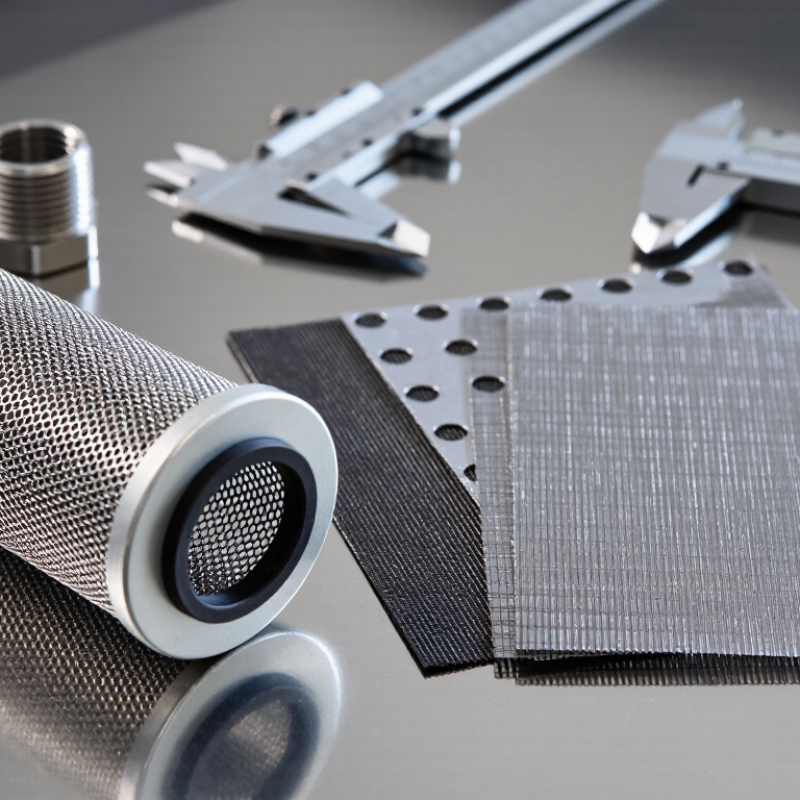
2026 How to Choose a Stainless Steel Wire Mesh Filter?

Choosing a Stainless Steel Wire Mesh Filter is not simply a matter of selecting the finest mesh. The right choice depends on the material being filtered, the size and shape of unwanted particles, and the conditions inside the process. A mesh that works well in a water line may perform poorly with viscous oil or a fast-moving slurry. Small details matter. Wire diameter, opening size, weave style, and filter area all affect flow, particle retention, and service life.

Start with the application. Identify the fluid, operating temperature, pressure, expected flow rate, and cleaning method. Then compare mesh specifications carefully: “mesh count” alone can be misleading because wire thickness changes the actual opening. Ask suppliers for clear aperture data, material grades, dimensional tolerances, and test documentation. Stainless steel offers useful corrosion resistance and strength, but no grade suits every chemical or operating environment. Verify compatibility for your specific conditions rather than relying on a broad product description. Check how the filter will be installed, too; a well-made screen can still bypass particles if its housing or seal is poorly matched.

This guide explains how to weigh these factors and avoid common purchasing mistakes. It also considers cleaning, maintenance, and replacement needs, since the cheapest unit may cost more over time. There is no universal best filter. And specifications can leave questions unanswered. When conditions are uncertain, a sample test or a discussion with a qualified filtration engineer can help confirm performance before a full order.

2026 How to Choose a Stainless Steel Wire Mesh Filter?

Define the Filtration Requirements and Operating Conditions

Define the filtration requirement before selecting a stainless steel wire mesh filter. Identify the particles you need to capture, their approximate size, and whether they are soft, abrasive, or irregular. A target such as “fine particles” is not precise enough. Record the acceptable downstream particle level and the flow rate the process must maintain. Mesh opening size alone does not guarantee a specific separation result; particle shape, loading, and fluid behavior also matter.

Check the operating conditions at the filter location, not just the equipment’s average conditions. Note the liquid or gas, temperature, pressure, pressure changes, and any cleaning chemicals. For a hot, viscous liquid, a mesh that works well in a cool-water test may clog quickly or create excessive pressure drop. Consider how often the filter can be inspected and cleaned, and whether the process can tolerate a brief shutdown. Small details matter. A sample test under realistic flow and temperature can reveal problems that a specification sheet misses. It may feel excessive to document every variable, but skipping one can lead to repeated cleaning or poor filtration. That is worth questioning before ordering.

Select the Stainless Steel Grade and Mesh Weave

A stainless steel wire mesh filter should be chosen for the fluid it will actually meet. Grade 304 often suits water, dry materials, and many indoor processes. Grade 316 offers better resistance to chlorides and some corrosive environments. Salt changes the picture. But 316 is not a cure-all; concentration, temperature, and cleaning chemicals still matter. Check the operating conditions before choosing by grade name alone.

Weave controls how particles pass through the screen. Plain weave is common and easy to inspect, while twill weave can accommodate finer openings with relatively strong wires. Dutch weave uses closely packed wires and is often selected for fine filtration. Look at the stated opening size, wire diameter, and open area together. A tiny opening may sound ideal, yet it can restrict flow or clog quickly.

Match the mesh to the particle size and the filter’s pressure limits. Ask whether the specified opening is nominal or tightly controlled; suppliers may define these terms differently. That detail is easy to miss. A sample test with the real fluid can reveal blinding, bypass, or an unexpected pressure drop. The first choice may still need adjustment. That is normal.

2026 How to Choose a Stainless Steel Wire Mesh Filter? — Select the Stainless Steel Grade and Mesh Weave

How to read the chart: Clear openings are calculated as mesh pitch (25.4 mm ÷ mesh count) minus wire diameter. The assumed wire diameters are illustrative; actual openings vary by specification. Plain weave is a common choice for general filtration. Grade 304 suits many general-purpose environments, while grade 316 offers greater resistance to chloride corrosion. Confirm the grade and mesh specification against the fluid, operating conditions, and required filtration size.

Match Aperture Size, Micron Rating, and Open Area

2026 How to Choose a Stainless Steel Wire Mesh Filter?

Match the aperture to the particles you need to retain, not just to a mesh count. Aperture describes the clear opening between wires; a micron rating expresses a particle-size target. These figures are related, but they are not always interchangeable. Check whether a stated rating is nominal or absolute, and ask how it was measured. Particle shape, pressure, and fluid viscosity can all affect what passes through. Small details matter.

Open area is the percentage of the mesh surface available for flow. A finer aperture usually captures smaller particles, but may reduce open area and increase pressure drop. Compare mesh samples under realistic operating conditions, using the same fluid, flow rate, and temperature where possible. Also check wire diameter and weave: two meshes with similar openings can have different strength and flow behavior. There is no perfect number. A quick selection based only on micron rating can miss the practical trade-off.

Tips: Write down the largest particles to retain, expected flow, and cleaning method before choosing. Ask for aperture, micron-rating basis, open-area data, and tolerances. Test a sample if the process is sensitive; published figures alone may not predict performance exactly.

Evaluate Filter Shape, Strength, and Cleaning Needs

2026 How to Choose a Stainless Steel Wire Mesh Filter?

Evaluate Filter Shape, Strength, and Cleaning Needs

Choose a filter shape that fits the flow path and can be removed without spilling trapped material. A cylindrical basket suits a pipe or vessel; a flat disc may work better in a compact housing. Check the support structure, too. A fine mesh can deform if pressure, flow, or cleaning loads exceed what its backing can handle. ASTM E11-24 lists a nominal opening of 150 micrometres for a No. 100 test sieve and 75 micrometres for No. 200. These figures help compare openings, but a test-sieve rating is not a full prediction of filter performance. Wire diameter and weave matter.

Cleaning needs are easy to underestimate. Sticky residue may cling to intersections, while dry particles can loosen with a gentle back-flush. Confirm that the chosen shape allows access to both sides, and ask how the mesh behaves after repeated cleaning. A filter that is hard to inspect may be hard to maintain. I would also leave room for a trial; actual process conditions can surprise you.

Tips: Match the opening to the particles you need to retain, then check pressure, support, and cleaning access. Record the mesh condition after each cleaning cycle. A simple log helps spot early wear.

Verify Standards, Testing, and Supplier Documentation

A stainless steel wire mesh filter can look consistent while hiding variations in opening size or wire diameter. Ask which standard governs its construction, and confirm the standard’s current edition and scope. ISO 9044, for example, covers industrial woven wire cloth; it may not address every filter design. Check that the quoted mesh count, aperture, wire diameter, alloy, and tolerances match your operating needs. Small gaps matter.

Testing should verify the actual mesh, not just repeat a product description. Request inspection results for aperture size and wire diameter, including the sampling method and measurement equipment. A calibrated microscope or optical measurement system can reveal uneven openings. For demanding service, ask whether corrosion or strength testing is relevant to the intended temperature, fluid, and cleaning process. One test cannot predict every condition. That distinction is easy to overlook.

Review supplier documents for material certificates, lot identification, inspection records, and clear links between each report and the delivered mesh. Confirm whether results apply to the exact production lot or only to a typical sample. Paperwork is not proof by itself. Compare it with markings, packaging details, and a receiving inspection. If a report uses vague terms such as “standard quality,” request measurable acceptance limits. Some documents may still leave gaps; note them before approving the filter.

Find the Right Repair Product for Your Project

Need to find the most appropriate product for the needs of your project? We can help because we have over 70 years of experience servicing the industry with every kind of project, from Do-it-yourself projects to large skyscrapers. Package Pavement has the experience, the knowledge and the products to help every project succeed.

Quikrete Repair Products
Legend
Package Pavement has two convenient locations in Stormville, NY (Dutchess County) and Ravena, NY (Greene County) to serve the Northeastern Region with bagged concrete, blacktop, mortar, and repair products. This map gives a general idea of where we service and the product lines we offer.
Package Pavement Products
Quikrete Products
Spec Mix Products
map

Our Brands Websites