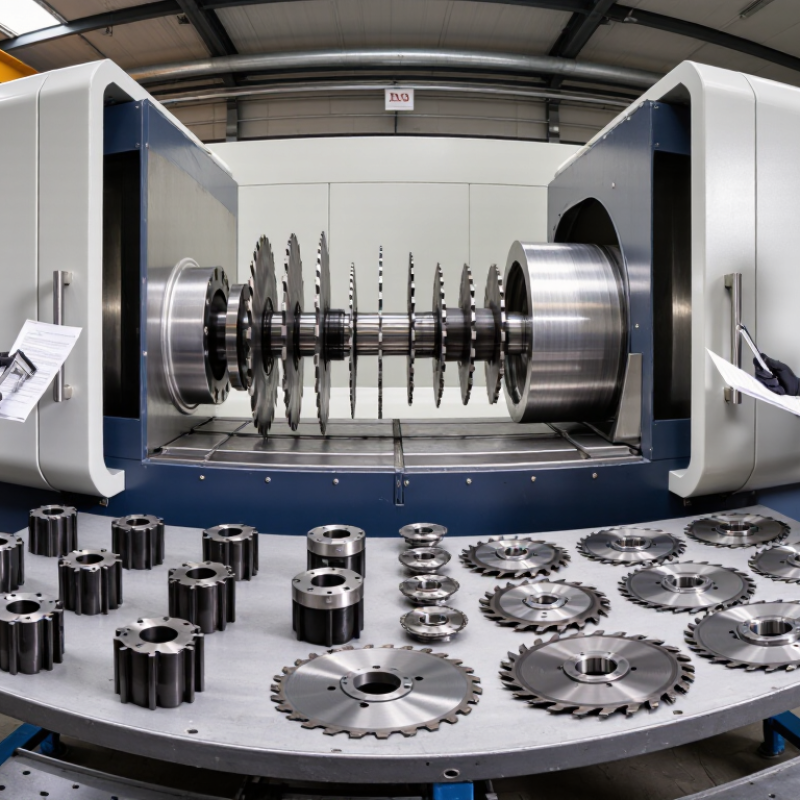
| Cutting knives or cutters | Wear-resistant, application-appropriate steel; consistent hardness; accurate dimensions; secure mounting and suitable cutting geometry. | About 500–2,000 operating hours, depending heavily on feedstock, contamination, and cutting conditions. | Inspect edges and fasteners regularly; rotate or reverse reversible cutters as designed; maintain correct clearances and torque. | Rounded or chipped edges, rising power draw, reduced throughput, uneven product size, or abnormal vibration. |
| Screen or sizing grate | Wear-resistant material; correctly sized openings; sound welds or construction; fit compatible with the machine and target output. | Often 1,000–4,000 operating hours; abrasive or contaminated material can shorten life substantially. | Check for blocked openings, cracks, deformation, and uneven wear; clean safely and inspect during planned shutdowns. | Enlarged or distorted openings, cracks, loose sections, inconsistent particle size, or frequent clogging. |
| Rotor or shaft | Correct material and heat treatment; dimensional accuracy; sound welds where applicable; verified balance and compatibility with the rotor assembly. | Typically a multi-year component; actual life depends on loading, impact events, alignment, and inspection results. | Monitor vibration and temperature; inspect for cracks, runout, and wear; verify alignment after major service. | Persistent vibration, visible cracking, measurable runout, repeated bearing failures, or unusual noise. |
| Bearings and seals | Correct load rating, fit, clearance, sealing arrangement, and lubricant compatibility for the machine operating conditions. | Service life varies widely; properly selected, aligned, lubricated bearings may operate for tens of thousands of hours, but contamination and shock loads reduce life. | Follow the specified lubrication type and schedule; keep seals clean; monitor temperature, noise, and vibration. | Excess heat, grease leakage or contamination, rough rotation, unusual noise, or increasing vibration. |
| Drive belts or couplings | Correct size and torque capacity; material suitable for the environment; accurate alignment and secure connections. | Highly dependent on load, alignment, starts, and operating environment; use inspection findings rather than a fixed replacement interval. | Check belt tension and alignment; inspect coupling elements and fasteners; keep oil and debris away from belt surfaces. | Cracks, fraying, glazing, slipping, damaged coupling elements, or recurring alignment issues. |
| Gearbox components | Correct gear ratio and load rating; accurate tooth geometry; compatible materials and heat treatment; suitable lubricant specification. | Often designed for long-term service, but life depends on load, lubrication, temperature, alignment, and shock loading. | Check oil level and condition; follow specified oil-change intervals; monitor temperature, leakage, and operating noise. | Metal particles in oil, rising temperature, persistent whining or knocking, leakage, or abnormal backlash. |