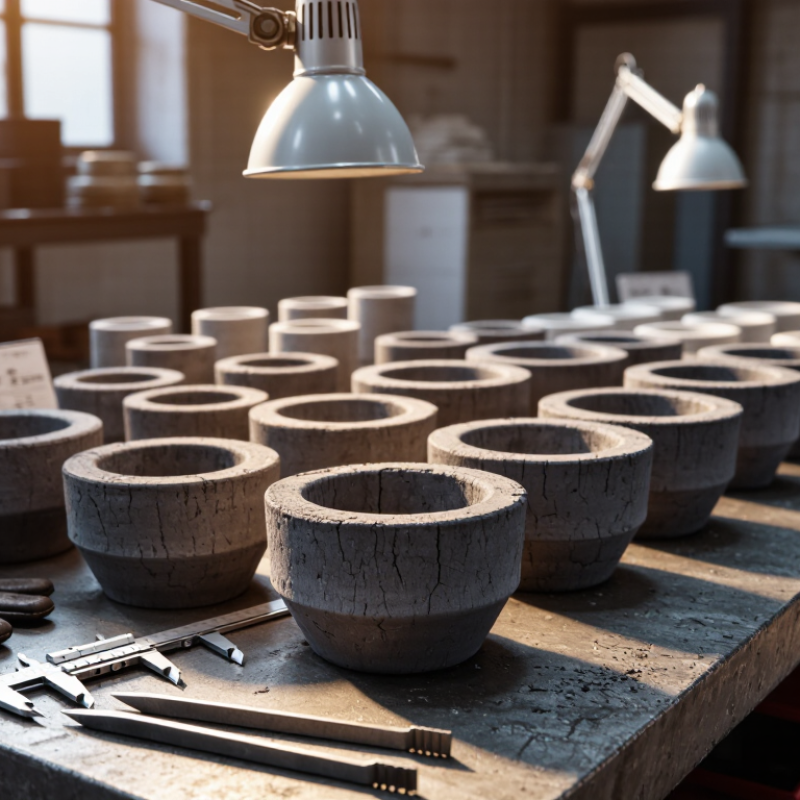
How to Choose a Graphite Clay Crucible?
Material compatibility begins with temperature, atmosphere, and the molten charge.
NIST thermochemical data places graphite sublimation near 3,915 K, or about 3,642°C, under standard pressure. This figure is not a safe working temperature. In air, graphite can oxidize rapidly above approximately 500–600°C, according to thermal-material guidance in the ASM Handbook. A clay matrix can slow oxidation, but it cannot replace a controlled atmosphere.
For repeated heating, check the furnace oxygen level, heating rate, and holding time. Atmosphere matters.
Chemical behavior is equally important. Graphite generally handles many non-oxidizing molten metals, yet oxidizing salts, fluorides, borates, and alkaline compounds may attack the clay binder or graphite. Chloride-rich residues can also create unexpected corrosion paths.
The U.S. Geological Survey’s Mineral Commodity Summaries 2025 estimates global natural graphite mine production at about 1.6 million metric tons in 2024, but purity still varies by source and processing.
Ask for ash content, apparent porosity, and maximum recommended temperature. I would not choose from temperature alone. A crucible rated for 1,600°C may fail earlier with oxygen, moisture, or aggressive flux.
Run a small compatibility trial first. It is slower, but safer.