| Paper, menus and printed documents | Paper, coated paper, card stock | Thermal film lamination | 90–120°C | Light to medium | 1–5 m/min | Adjustable temperature, heated rollers, pressure adjustment, anti-static control | Use lower heat for heat-sensitive inks and digitally printed sheets. Confirm film compatibility before production. |
| Photographs and high-quality graphics | Photo paper, inkjet media, coated graphics | Thermal or low-temperature thermal lamination | 70–110°C | Light to medium | 1–4 m/min | Fine temperature control, uniform roller pressure, adjustable cooling, low-wrinkle feeding | A lower operating temperature helps reduce color shift, silvering and distortion on sensitive prints. |
| Outdoor signs and posters | Vinyl, synthetic paper, coated banner media | Cold pressure-sensitive or thermal lamination | 20–80°C | Medium | 1–6 m/min | Consistent nip pressure, dust-resistant work area, adjustable speed, wide working width | Cold lamination avoids heat-related deformation. Select an outdoor-rated film and allow printed ink to dry fully. |
| Labels and product stickers | Self-adhesive paper, synthetic label stock, film labels | Cold pressure-sensitive or low-temperature thermal lamination | 20–90°C | Light to medium | 1–8 m/min | Accurate web alignment, tension control, clean rollers, repeatable pressure adjustment | Match the laminating film adhesive to the label face stock. Excessive pressure may cause adhesive squeeze-out. |
| ID cards and small rigid cards | PVC, PET, paper core, synthetic card stock | Flat-press thermal lamination | 110–150°C | Medium to high | Batch cycle: 3–12 min | Heated platens, programmable dwell time, even clamping pressure, cooling cycle | The temperature must suit the card core and overlay film. Controlled cooling helps prevent curling. |
| Fabric and textile graphics | Polyester fabric, coated textile, transfer paper | Heat-press or thermal roller lamination | 120–180°C | Medium to high | 0.5–3 m/min | Stable heat distribution, dwell-time control, adjustable pressure, release liner handling | Use a temperature profile recommended for the adhesive and textile. Excessive heat can change fabric texture or color. |
| Decorative films and furniture surfaces | MDF, plywood, particleboard, PVC film, decorative paper | Hot press or flat roller lamination | 100–160°C | 0.3–1.0 MPa | 0.5–4 m/min | Rigid flat bed, high-pressure capability, uniform heating, platen parallelism control | Choose a press size that supports the largest panel. Moisture and surface flatness strongly affect bonding quality. |
| Composite panels and insulation boards | Foam board, honeycomb core, aluminum composite panel | Cold adhesive or controlled hot lamination | 20–120°C | 0.1–0.6 MPa | 0.3–3 m/min | Low-pressure setting, flat support table, adjustable gap, controlled adhesive application | Avoid excessive heat and pressure when the core can compress, melt or deform. Test the complete panel structure. |
| Electronics and flexible circuits | Polyimide film, PET film, copper foil, flexible printed circuits | Precision hot press or vacuum-assisted lamination | 80–180°C | 0.2–1.0 MPa | Batch cycle: 2–20 min | Accurate temperature control, programmable pressure, vacuum option, clean-room-compatible surfaces | Process settings depend on the adhesive system and circuit construction. Uniform pressure is essential for avoiding voids. |
| Safety glass and transparent interlayers | Glass, EVA film, PVB film, transparent protective layers | Vacuum laminator or autoclave-assisted lamination | 60–140°C | Vacuum or 0.6–1.3 MPa | Batch cycle: 30–180 min | Vacuum control, programmable heating and cooling, pressure monitoring, large flat work area | The correct process depends on the interlayer type and glass construction. Air removal and controlled cooling are critical. |
| Books, covers and packaging prototypes | Paperboard, book cloth, coated paper, synthetic cover stock | Thermal film or adhesive lamination | 80–130°C | Light to medium | 1–5 m/min | Quick warm-up, adjustable roller gap, edge-to-edge pressure control, easy setup for short runs | A machine with fast changeover is practical for varied formats. Check whether the film requires heat activation or pressure only. |
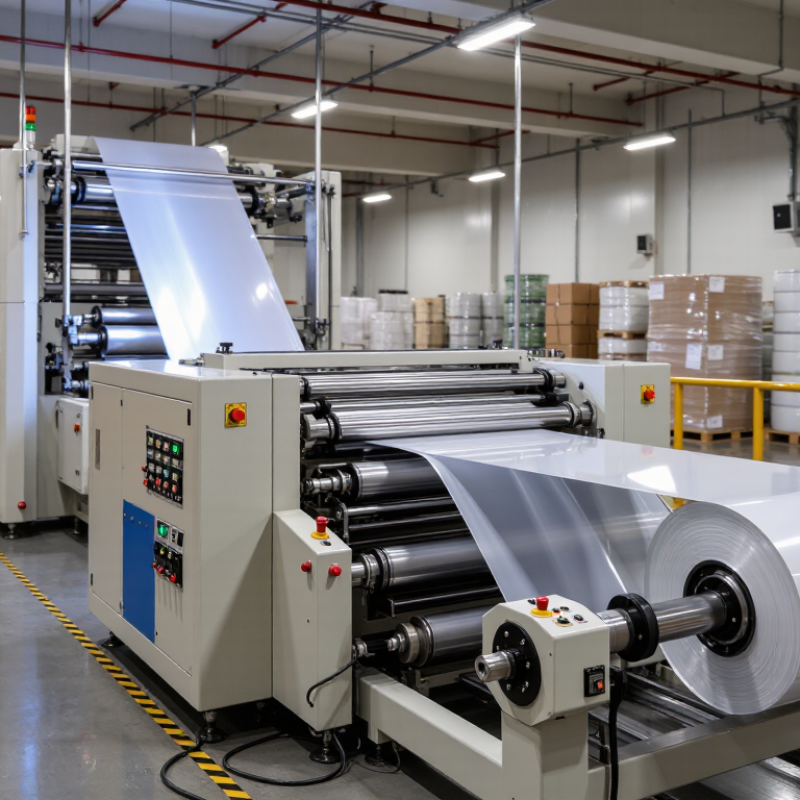
| High-volume commercial production | Paper, film, board, synthetic sheets and mixed media | Continuous roll-to-roll or sheet-fed thermal lamination | 80–160°C | Light to high | 5–30 m/min | Automatic feeding, web-tension control, programmable recipes, cooling rollers, slitting and rewind options | Prioritize throughput, repeatability and uptime. The machine width should exceed the normal sheet or web width with working clearance. |