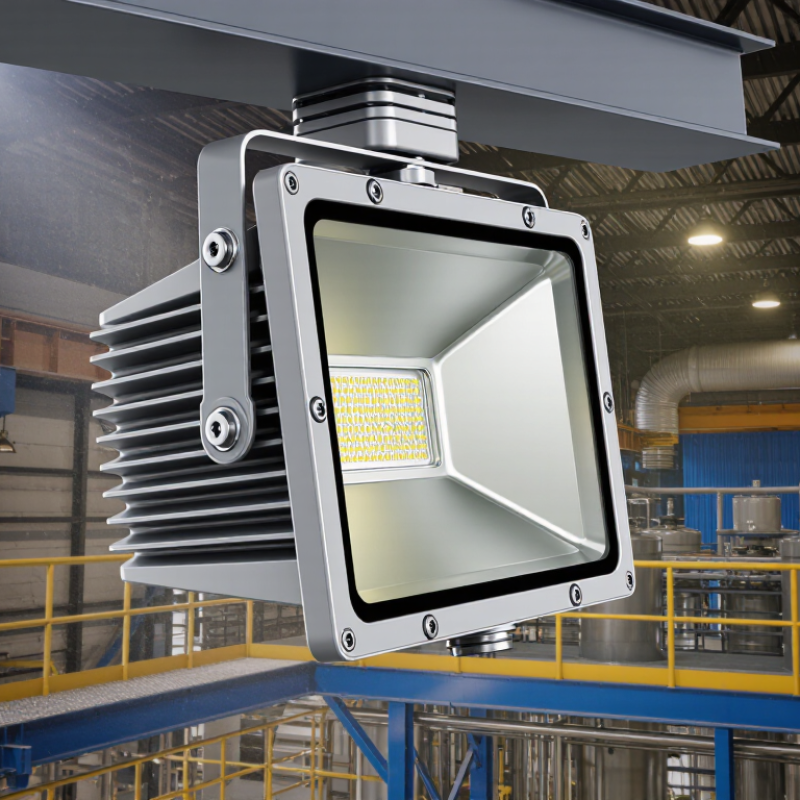
Choosing an explosion-proof LED floodlight starts with the actual installation conditions, not just the required brightness. Confirm that its hazardous-area classification, temperature rating, and enclosure protection match the site’s gas, dust, moisture, and ambient heat. A fitting that looks robust may still be unsuitable. Check the mounting surface, beam direction, and clearance for future inspection before ordering.
Cable entries deserve careful attention. Use glands and seals specified for the luminaire, and make sure cables are supported without pulling on the terminals. A qualified installer should follow the product instructions and site procedures, including grounding and isolation requirements. Keep the certification label readable after mounting; it can save time during later inspections. Small details matter.
Plan maintenance before the light goes into service. Set inspection intervals based on operating hours, dust, vibration, and corrosion, rather than relying on a calendar alone. With power safely isolated, inspect the lens, enclosure joints, fasteners, and cable entries for cracks, looseness, or moisture. Clean the lens with a non-abrasive cloth; harsh cleaners can cloud it. Record changes in brightness or repeated condensation. A checklist helps, but it cannot catch everything—workers familiar with the site may notice a subtle shift first. Replace damaged components only with approved parts, and never treat a quick repair as a substitute for checking the original installation conditions.