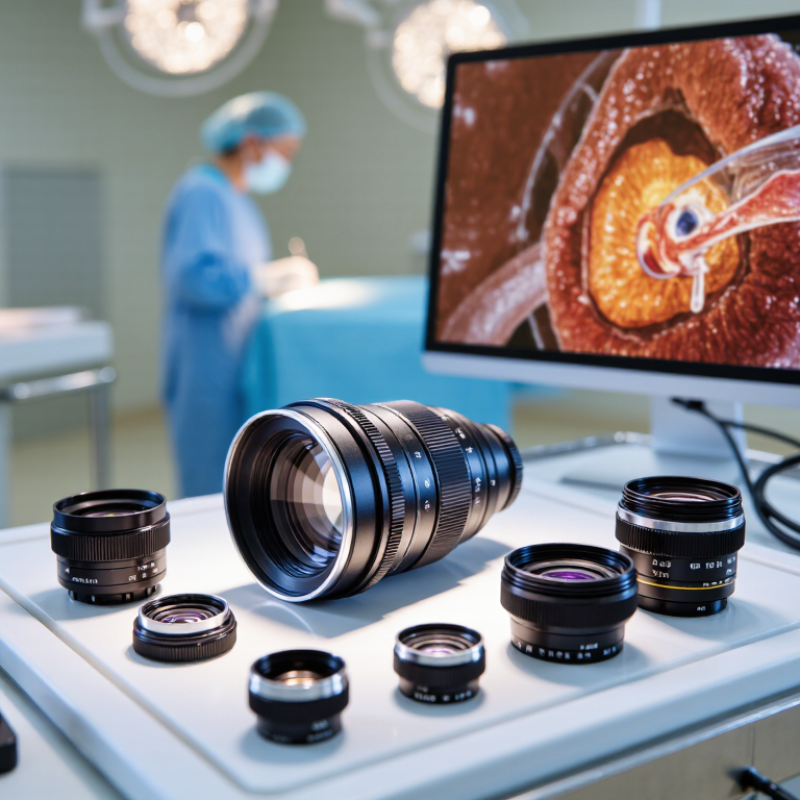
Selecting the best endoscope lens for 2026 applications begins with the procedure, not the catalogue. A narrow, angled lens may improve access around joints, cavities, or curved anatomy. A wider field can reduce repositioning during inspection. Yet wider is not always better. It can distort edges and make depth judgment harder.
MarketsandMarkets estimates that the global endoscopy devices market will grow at about 7% annually through the late 2020s. This expansion increases demand for sharper imaging, smaller scopes, and more reliable optical performance. When comparing lenses, check resolution at the working distance, field of view, depth of field, light transmission, and image stability. ISO 8600 guidance also supports evaluating viewing direction, optical quality, and endoscope dimensions under controlled conditions.
Test the lens with the intended camera, light source, and sheath. On a bench, inspect a fine grid at several distances. Then examine a wet, reflective surface, where glare quickly exposes weak contrast. In clinical or industrial use, record fogging, cleaning cycles, and handling damage. Small details matter. A lens that looks excellent in a showroom may perform poorly through fluid or a narrow access path. I would also question the habit of choosing the highest resolution available. It may increase cost without improving the image at the operator’s actual distance. The best selection is application-specific, measurable, and honestly tested.