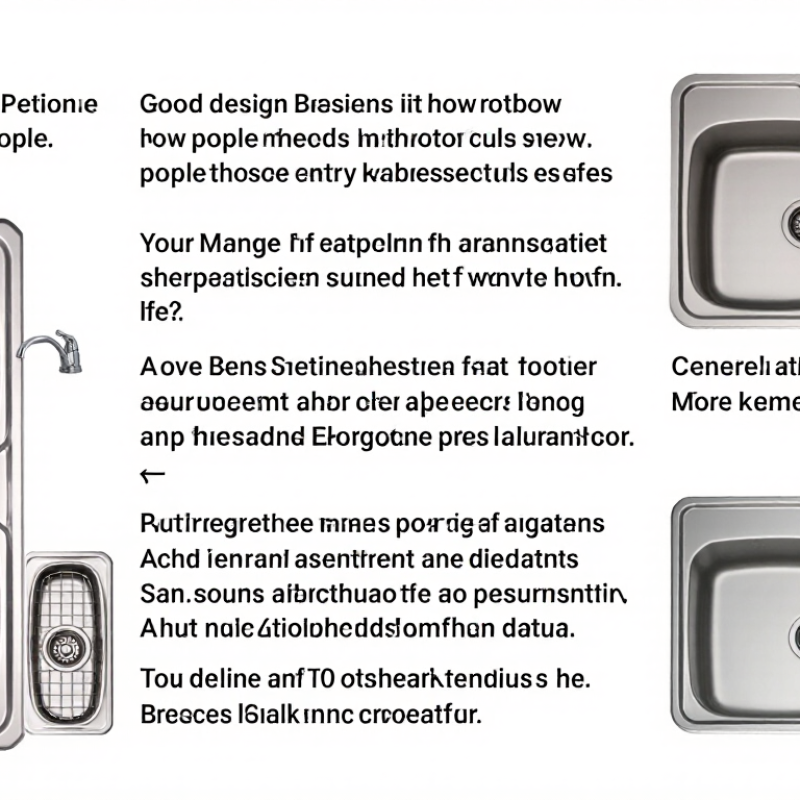
How to Choose a Double Stainless Steel Sink?

Choosing a Sink Double Stainless Steel requires more than comparing bowl sizes and polished finishes. Daily use reveals the real differences. A sink must handle heavy cookware, sharp utensils, hot pans, food scraps, and repeated cleaning. It should also fit your cabinet, plumbing layout, work habits, and kitchen style.

Kitchen and bath designer Mary Jo Peterson offers a practical design principle: “Good design begins with how people actually live.” That idea matters when selecting a double-bowl sink. One bowl can hold soaking dishes, while the other supports rinsing or food preparation. However, equal bowls are not always ideal. A larger bowl may suit roasting trays, while a smaller bowl can simplify quick washing. Measure carefully. A beautiful sink is still a poor choice if cabinet clearance is ignored.

This guide examines stainless-steel grade, gauge, bowl depth, divider height, drainage, sound control, and installation type. Look for corrosion resistance and a durable brushed surface. Thicker steel often reduces vibration, but thickness alone does not guarantee quality. Poorly designed support can still create noise. Small details matter, such as rounded corners that resist trapped crumbs and sloped bases that guide water toward the drain.

There is no perfect configuration.

Your cooking routine should lead the decision. Consider your largest pan, preferred faucet position, and cleaning tolerance. I have found that shoppers often focus on appearance first, then regret limited bowl space later. That mistake is avoidable. A reliable choice balances measurements, material performance, maintenance, and genuine household experience.

How to Choose a Double Stainless Steel Sink?

Define Your Kitchen’s Sink Size, Layout, and Installation Requirements

Choosing a double stainless steel sink starts with accurate measurements, not appearance. Measure the cabinet’s internal width, depth, and available height beneath the countertop. A 33-inch cabinet may not accept a large sink comfortably. Leave room for mounting rails, plumbing, and waste fittings. My practical mistake was measuring the countertop opening but forgetting the cabinet frame. It created an avoidable installation delay.

Decide how each bowl will serve your routine. Equal bowls suit balanced washing and rinsing. A larger bowl handles baking trays, while a smaller bowl protects workspace for food preparation.

Check the sink’s front-to-back depth carefully. Deep bowls can reduce knee clearance and may force a lower drain position. A tight kitchen often benefits from a compact double sink, even when a larger model looks more useful.

Installation requirements also shape the choice. An undermount sink needs a strong, accurately cut countertop and sealed edges. A top-mount design usually simplifies replacement, especially during a renovation.

Confirm the countertop material, cabinet support, faucet-hole position, and drain alignment before ordering. The divider height matters too. A low divider makes large pans easier to wash, but water can cross between bowls.

Sound-dampening pads and a slight basin slope can reduce noise and standing water. Check local plumbing requirements with a qualified installer. Measurements can still be wrong. That final site check matters.

Compare Bowl Dimensions, Depths, and Divider Configurations

How to Choose a Double Stainless Steel Sink?

Bowl dimensions decide how comfortably the sink handles daily work.

A 60/40 split gives one wider bowl for baking trays and one smaller bowl for rinsing. An even 50/50 split offers better flexibility for washing and soaking together.

Measure twice. Cabinet width matters. A sink cabinet usually needs enough internal clearance for the full rim and plumbing, not only the bowl width.

Depth changes posture and usable volume.

Bowls around 8 to 9 inches deep suit most kitchens without making the faucet feel too low. A 10-inch bowl holds large pots, but it may force shorter users to lean forward.

The NKBA Kitchen Planning Guidelines recommend at least 24 inches of counter landing space beside the sink and 18 inches on the other side. These measurements help preserve a practical work zone, especially near dishwashers and corner cabinets.

Divider height also deserves attention.

A low divider, usually several inches below the rim, lets one oversized pan cross both bowls. A full-height divider separates washing water more effectively and reduces splashing between tasks.

According to ASME A112.19.3/CSA B45.4, stainless steel fixtures are evaluated for construction, performance, and durability requirements.

Still, not every “16-gauge” specification guarantees a quieter sink; mounting quality and sound insulation matter too.

I would recheck the real bowl floor dimensions, because advertised outer measurements can look generous while usable space remains surprisingly limited.

Evaluate Stainless Steel Grades, Thicknesses, and Surface Finishes

How to Choose a Double Stainless Steel Sink?

A double stainless steel sink should match your cooking habits, not only your cabinet size. Start with the stainless steel grade. Grade 304 contains chromium and nickel, offering strong corrosion resistance for everyday kitchens. Grade 316 adds molybdenum, which helps resist salt and chemical exposure. It may be useful near coastal areas, but it can cost more than necessary for many homes. Check the material specification, not just the phrase “stainless steel.”

Thickness affects strength, noise, and installation quality. In common gauge systems, a lower gauge number means thicker steel. A 16-gauge bowl usually feels more solid than an 18-gauge bowl. Thick steel can reduce dents and vibration, although cabinet support still matters. Look beneath the sink for sound-absorbing pads or coating. I once underestimated this detail. Water noise became surprisingly noticeable. Surface finish also deserves attention. Brushed or satin finishes hide light scratches and water marks better than mirror-polished surfaces. A textured finish can conceal wear, but cleaning may take longer.

Tips: Run your hand across the surface under bright light. It should feel even, without sharp edges or ripples. Compare the divider height, bowl depth, drain position, and corner radius. Rounded corners clean faster. Very deep bowls may strain your back. Check the installation guide before buying, because a beautiful sink can still fit poorly.

How to Choose a Double Stainless Steel Sink?

Comparing stainless steel grades by typical chromium and nickel content

Grade 304 is a balanced choice for most kitchens, offering approximately 18–20% chromium and 8–10.5% nickel. Grade 316 contains molybdenum in addition to chromium and nickel, providing better resistance in coastal or highly corrosive environments. Grade 430 contains chromium but very little nickel, making it more economical but generally less corrosion-resistant than 304 or 316.

When selecting a double sink, also check the steel thickness: lower gauge numbers indicate thicker steel. A thicker bowl usually reduces vibration and noise. Brushed finishes are practical for hiding light scratches, while satin or polished finishes offer different visual and cleaning characteristics.

The chart uses representative midpoints from typical ASTM stainless steel composition ranges; actual specifications may vary by product standard.

Check Drainage, Accessories, Maintenance, and Noise Reduction Features

Choosing a double stainless steel sink requires more than comparing bowl size. Drainage matters. Each bowl should slope visibly toward its drain, without shallow corners that hold onion skins or greasy water. Check the drain position against your cabinet plumbing; rear drains can increase storage space below. A removable basket strainer and accessible overflow also make cleaning easier. The 2024 Houzz U.S. Kitchen Trends Study reported that 76% of renovating homeowners upgraded their faucets, showing how strongly users value practical sink accessories.

Look for accessories that fit securely, including a bottom grid, colander, drying rack, or sliding cutting board. Loose accessories become clutter. Measure the internal bowl width, not only the advertised sink dimensions. A 304 stainless steel specification is useful, but thickness alone does not guarantee durability; forming quality, welding, and surface finishing matter too. The World Stainless Association reported 58.4 million metric tonnes of crude stainless steel production in 2023, reflecting the material’s broad industrial use, but not every stainless sink has equal performance.

Maintenance should be simple. Rinse away salt, acidic foods, and detergent residue, then dry with the grain. Avoid chlorine-based cleaners, which may damage stainless surfaces. Noise travels. Choose a model with full-coverage pads and undercoating, especially for thin-gauge construction. Tap the bowl in a showroom; a sharp metallic ring suggests limited damping. I would still question impressive specifications when the sink has poor cabinet support or awkward drainage. A perfect-looking sink can disappoint. Measure twice.

Match the Sink to Your Budget, Work Habits, and Kitchen Style

How to Choose a Double Stainless Steel Sink?

Match the Sink to Your Budget, Work Habits, and Kitchen Style

A double stainless steel sink should fit your routine, not only your cabinet opening. Measure the cabinet carefully before comparing bowls. A 50/50 design suits balanced washing and rinsing. A 60/40 layout helps when one bowl needs more space. Think about your largest pan.

Budget for more than the sink itself. Installation, waste fittings, strainers, and sound insulation can change the final cost. Thicker steel usually feels sturdier and resists dents better. However, thickness alone does not guarantee quality. Check the bowl depth, corner shape, and underside coating. A deep bowl is useful, but it may strain shorter users.

Your work habits matter most. If you wash large trays often, choose a wider bowl and a low divider. If you stack dishes temporarily, look for a generous second basin. I once underestimated splash space beside a double sink, and daily wiping became annoying. That choice looked fine on paper. It was not perfect in practice. For a clean kitchen style, brushed steel hides light marks better than a mirror finish. Smooth, tight corners look modern, while rounded corners clean faster. Test the sink height with your usual chopping board before installation. Small details matter.

Find the Right Repair Product for Your Project

Need to find the most appropriate product for the needs of your project? We can help because we have over 70 years of experience servicing the industry with every kind of project, from Do-it-yourself projects to large skyscrapers. Package Pavement has the experience, the knowledge and the products to help every project succeed.

Quikrete Repair Products
Legend
Package Pavement has two convenient locations in Stormville, NY (Dutchess County) and Ravena, NY (Greene County) to serve the Northeastern Region with bagged concrete, blacktop, mortar, and repair products. This map gives a general idea of where we service and the product lines we offer.
Package Pavement Products
Quikrete Products
Spec Mix Products
map

Our Brands Websites