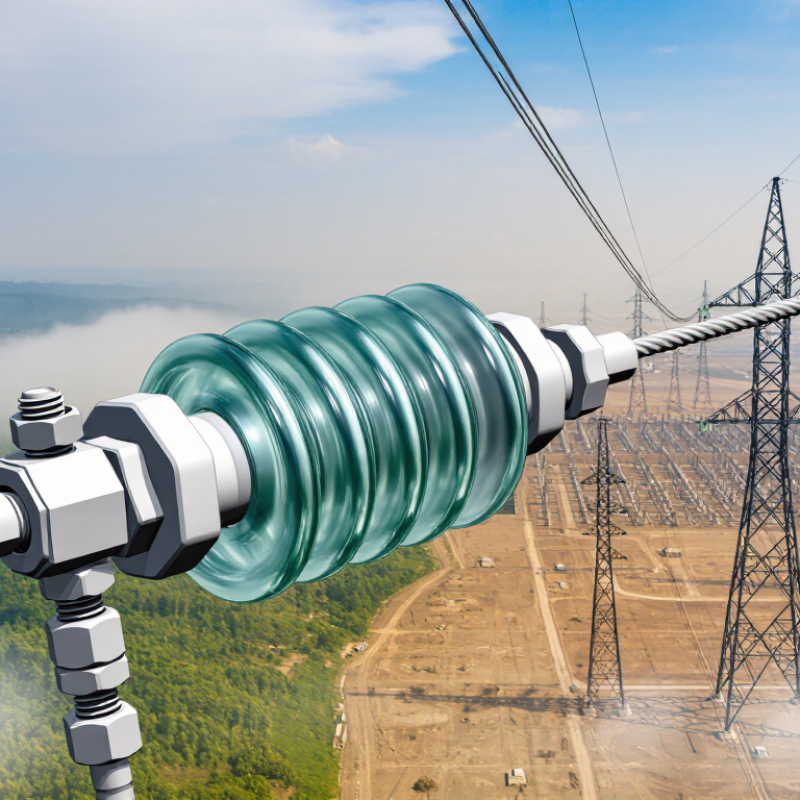
Choosing a disc glass insulator starts with matching its mechanical rating to the line’s actual loading, not simply its voltage.
IEC 60305 lists suspension-unit classes with specified mechanical failing loads, including 70, 120, and 160 kN. These figures help compare units, but they are not working-load targets. Allow for conductor weight, wind, ice, and string arrangement, then check the project’s design factors.
Details matter. A 120 kN unit may suit one span and be inadequate for another.
Compare dimensions and interfaces as carefully as ratings. IEC 60120 covers ball-and-socket coupling dimensions; mismatched fittings can complicate string assembly or replacement. Check creepage distance and dry arcing distance against the pollution level, altitude, and system voltage.
Then review the applicable requirements, such as IEC 60305 or the relevant ANSI C29.2 specification, and request routine and type-test records for the exact unit. Test data should identify the tested design and rating, not just a similar product.
Not interchangeable.
Field inspection also matters: look for chipped glass, corrosion around metal fittings, and signs of uneven wear. I would still verify the assumptions with a line engineer; standards do not capture every site condition.