

Why Choose the Right Cement Mix for Your Construction Needs?

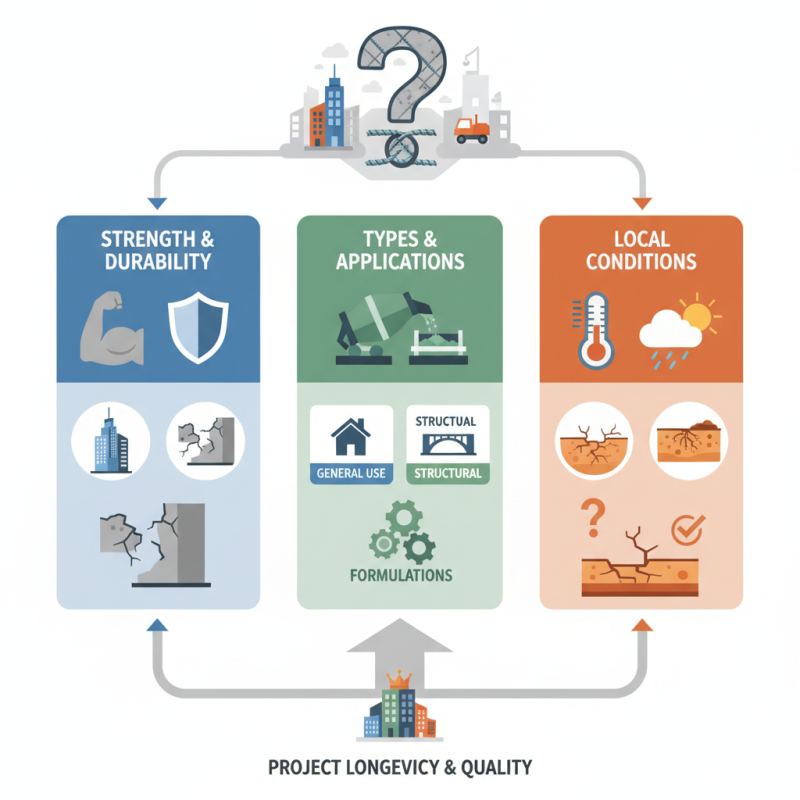
Choosing the right cement mix is crucial for any construction project. The type of cement mix affects strength, durability, and overall quality. With various options available, making an informed decision can be overwhelming.

Cement mix formulations vary significantly. Each type serves specific needs and applications. For instance, a standard concrete mix is excellent for general use. In contrast, a high-strength mix is suitable for structural applications. Understanding these differences can prevent costly mistakes.

It's essential to consider local conditions too. Factors like climate and soil type may influence your choice. Neglecting these details can lead to structural issues. A poor cement mix may not perform well over time, raising questions about reliability. Taking the time to select the appropriate mix will enhance the longevity of your project.

Why Choose the Right Cement Mix for Your Construction Needs?

Understanding Different Types of Cement Mixes Available for Construction

Why Choose the Right Cement Mix for Your Construction Needs?

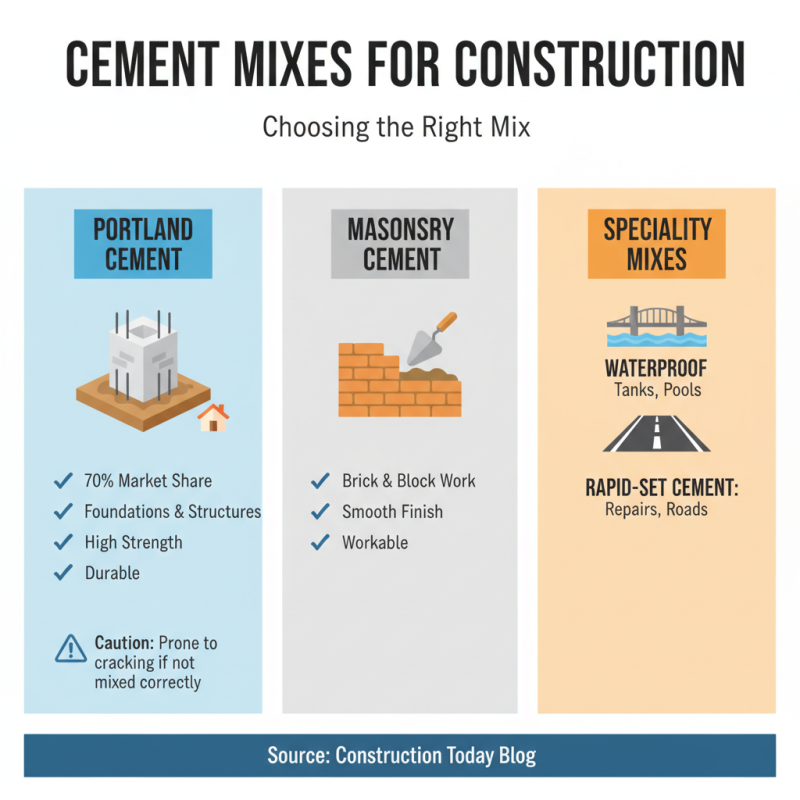
Choosing the right cement mix is crucial for any construction project. Several types of cement mixes are available, each suited for specific applications. Portland cement is the most common type used, making up about 70% of the market. It's ideal for foundations and structural elements due to its high strength and durability. However, it can be prone to cracking if not mixed correctly.

Another popular option is high-alumina cement. This type offers quick setting and heat resistance, making it suitable for areas with high temperatures. However, it's worth noting that this rapid set can create challenges for contractors unaccustomed to its properties. Reports indicate that improper use can lead to structural issues, emphasizing the need for professional knowledge and experience when selecting a mix.

Lastly, there's the eco-friendly alternative of recycled cement. While it reduces environmental impact, its variability can be a concern. Research shows that recycled mixes can result in lower compressive strength compared to traditional mixes. Understanding these differences can help ensure that the chosen cement mix aligns with construction goals and structural requirements.

Factors Influencing the Choice of Cement Mix for Specific Projects

Choosing the right cement mix is essential for any construction project. Several factors influence this choice. First, the environmental conditions play a crucial role. For instance, a colder climate may require a mix that sets faster. Conversely, hot and dry conditions might demand more water retention.

The type of project also matters. Residential buildings typically need different mixes than commercial structures. High-traffic areas, like roads or bridges, require stronger formulas to withstand constant pressure. On the other hand, decorative elements might prioritize aesthetics. In those cases, color and texture become significant.

It’s also vital to consider the long-term performance and sustainability. Will the structure face heavy loads? Or will it be exposed to moisture? These questions might seem straightforward, yet they often lead to overlooked details. Testing and adjusting mixes for specific applications can prevent future structural failures. Relying solely on generic solutions can result in costly mistakes.

Analyzing Performance Characteristics of Various Cement Mixes

Why Choose the Right Cement Mix for Your Construction Needs?

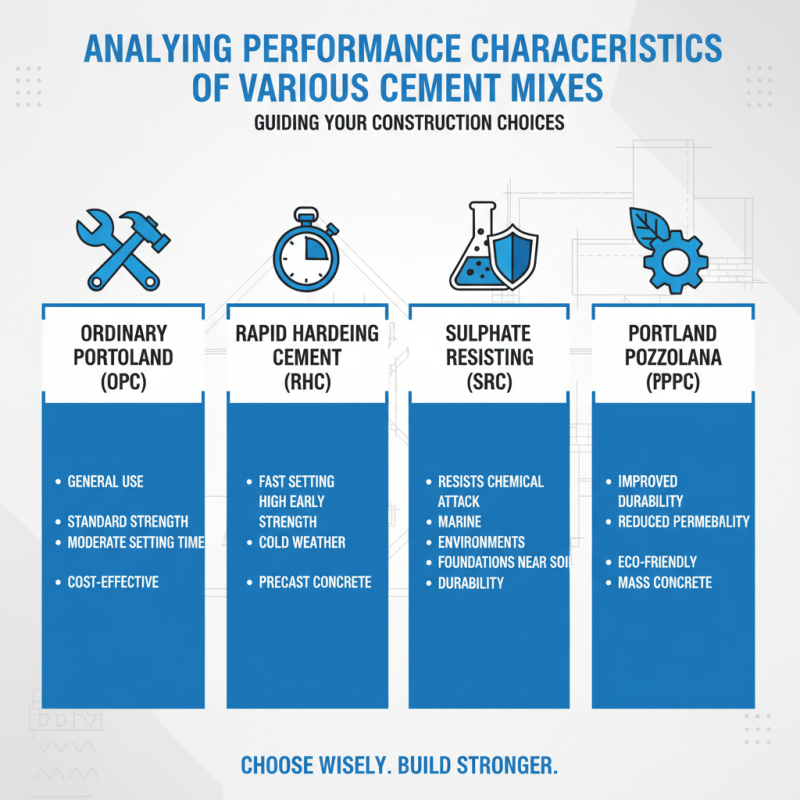
Choosing the right cement mix is crucial for any construction project. Performance characteristics vary significantly among different mixes. Understanding these can guide your decision-making process.

Strength is a primary factor. High-strength mixes are essential for heavy loads. However, if you overlook the curing time or water-to-cement ratio, cracks may develop. This can lead to structural failures that are costly to repair.

Workability also matters. Some mixes are easier to pour and shape. But, a mix that is too fluid might not hold its form. Balancing consistency with stability can be challenging. Pay attention to local climate conditions as they impact drying times. A mix suitable for a dry area may fail in humid conditions.

Common Mistakes to Avoid When Selecting Cement Mix for Construction

When selecting a cement mix for construction, many overlook critical aspects. One common mistake is not considering the specific requirements of the project. Each construction type demands a different mix design, which affects durability and strength. For instance, structures exposed to water must use waterproof cement. Ignoring this can lead to costly repairs later.

Another error revolves around the misconception that all cement mixes are the same. Variations in materials can drastically affect performance. It’s also essential to assess the environmental conditions. Hot or cold climates impact the curing process. Using inappropriate mixes may result in cracks or structural failure.

Lastly, many choose cement based on price alone. This can be misleading. Cheaper options may not offer the necessary strength or longevity. Investing in a suitable mix ensures project safety and sustainability. Understanding these pitfalls is crucial for successful construction.

Why Choose the Right Cement Mix for Your Construction Needs? - Common Mistakes to Avoid When Selecting Cement Mix for Construction

Cement Mix Type Common Uses Strength (MPa) Setting Time (Hours) Common Mistakes
Standard Portland Cement Residential and Commercial Construction 30 MPa 2-4 hours Not checking local regulations
High-Strength Concrete Bridges and High-Rise Buildings 50 MPa 3-6 hours Underestimating load requirements
Quick-Setting Cement Rapid Repairs and Emergency Work 25 MPa 1-2 hours Using in unsuitable weather conditions
Sustainable Cement Eco-friendly Constructions 20 MPa 2-5 hours Not understanding material sources

Best Practices for Mixing and Applying Cement in Construction Projects

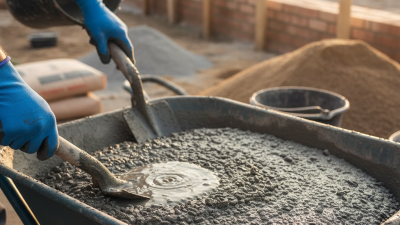
When it comes to mixing and applying cement, understanding the right practices can make a significant difference in the success of your construction projects. Proper mixing is essential for achieving the desired strength and durability of any cement structure. Each project has its own unique requirements, so it's vital to select the right mix.

One of the best practices is to measure components accurately. A common mistake is to assume that a 'good eye' is enough. Using a scale can ensure the right proportions, especially when mixing concrete. Think about the water-to-cement ratio. This often impacts workability and strength. Too much water can weaken the mix, while too little makes it unmanageable.

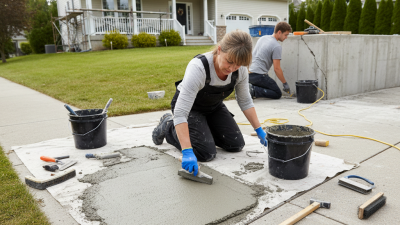
Consistency in application is critical. It’s easy to overlook surface preparation. Clean surfaces promote better adhesion. Once the mix is prepared, apply it promptly. Delays can result in uneven curing and reduced strength. Make sure to use adequate tools like trowels and mixers for uniformity.

Tips: Always check the weather before pouring. Rain and extreme temperatures can affect the curing process. Consider creating test samples before major applications to evaluate performance. Reflecting on past projects can provide insights into where improvements can be made for future endeavors.

Find the Right Repair Product for Your Project

Need to find the most appropriate product for the needs of your project? We can help because we have over 70 years of experience servicing the industry with every kind of project, from Do-it-yourself projects to large skyscrapers. Package Pavement has the experience, the knowledge and the products to help every project succeed.

Quikrete Repair Products
Legend
Package Pavement has two convenient locations in Stormville, NY (Dutchess County) and Ravena, NY (Greene County) to serve the Northeastern Region with bagged concrete, blacktop, mortar, and repair products. This map gives a general idea of where we service and the product lines we offer.
Package Pavement Products
Quikrete Products
Spec Mix Products
map

Our Brands Websites