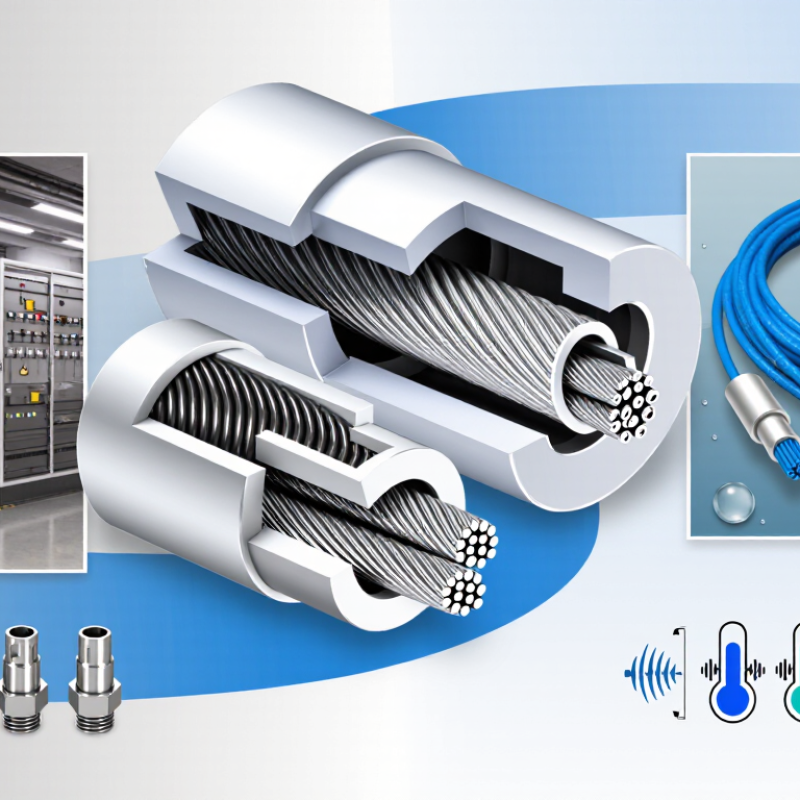
| What an Aluminum Ferrule Is | An aluminum ferrule is a metal sleeve or end fitting used to terminate, join, reinforce, or secure a cable, wire rope, tube, or flexible assembly. It is commonly installed by crimping, swaging, or compression. | Wire-rope terminations, cable assemblies, electrical conductor ends, tubing supports, and lightweight mechanical connections. | Identify the ferrule function first: cable termination, wire-rope loop formation, conductor connection, or tube reinforcement. | “Ferrule” is a general term; different applications require different shapes, alloys, and installation methods. |
| Primary Material | Common aluminum ferrules are manufactured from commercially pure aluminum or aluminum alloys such as 1100, 5052, or 6061. Exact properties depend on temper and product design. | Applications requiring low mass, corrosion resistance, and good formability. | Choose a material grade that matches the required strength, ductility, corrosion exposure, and crimping behavior. | Do not select by alloy number alone; temper, wall thickness, hardness, and ferrule geometry also affect performance. |
| Weight Advantage | Aluminum has a density of approximately 2.70 g/cm³, compared with approximately 7.85 g/cm³ for carbon steel. An aluminum ferrule can therefore reduce component mass when equivalent geometry is suitable. | Portable equipment, overhead cable systems, marine accessories, outdoor structures, and weight-sensitive assemblies. | Use aluminum when weight reduction is important and the connection does not require the higher strength or wear resistance of steel. | Lower density does not automatically mean equal load capacity; compare tested working-load data. |
| Corrosion Resistance | Aluminum naturally forms a thin oxide layer that helps protect the surface. Performance varies with alloy, surface condition, salt exposure, chemicals, and contact with dissimilar metals. | Outdoor cable terminations, general marine environments, architectural assemblies, and light industrial equipment. | For saltwater or chemical exposure, select a corrosion-suitable alloy and consider sealing, coating, or an isolating washer. | Direct contact between aluminum and some dissimilar metals can cause galvanic corrosion in a wet environment. |
| Cable or Rope Diameter | Ferrule bore and length must be matched to the actual outside diameter and construction of the cable or rope. Nominal diameter alone may not define the finished fit. | Wire-rope eyes, loops, cable stops, and swaged terminations. | Measure the cable or rope, then use the ferrule manufacturer’s compatibility chart and required crimp dimensions. | A loose fit can slip; an undersized ferrule can damage strands or prevent complete insertion. |
| Ferrule Shape | Common forms include oval sleeves, stop sleeves, round sleeves, end caps, and tubular compression sleeves. Shape affects load distribution and tool compatibility. | Oval sleeve Loop and eye terminations
Stop sleeve Cable stops
Tubular sleeve Wire or tube reinforcement | Choose the shape that supports the intended termination and provides sufficient contact area after crimping. | Shape names are not interchangeable across applications or manufacturers. |
| Electrical Use | Aluminum sleeves may be used in conductor and cable assemblies, but electrical connectors must be rated for the conductor material, temperature, current, and connection method. | Aluminum conductors, cable lugs, wire-end connections, and selected compression connectors. | Use only a connector specifically rated for aluminum conductors and the applicable voltage and current conditions. | A mechanical ferrule intended for wire rope is not automatically suitable for electrical service. |
| Mechanical Strength | Connection strength depends on alloy, temper, sleeve dimensions, cable construction, crimp pattern, tool calibration, and installation quality. | Static cable supports, light-duty rigging, signage, barriers, and equipment controls. | Use published breaking-load, proof-load, or working-load data for the complete ferrule-and-cable assembly. | Never estimate safe working load from ferrule appearance or material density. |
| Crimping Method | Installation may require hand crimpers, compound-leverage tools, hydraulic presses, or dedicated swaging equipment. The correct die profile is application-specific. | Field cable assembly, production wire-rope termination, and controlled industrial installation. | Match the tool and die to the ferrule size, alloy, and approved crimp sequence. Inspect the finished compression visually and dimensionally. | Improper tooling can create cracks, insufficient compression, or hidden cable damage. |
| Temperature Range | Aluminum retains useful service performance over a broad temperature range, but strength, conductor resistance, seal materials, and cable coatings can change with temperature. | Indoor and outdoor equipment, vehicle accessories, control cables, and general industrial assemblies. | Check the complete assembly rating, including the cable jacket, coating, seal, insulation, and adjacent hardware. | Do not use a ferrule beyond the temperature rating of the weakest component. |
| Indoor or Outdoor Location | Indoor installations generally face lower moisture and contamination. Outdoor installations may experience rain, ultraviolet exposure, salt, dirt, and freeze-thaw cycling. | Indoor machinery, outdoor lighting supports, fencing, marine accessories, and architectural cable systems. | For outdoor service, select corrosion-compatible materials and protect the termination from water ingress where practical. | Outdoor exposure can reduce service life even when the aluminum itself remains intact. |
| Standards and Testing | Applicable requirements may include product-specific wire-rope termination guidance, electrical connector standards, lifting regulations, or project specifications. | Construction, lifting-related equipment, power distribution, transportation, and industrial installations. | Confirm the relevant local code, application standard, test method, and inspection requirement before installation. | Certification for one application does not transfer automatically to another application. |
| Inspection and Maintenance | Inspect for cracks, deformation, slippage, corrosion, strand damage, incomplete crimping, and movement at the termination. | Any assembly exposed to vibration, repeated loading, weather, or regular handling. | Set an inspection interval based on load, environment, usage frequency, and safety importance. | Replace a ferrule and review the installation if visible damage or cable slippage is found. |
| When Aluminum Is a Good Choice | Aluminum is typically suitable where low weight, formability, and moderate corrosion resistance are more important than maximum strength, abrasion resistance, or high-temperature performance. | Light-duty and medium-duty cable assemblies, general outdoor fittings, non-extreme environments, and weight-sensitive designs. | Choose aluminum after confirming load, environment, compatibility, and approved installation tooling. | For severe abrasion, high shock loads, very high temperatures, or demanding lifting duties, another material may be more appropriate. |