| Manual pasta roller and cutter | Small batches; output depends heavily on operator speed and dough preparation. | Good hands-on control over sheet thickness and noodle width. Results can vary between operators and batches. | About 0.2–0.5 m² for the machine; allow additional bench space for dough handling. | Stable workbench, room for manual feeding, cutting, and flouring. | Home kitchens, very small restaurants, or occasional fresh-noodle production. | Low space and equipment needs, but labor-intensive and difficult to scale. |
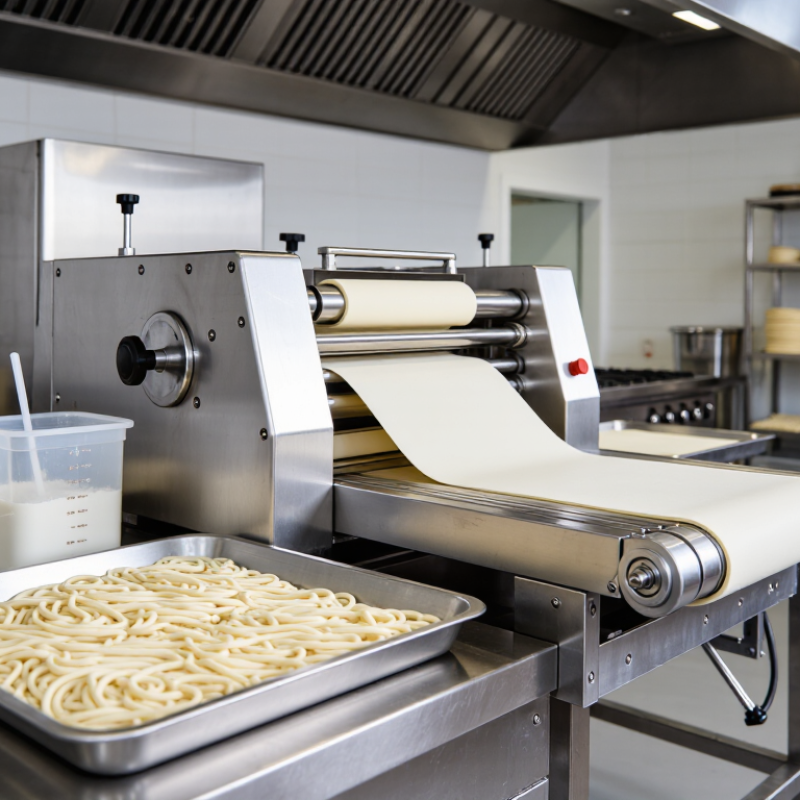
| Compact tabletop electric sheeter and cutter | Low to moderate volume; check the manufacturer’s rated dough throughput and recommended duty cycle. | More repeatable sheet thickness and cutting than manual equipment when dough hydration and feeding are consistent. | About 0.3–0.7 m², excluding clearance for loading dough and collecting noodles. | Strong, level counter; suitable electrical supply; space for mixing and resting dough nearby. | Cafés, small kitchens, and restaurants making fresh udon in limited batches. | Compact and relatively easy to place, but batch handling may limit service-volume output. |
| Floor-standing sheeter and cutter | Moderate to high volume; capacity depends on roller width, motor rating, feeding rate, and operating schedule. | Can produce more uniform sheets and cuts across larger batches; dough preparation remains essential to texture. | About 0.6–1.2 m² for the machine, plus access and product-handling space. | Dedicated floor area, safe operator access, appropriate power supply, and room for dough carts or trays. | Busy restaurants, commissary kitchens, and small-scale food production. | Higher throughput potential, but requires more floor space and a larger initial investment. |
| Integrated mixing, sheeting, and cutting line | High-volume production; use the line’s rated capacity for the specific dough recipe and product format. | Can improve repeatability across larger runs when mixing, resting, sheeting, and cutting are controlled as a process. | Typically several square metres; the full line may need substantially more room than the machines alone. | Planned workflow, ingredient storage, cleaning access, operator clearance, and suitable electrical and ventilation provisions. | Central kitchens and dedicated production facilities with regular, substantial demand. | High output potential, but greater space, installation, cleaning, and maintenance demands. |