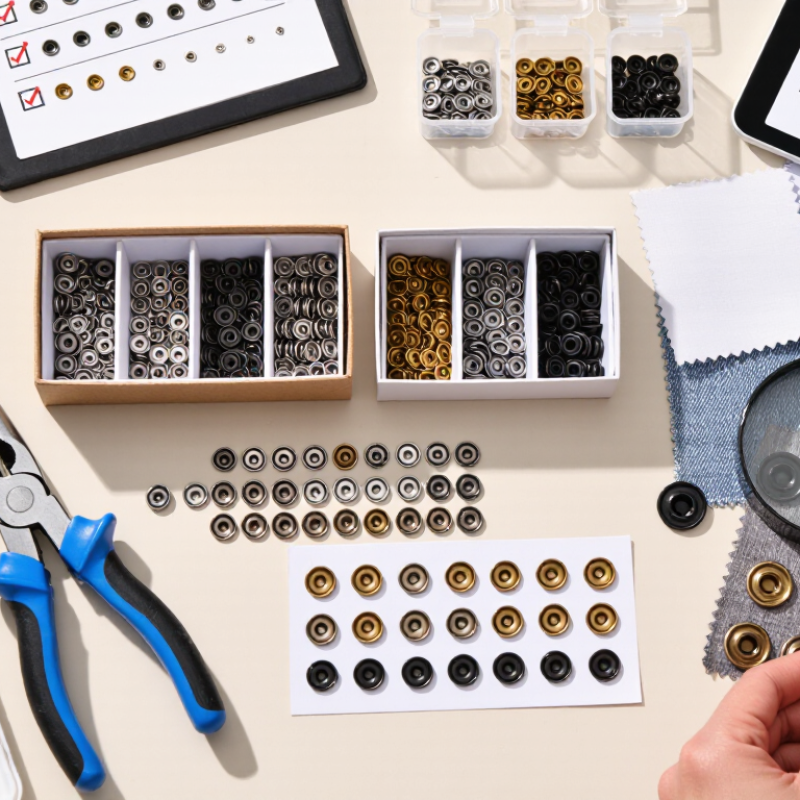
| Product and use | What items will use the snaps, and how often will they be opened and closed? | Lightweight craft accessories; occasional fastening | Use conditions help determine the required fastener style, material, and durability. |
| Fabric or material thickness | Measure the compressed material stack where each snap will be installed. | For example, a thin single-layer fabric or a thicker layered panel | Post length must suit the material thickness; an unsuitable length can cause a weak or poorly formed attachment. |
| Snap size | Choose the cap diameter and confirm the size system used by the kit. | Common cap diameters include approximately 9.5 mm, 12.5 mm, and 15 mm; availability varies by system. | The snap should fit the product’s scale and provide the desired appearance and holding feel. |
| Fastener material | Compare metal or plastic options against the product’s exposure and care requirements. | Brass or stainless steel for metal fasteners; plastic for applications where a non-metal option is preferred | Material affects corrosion resistance, appearance, weight, and suitability for the intended environment. |
| Finish and color | Specify the visible finish and whether it must match other garment hardware. | A consistent finish, such as a silver-tone or dark-tone finish, across the production run | A defined finish improves visual consistency and makes replenishment easier. |
| Installation method | Decide whether installation will be manual or performed with a press, and check the required dies. | Hand tool for small batches; compatible press and dies for repeated production | Tools and dies must match the snap components; not all kits are compatible with every press. |
| Production volume | Estimate snaps used per item, items produced, and the quantity needed for testing and rejects. | Monthly requirement = snaps per item × items per month, plus a planned reserve | A usage estimate helps select an appropriate kit quantity and plan restocking. |
| Kit contents | Confirm the number of complete snap sets, size range, tools, dies, and instructions included. | Components supplied as matching sets, with installation tools suitable for the selected size | A complete, clearly specified kit reduces mismatched parts and unplanned tool purchases. |
| Quality checks | Test samples on the actual material and inspect attachment, alignment, and opening and closing action. | Approve a sample installation before using the kit for a full production batch. | Testing helps identify size, post-length, tool, or material issues before they affect finished goods. |