| Flat-ground urban commuting | Single motor; prioritizes efficiency, manageable acceleration, and low maintenance | Often 36 V or 48 V, with roughly 250–500 W rated power | Hub motor; smaller wheels are compact, while larger wheels can roll over surface imperfections more smoothly | Confirm that the continuous power rating is suitable for the scooter’s total load and local regulations. Check whether the battery voltage matches the controller. |
| Regular hills or a heavier rider and cargo load | Higher-torque single hub motor or a dual-motor system | Commonly 48 V, with roughly 500–1,000 W rated power; higher-output systems may use higher-voltage batteries | Hub motors are common; dual motors can improve traction but increase energy use | Look for climbing performance and thermal limits, not peak watts alone. Verify the combined rider-and-cargo load against the scooter’s rated capacity. |
| Longer rides with fewer charging stops | Efficient single motor matched to a battery with adequate capacity | Often 36–48 V; choose rated power based on route, load, and desired speed rather than maximizing output | A hub motor with suitable gearing and wheel size can balance efficiency and everyday usability | Compare battery capacity in watt-hours (Wh), since voltage alone does not indicate range. Real-world range also depends on speed, hills, temperature, tires, and payload. |
| Fast acceleration or performance-focused riding | High-output single motor or dual motors, with a controller designed for the motor system | Often 48 V or higher, with rated and peak power varying widely by model | Dual hub motors are a common layout; larger tires may improve comfort and stability | Check that the battery, controller, wiring, and motor are rated as a compatible system. Confirm braking performance, tire suitability, and legal speed limits. |
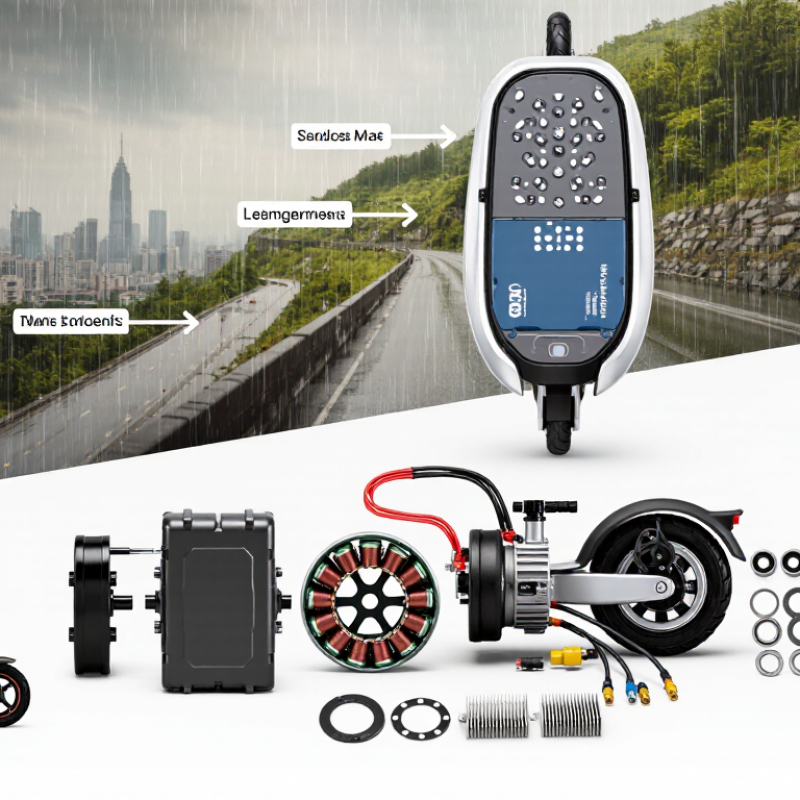
| Wet, loose, or uneven surfaces | Motor choice should be paired with predictable power delivery and adequate tire grip | Moderate power may be sufficient; controllable acceleration is often more useful than a high peak rating | Hub motors are common; tire tread, tire width, suspension, and ground clearance also affect control | Check the scooter’s water-resistance rating and operating guidance. Motor power does not replace appropriate tires or safe riding practices. |
| Compact, lightweight portability | Lower-output single motor to help limit weight and power consumption | Often 36 V, with roughly 250–350 W rated power for modest-speed use | Compact hub motor and smaller wheels can reduce overall size, though ride comfort may be lower on rough pavement | Compare total scooter weight, folded dimensions, and manufacturer load rating. Small motors may lose speed more noticeably on steep hills. |