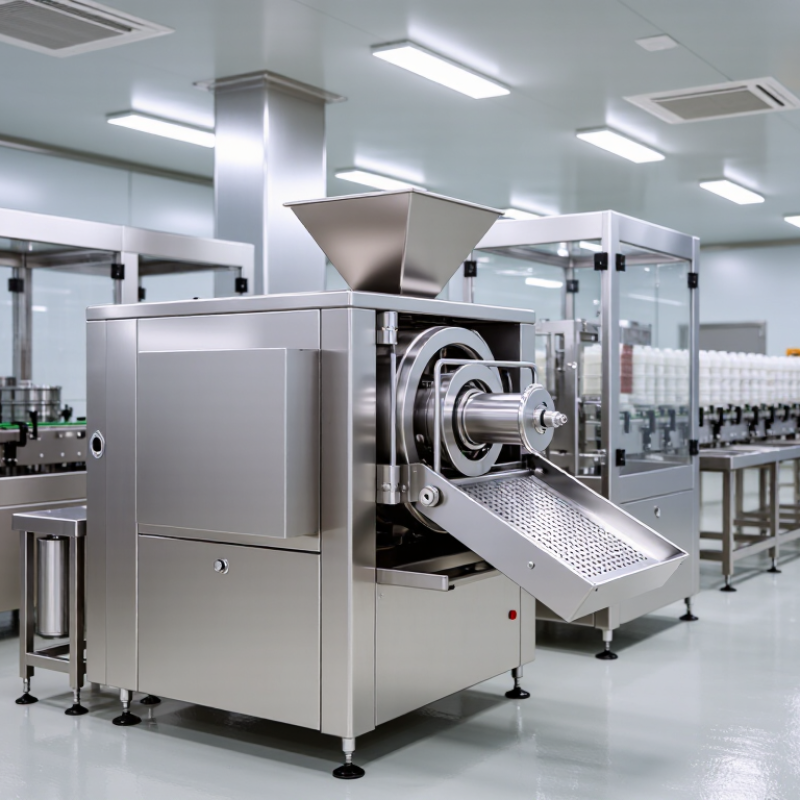
Selection should begin with the material, not the machine’s advertised capacity. Grand View Research’s 2024 pharmaceutical manufacturing equipment analysis projects more than 6% annual growth through 2030, increasing pressure for flexible, efficient systems. However, market growth does not prove process suitability. Record the target batch size, moisture level, granule distribution, and required hourly output. Then compare screen area, oscillation speed, torque, and feeding stability.
A small test run is essential. Powders can behave unexpectedly.
Inspect the granulator as an operator would. Can the screen be removed without awkward lifting? Are product-contact parts polished, accessible, and easy to inspect? FDA guidance on process validation emphasizes documented control of critical process parameters, so speed settings and cleaning procedures should be repeatable. ISPE’s Pharma 4.0 guidance also supports collecting useful production data, but sensors are not automatically valuable. Avoid paying for dashboards that cannot improve yield, downtime, or deviation review.
Ask for noise readings, cleaning time, spare-part lead times, and maintenance records. Check containment performance under realistic conditions. Test it.
I would also challenge the supplier’s best-case figures. A granulator producing 500 kilograms per hour with one powder may perform poorly with another. Select the model that remains stable during ordinary shifts, not only during demonstrations.
This is less exciting, but more reliable.