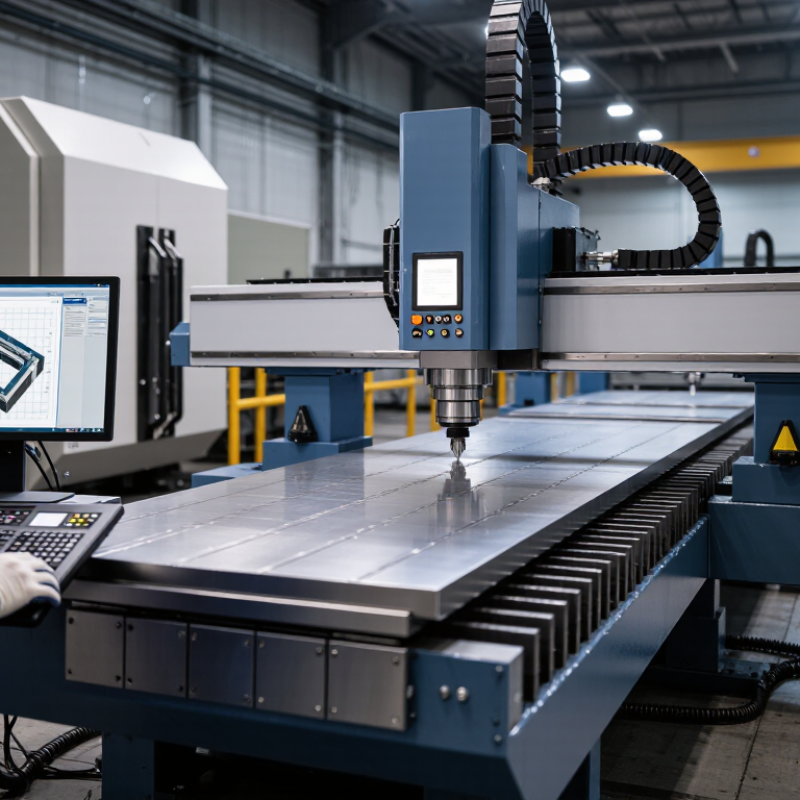
How to Choose the Best CNC Cutting Machine?

Choosing the right Cnc Cutting Machine begins with evidence, not attractive photographs or impressive speed claims. The market is expanding as manufacturers pursue tighter tolerances, shorter lead times, and reduced material waste. Grand View Research identifies automation and digitally connected production as major forces shaping the global CNC machine market. AMT’s U.S. Manufacturing Technology Orders reports also show continuing investment in advanced machine tools, despite yearly fluctuations.

These figures provide context, but they cannot choose a machine for your workshop. A fabricator cutting 6-millimeter steel needs different power, guarding, and extraction than an aerospace supplier cutting thin aluminum. Check the laser or spindle rating, working envelope, acceleration, repeatability, controller, consumable cost, and local service response. Ask for a sample cut using your actual material. Watch the edge: is it clean, vertical, and free from excessive heat marks?

John Saunders, founder of NYC CNC, has said, “The machine is only as good as the process around it.” That principle deserves attention. Software, fixturing, operator training, maintenance, and inspection often decide profitability more than headline power. A cheaper Cnc Cutting Machine may become expensive after downtime, rejected parts, and unavailable components.

No checklist is perfect. I would still question every supplier’s “maximum speed” claim. It may describe an empty table, not a production cut. The best choice balances verified performance, ownership cost, safety, and future workloads. Review supplier documentation, independent testing, and recognized industry reports before signing. Then compare the machine against a real job, not an ideal brochure example.

How to Choose the Best CNC Cutting Machine?

Define Your Cutting Requirements and Production Goals

Define the job before comparing machines. List the material, maximum thickness, sheet size, edge tolerance, and expected monthly volume. A 3-millimeter steel profile needs different power and tooling from a 25-millimeter aluminum plate. Record the required cut speed, piercing time, surface finish, and acceptable scrap rate. These details turn a vague purchase into measurable production goals.

Capacity alone is not enough. Check positioning accuracy under ISO 230-2 testing, then ask whether that accuracy remains stable after long operating cycles. Review the machine’s duty cycle, maintenance access, extraction system, software compatibility, and operator training needs. Deloitte’s 2023 Global Smart Manufacturing Survey found that 86% of manufacturing executives expect smart manufacturing to drive competitiveness within five years. This supports connected monitoring, but connectivity cannot repair poor process planning. Not even close.

Production targets should include labor, uptime, changeover time, and total operating cost. IFR’s World Robotics 2024 report recorded 541,302 industrial robot installations worldwide in 2023, showing the wider move toward automated production. A CNC cutting machine should therefore fit your future workflow, not only today’s order list. Consider barcode tracking, automatic nesting, remote diagnostics, and integration with material handling. Yet forecasts are not guarantees. Your own material mix may change. The checklist may be imperfect. Test real samples, measure cycle times, and compare edge quality before approving the purchase.

How to Choose the Best CNC Cutting Machine? - Define Your Cutting Requirements and Production Goals

Selection Dimension Typical Requirement or Data Range Recommended Machine Direction Production Goal
Primary Material Mild steel, stainless steel, aluminum, copper, brass, wood, plastics, or composites Select a cutting process compatible with the material’s thermal conductivity, reflectivity, hardness, and thickness. Reliable cutting quality with minimal heat distortion, burrs, or secondary finishing.
Material Thickness Thin sheet: below 3 mm; medium plate: 3–12 mm; heavy plate: above 12 mm Choose rated capacity above the maximum planned thickness, not just the current average thickness. Maintain cut quality and reduce downtime when material specifications change.
Worktable Size Common sheet formats include approximately 1,220 × 2,440 mm and 1,500 × 3,000 mm. Match the usable cutting area to standard incoming sheet sizes and the largest finished part. Reduce repositioning, scrap, loading time, and operator handling.
Cutting Technology Laser, plasma, oxy-fuel, waterjet, router, or knife cutting Use laser for precise thin-to-medium metal work, plasma or oxy-fuel for thicker steel, waterjet for heat-sensitive materials, and routers or knives for non-metal sheets. Balance edge quality, operating cost, material compatibility, and required flexibility.
Required Accuracy General fabrication: approximately ±0.10–0.30 mm; precision work may require approximately ±0.05–0.10 mm. Specify machine positioning accuracy, repeatability, calibration method, and environmental conditions. Meet drawing tolerances without excessive inspection or rework.
Cutting Speed Actual speed depends on material, thickness, power, nozzle or tool condition, and part geometry; thin-sheet systems can operate at several metres per minute. Compare validated speed data for the exact material and thickness instead of relying only on maximum idle speed. Increase throughput while preserving edge quality and dimensional accuracy.
Production Volume Prototype and low volume; approximately 10–100 parts per order; repeat production above 100 parts per order Low volume may prioritize flexibility; repetitive production benefits from automation, nesting, and automatic loading or unloading. Choose capacity based on realistic monthly demand and peak workload.
Operating Hours Occasional use; 1 shift; 2 shifts; or continuous multi-shift operation For extended operation, prioritize rigid construction, thermal stability, automatic lubrication, guarding, and service accessibility. Improve uptime and reduce unplanned maintenance.
Automation Level Manual loading; assisted loading; automatic sheet handling; robotic part sorting Select automation when material handling consumes a significant share of cycle time or labor cost. Lower labor intensity, improve consistency, and support unattended production.
Software and File Compatibility Common workflows use CAD/CAM files such as DXF, DWG, or SVG, depending on the controller and application. Verify nesting, toolpath editing, lead-in and lead-out control, simulation, and post-processor compatibility. Shorten programming time and reduce cutting errors.
Utilities and Installation Electrical supply, compressed air or process gas, ventilation, extraction, cooling, drainage, and floor space Confirm voltage, connected load, gas pressure, extraction capacity, access clearance, and foundation requirements before purchase. Avoid installation delays, safety issues, and unexpected infrastructure costs.
Consumables and Maintenance Nozzles, electrodes, lenses, cutting tools, filters, lubricants, and wear components vary by process. Compare replacement intervals, local availability, cleaning requirements, and preventive maintenance procedures. Control total operating cost and keep machine availability high.
Evaluation Method Run sample tests using the actual material, thickness, part geometry, tolerance, and production schedule. Measure cut time, edge quality, dimensional results, scrap rate, operator input, and energy or consumable use. Select the machine with the lowest total cost per acceptable finished part, rather than the lowest purchase price.

Note: The ranges shown are general industry planning references. Confirm final specifications through application testing and the machine’s technical documentation.

Compare CNC Cutting Technologies and Machine Configurations

Choosing the best CNC cutting machine starts with the material, not the machine name. Laser cutting suits thin to medium metal, with clean edges and narrow kerfs. Plasma usually offers higher cutting speed on thicker steel, but it can leave a wider heat-affected zone. Waterjet cutting handles stone, glass, composites, and heat-sensitive materials without thermal distortion. CNC routers remain practical for wood, plastics, and softer nonferrous sheets.

Market data shows why this comparison matters. Grand View Research estimated the global CNC machine market at about USD 86.8 billion in 2022, with continued growth through 2030. MarketsandMarkets also projects strong expansion in laser cutting equipment, driven by automation and tighter production tolerances. These figures describe market direction, not guaranteed payback. The easy choice can be wrong.

Machine configuration changes daily output. A flatbed system may fit sheet production, while a tube-capable gantry reduces secondary setups. Three-axis movement is economical for flat profiles. Five-axis movement is better for angled parts and complex contours. Check table size, spindle or cutting-head power, acceleration, nesting software, dust extraction, and operator access. The International Federation of Robotics recorded 541,302 industrial robot installations in 2023, highlighting the value of automated loading and material handling. Still, automation adds maintenance and integration demands. A short sample test can reveal more than a specification sheet. Measure edge quality, cycle time, scrap, noise, and actual power use. Not always. Allow room for imperfect data.

Evaluate Key Specifications, Materials, and Cutting Performance

Choosing the best CNC cutting machine starts with measurable specifications, not impressive brochures. Grand View Research valued the global CNC machine market at about US$83.4 billion in 2023. Its report forecasts an 8.5% compound annual growth rate through 2030. This growth increases machine choices, but it also makes comparison harder. Check working area, spindle power, maximum feed rate, repeatability, and control-system compatibility. A large cutting bed is useful only when its frame stays rigid under load. ISO 230-2 testing methods can help verify positioning accuracy instead of relying on marketing claims.

Material determines cutting performance. Aluminum needs sharp tooling and efficient chip removal. Stainless steel demands stable torque, cooling, and lower cutting speeds. Wood and plastic may require dust extraction and reduced heat buildup. Compare spindle power with the thickness and hardness of your normal materials. A higher feed rate is not always better. It can create rough edges, vibration, or premature tool wear. Industry research from MarketsandMarkets identifies automation and precision manufacturing as major CNC growth drivers, yet shop-floor results still depend on setup quality. That is the imperfect part: identical machines can produce different finishes in different workshops.

Tips: Request sample cuts using your actual material. Measure edge quality, cycle time, noise, and tool wear. Check service access and spare-part availability. Leave a performance margin of at least 20%; cutting at the limit feels efficient, but it reduces flexibility. Recheck supplier accuracy claims against ISO test documentation.

Assess Software, Automation, Safety, and Maintenance Features

How to Choose the Best CNC Cutting Machine?

The control software often matters more than the machine’s advertised speed. I test whether it imports common design files without hidden errors. A clear toolpath preview should show lead-ins, cut order, and material waste. Nesting tools can save sheet metal, but only when settings are checked carefully. I prefer interfaces that let operators adjust feeds without digging through menus. Good software also records alarms and maintenance history. That record supports reliable decisions months later.

Automation should reduce repetitive handling, not remove human judgment. Automatic probing can measure material height before cutting. Loaders, unloading tables, and material sensors may shorten idle time. However, I watch the machine during its first production runs. A sensor can misread a warped sheet. Small failures become expensive delays. The best systems allow manual control when automation behaves unexpectedly.

Safety features deserve a practical inspection. Look for guarded cutting areas, door interlocks, emergency stops, and effective fume extraction. The operator should see warning lights from normal working positions. Training should include restart procedures after an alarm. Maintenance access also affects safety. Easy-to-reach filters, lubrication points, and consumable parts encourage regular service. I once ignored a dusty extraction filter, and cutting quality declined before the warning became obvious. A machine with diagnostic messages and simple service logs is easier to maintain. Still, no software replaces a daily inspection.

Calculate Total Ownership Costs and Select the Right Machine

How to Choose the Best CNC Cutting Machine?

Calculate Total Ownership Costs and Select the Right Machine

A CNC cutting machine costs more than its purchase price. Include tooling, software, installation, training, energy, maintenance, and waste. A machine priced $10,000 lower may consume more power and require frequent repairs. That difference can disappear within a year. Ask for realistic service intervals, not optimistic sales estimates. Check the cost of replacement blades, filters, motors, and control components.

Measure your daily production carefully. Record material thickness, cutting speed, setup time, and average downtime. A faster machine may not improve profit if operators spend hours adjusting programs. A smaller machine may also increase waste when panels do not fit efficiently. Calculate cost per finished part, not cost per hour. Include labor and rejected pieces. Small losses become expensive.

I once underestimated training time. My calculation looked accurate, but production slowed during the first month. That mistake changed how I compare machines. Request a live demonstration using your own material and typical designs. Review cut quality, noise, dust control, and software usability. Speak with technicians who maintain similar equipment. Their comments may reveal weaknesses that brochures hide. Leave room for uncertainty. Electricity prices, repair delays, and material changes can alter the final cost. A practical choice balances capacity, reliability, operator skill, and five-year ownership expenses.

How to Choose the Best CNC Cutting Machine?

Estimated five-year total ownership cost by machine configuration. Costs include acquisition, installation, energy, maintenance, and tooling in USD thousands. These illustrative values reflect common cost categories and should be replaced with supplier quotations and site-specific operating data.

Selection insight: A lower purchase price does not always mean a lower total cost. Compare installation requirements, expected utilization, energy consumption, maintenance intervals, and tooling expenses over the complete ownership period before selecting a CNC cutting machine.

Find the Right Repair Product for Your Project

Need to find the most appropriate product for the needs of your project? We can help because we have over 70 years of experience servicing the industry with every kind of project, from Do-it-yourself projects to large skyscrapers. Package Pavement has the experience, the knowledge and the products to help every project succeed.

Quikrete Repair Products
Legend
Package Pavement has two convenient locations in Stormville, NY (Dutchess County) and Ravena, NY (Greene County) to serve the Northeastern Region with bagged concrete, blacktop, mortar, and repair products. This map gives a general idea of where we service and the product lines we offer.
Package Pavement Products
Quikrete Products
Spec Mix Products
map

Our Brands Websites