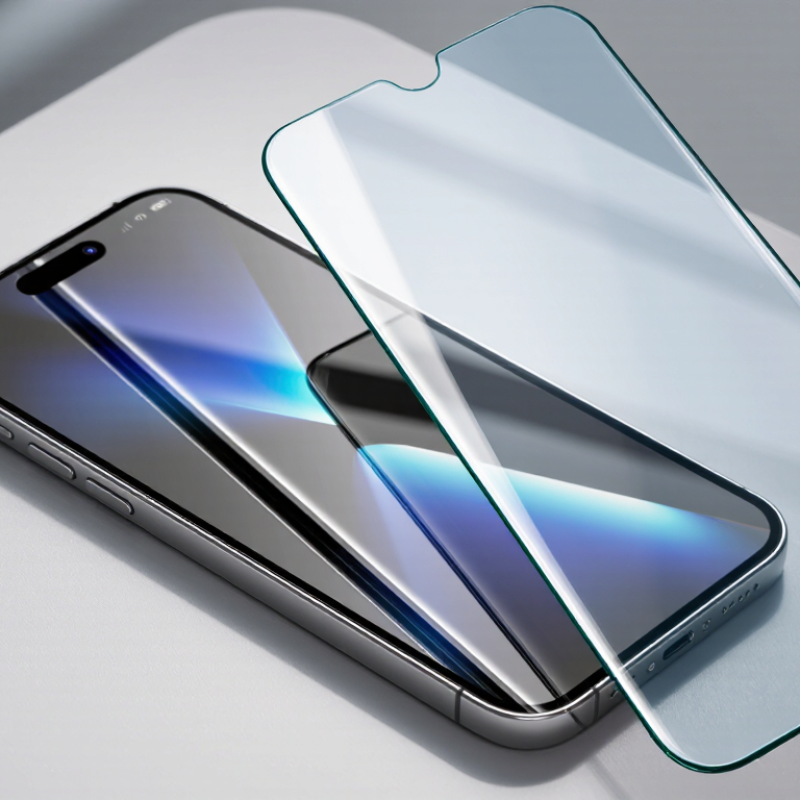
| Material identity | “Ceramic tempered glass” is not a single standardized material name. It may refer to chemically strengthened glass, glass-ceramic, or a layered product. | These materials have different compositions and performance. The product name alone does not establish that the sheet is a glass-ceramic. | Request the material type and a technical data sheet. Check whether “ceramic” describes the glass itself or a coating or marketing category. |
| Scratch resistance | Hardness varies with composition, surface treatment, and test method. Mohs hardness is a qualitative scratch scale and does not predict resistance to every real-world scratch. | Fine particles such as quartz can scratch many glass surfaces; hardness claims should be interpreted in context. | Compare products using the same stated test method. Treat a hardness number without a method or test standard as incomplete information. |
| Bending strength | Strength depends on composition, thickness, edge quality, surface flaws, and strengthening process. There is no single universal strength value for all ceramic glass products. | Strength affects resistance to bending and crack initiation, but does not by itself predict impact or drop performance. | Compare values measured using the same test method and specimen dimensions. Look for test results rather than an unqualified “stronger” claim. |
| Strengthening process | Some cover glasses are chemically strengthened by ion exchange; some glass-ceramics may also be strengthened if their composition and process allow it. Not every ceramic glass product is tempered. | Strengthening can create surface compression, which helps resist crack initiation. The effect depends on the material and processing conditions. | Confirm whether the product is thermally tempered, chemically strengthened, or neither. Ask for process and performance details. |
| Thermal expansion | Some lithium-aluminosilicate glass-ceramics are designed for very low thermal expansion; values vary substantially by composition and can be near zero. Other formulations have higher expansion. | Thermal expansion affects dimensional stability and compatibility with frames, adhesives, and temperature changes. | Check the coefficient of thermal expansion and its temperature range in the technical data sheet when thermal cycling matters. |
| Optical clarity and color | Transparency, haze, and color depend on composition, thickness, surface finish, coatings, and any layers in the product. | Optical quality is important for screens, display windows, and viewing panels. A material label alone does not guarantee clarity. | Look for measured transmittance and haze at the intended thickness, plus a sample viewed under realistic lighting. |
| Impact and fracture behavior | Impact performance depends on thickness, support, edge design, flaw population, and test conditions. Glass-based materials can still crack or chip. | A high hardness or bending-strength value does not guarantee resistance to drops or edge impacts. | Use impact or drop-test results that match the intended product geometry and mounting conditions. |
| Thickness and fit | Available thicknesses depend on the product and manufacturing process. Small changes in thickness can affect stiffness, weight, fit, and optical behavior. | A material with suitable properties may still fail to fit or perform properly if dimensions and edges are unsuitable. | Verify thickness tolerance, flatness, edge finish, and compatibility with the frame or device before purchase. |
| Coatings and surface treatment | Anti-reflective, anti-fingerprint, or other coatings may be applied. Coating durability and performance vary by product and test method. | Surface treatments can improve usability but may wear or affect reflectance and cleaning behavior. | Check which coatings are present and request abrasion or durability test information if long-term performance is important. |
| Best choice by application | For display covers, optical performance and fit may be priorities. For cookware or thermal components, thermal expansion and heat resistance may matter more. | The “best” material depends on its intended use, operating conditions, and failure risks. | Rank requirements first, then compare verified data for the same application and test conditions. |