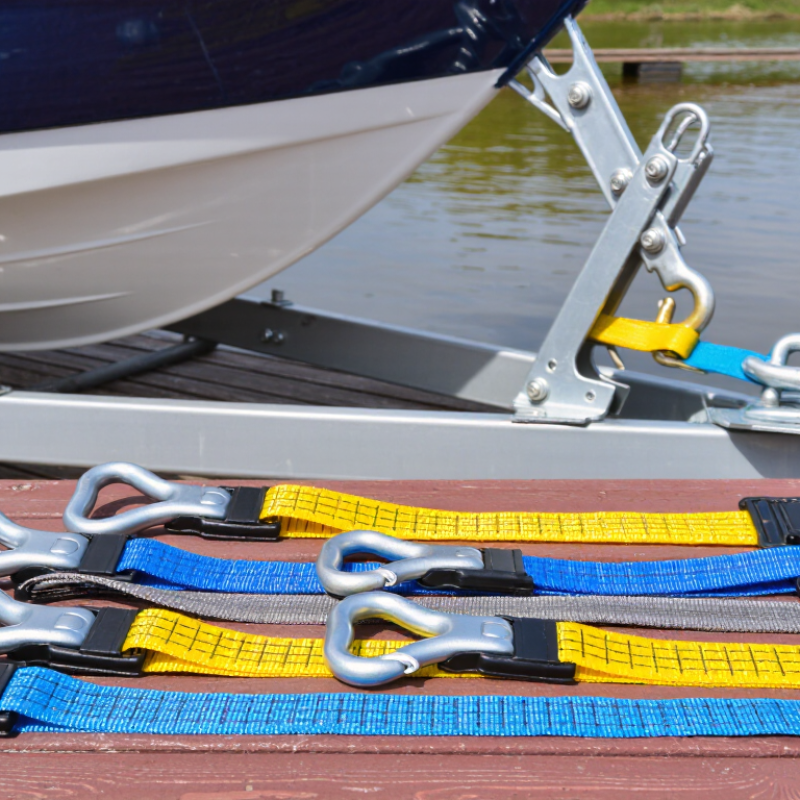
| Transom tie-downs on a boat trailer | About 2–4 ft per strap; measure the actual distance between the boat’s tie-down point and the trailer anchor. | Choose a strap width and ratchet with a working load limit appropriate for the boat and tie-down setup. | Use hooks that fit the trailer’s designated anchor points securely. A coated S-hook or compatible snap hook can help reduce scratching. | Use a pair where the setup calls for two tie-downs. Keep straps clear of sharp edges, and avoid excessive tension on the hull or fittings. |
| Bow tie-down to a trailer winch stand or bow stop | Often about 4–6 ft, but select the length from the measured routing path. | A short ratchet strap can help limit upward or rearward movement when used with the boat’s proper bow connection. | Choose a hook that fully engages the trailer anchor without twisting or loading it from the side. | A tie-down strap is not a substitute for the winch line or other required bow-retention equipment. |
| General securing of removable equipment or cargo aboard a boat | About 6–12 ft is a useful starting range; allow enough length for the load and anchor locations. | A 1-in strap may suit lighter loads; wider straps are commonly used for heavier-duty applications. Always compare the marked working load limits. | Use hooks or end fittings compatible with the vessel’s tie-down points. Protect contact areas to prevent abrasion. | Secure the load against movement in multiple directions, and do not route straps over sharp or delicate surfaces without protection. |
| Long-span tie-down across a larger item or wider trailer arrangement | About 12–20 ft may be needed in some setups; measure the complete route before buying. | Select a ratchet with enough take-up range to tighten the strap while leaving a manageable amount of excess webbing. | Choose fittings that match the anchor type, such as flat hooks for suitable flat anchor edges or other compatible hooks for closed attachment points. | Keep the strap away from propellers, controls, wiring, and other vulnerable components. Do not use a strap for lifting. |
| Frequent use in a wet or saltwater environment | Choose length based on the application; avoid excess webbing that can flap or become tangled. | Polyester webbing is commonly used for tie-downs because it has low stretch. Select corrosion-resistant hardware suitable for the environment. | Check the hook’s finish and construction, and make sure its gate or latch, if present, closes and works correctly. | Rinse salt and debris off after use, dry straps before storage, and inspect webbing and hardware regularly for damage or corrosion. |