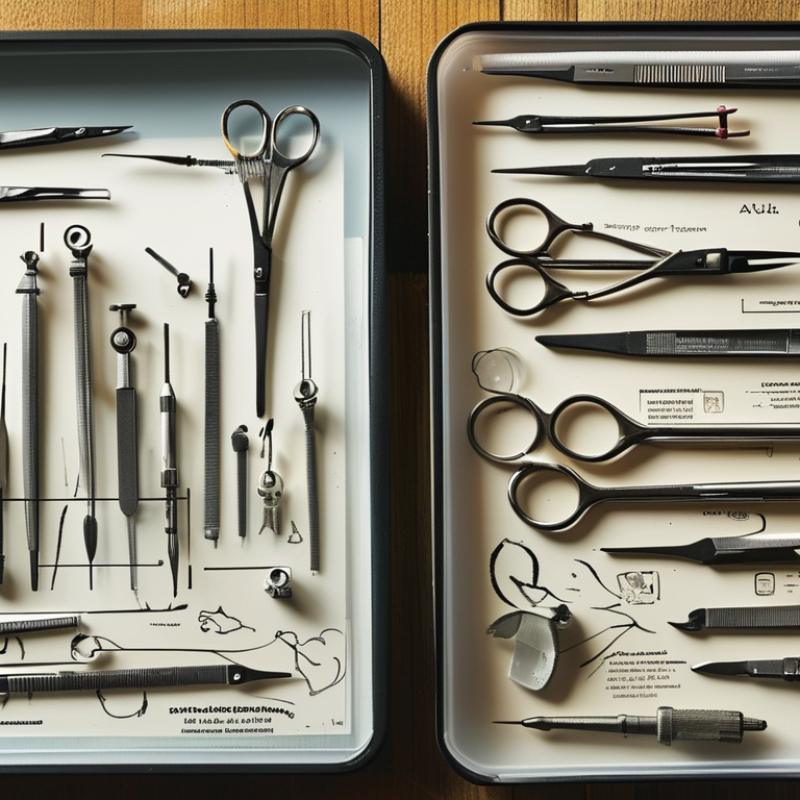
| Basic Student Kit Approx. 8–10 instruments | Scalpel, forceps, dissecting needle, probe, scissors, ruler, and dropper | Stainless-steel instruments with a plastic or coated case | Check that blades are securely fitted, forceps meet evenly at the tips, and scissors cut without excessive lateral movement | Good | Wipe instruments after use, wash with mild detergent when required, dry completely, and store in the case | Introductory secondary-school biology and occasional classroom work | 3.6 / 5 |
| Intermediate Laboratory Kit Approx. 12–16 instruments | Fine and blunt forceps, dissecting scissors, scalpel handle with replaceable blades, probes, teasing needles, and ruler | Corrosion-resistant stainless steel; textured or grooved handles for improved grip | Smooth joints, symmetrical forceps tips, secure handle connections, and consistent blade alignment | Very Good | Instruments can usually be cleaned individually; removable blades simplify replacement and inspection | Repeated school laboratory sessions and undergraduate practical classes | 4.3 / 5 |
| Precision Dissection Kit Approx. 15–20 instruments | Fine-point forceps, micro-spatula, delicate probes, iris scissors, scalpel handle, and multiple blade shapes | Fine-finish stainless steel with narrow tips and precision-ground cutting edges | Tips should close accurately, blades should be free from burrs, and hinged tools should move smoothly without looseness | Good | Requires careful rinsing, thorough drying, and protection of fine tips; avoid abrasive cleaners | Detailed work involving small specimens, organs, or delicate structures | 4.1 / 5 |
| Heavy-Duty Reusable Kit Approx. 10–14 instruments | Reinforced scissors, robust forceps, scalpel handle, probes, dissecting pins, and a metal or rigid polymer case | Thicker stainless-steel instruments with durable protective storage | Rigid construction, stable joints, corrosion resistance, and handles that remain secure during repeated use | Excellent | Easy to inspect and disinfect; heavier components take longer to dry and should not be stored while damp | Frequent laboratory use, teaching collections, and shared equipment areas | 4.4 / 5 |
| Portable Field Kit Approx. 6–10 instruments | Compact scissors, forceps, probe, scalpel handle, measuring scale, specimen tags, and a sealed storage pouch | Stainless steel with a compact, water-resistant case or pouch | Secure closures, protected sharp edges, corrosion-resistant surfaces, and low risk of loose instruments during transport | Good | Simple to wipe and organize; instruments should be cleaned and dried promptly after outdoor use | Field sampling, outdoor instruction, and travel between laboratory stations | 3.9 / 5 |
| Economy Disposable-Blade Kit Approx. 8–12 instruments | Scalpel handle with disposable blades, forceps, scissors, probe, and dissecting needle | Stainless-steel reusable tools combined with replaceable carbon-steel or stainless-steel blades | Blade compatibility, secure blade locking, straight tool edges, and individually protected replacement blades | Moderate | Replacement blades reduce sharpening needs, but used blades require approved sharps disposal | Occasional practical work where convenient cutting-edge replacement is important | 3.8 / 5 |