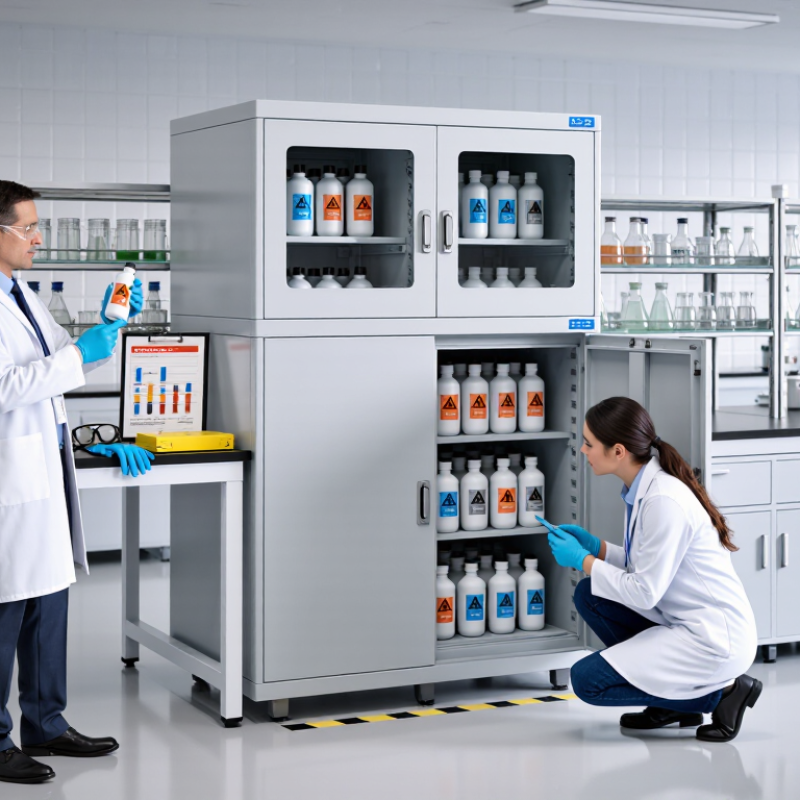
| Acid inventory | Record each acid’s name, concentration, container size, quantity, hazard information, and storage location. | Use the current inventory and Safety Data Sheets (SDSs) as the basis for cabinet selection. Recheck the list when chemicals or quantities change. | Example inventory: 4 containers × 2.5 L each = 10 L of product. |
| Cabinet capacity | Calculate the total volume and dimensions of the containers, including their secondary trays. Check shelf load limits and usable interior dimensions. | Choose a cabinet that fits the containers without crowding and leaves room for safe handling. Any extra capacity allowance is a planning choice, not a universal code requirement. | For the 10 L example, a 25% planning allowance gives 12.5 L of target usable space. Confirm that the actual container layout fits. |
| Chemical compatibility | Compare incompatibilities listed in SDSs and the site’s chemical segregation plan. | Do not store acids with incompatible substances such as bases. Keep oxidizing acids, such as nitric acid, segregated from organic materials and other incompatible chemicals as required by the SDS and site assessment. | Record the segregation decision for each acid; use separate cabinets or approved compartments when needed. |
| Cabinet construction | Identify the acids, concentrations, expected exposure, and cleaning practices. | Select materials and interior finishes documented as compatible with the specific chemicals. Corrosion-resistant metal and suitable polymer cabinets are both available; no single material is appropriate for every acid. | Verify compatibility against the cabinet documentation and chemical supplier guidance before purchase. |
| Spill containment | Check container sizes, shelf arrangement, and the facility’s spill-control requirements. | Use compatible trays or a cabinet sump to contain leaks. Keep containers closed and arrange them so they can be removed without lifting or disturbing other containers. | Document the containment method and confirm that trays are compatible with the stored acids. |
| Ventilation | Review each SDS, the chemical hygiene or safety plan, and applicable building, fire, environmental, and occupational requirements. | Do not assume every acid cabinet must be ducted. Ventilation needs depend on the chemicals, use, site assessment, and local requirements. Have qualified personnel assess ducting; modifications may affect cabinet performance or listing. | Decision: unvented or connected to an approved exhaust system. Record the basis for the decision and obtain required approvals. |
| Location and access | Check the cabinet location, nearby heat or ignition sources, egress routes, and access for trained users. | Follow local fire and building requirements and the facility’s risk assessment. Keep the cabinet stable, accessible, and away from conditions that could damage it or its contents. | Record the proposed room and location, then confirm suitability with the site safety officer or authority having jurisdiction. |
| Labels and operating controls | Review container labels, hazard communication requirements, and the site’s inspection procedures. | Keep original labels legible, identify cabinet contents as required, and establish routine checks for corrosion, leaks, damaged containers, and expired or unwanted chemicals. | Assign an inspection frequency under the facility’s chemical safety program and document corrective actions. |
| Code and standards review | Determine the jurisdiction, occupancy, stored chemicals, quantities, and any adopted fire, building, environmental, or workplace rules. | Requirements vary by location and application. Confirm current local rules with the authority having jurisdiction and the organization’s safety professional; do not rely on a generic cabinet capacity or ventilation rule. | Before purchase: document the applicable requirements, approvals, cabinet specifications, and ventilation decision. |