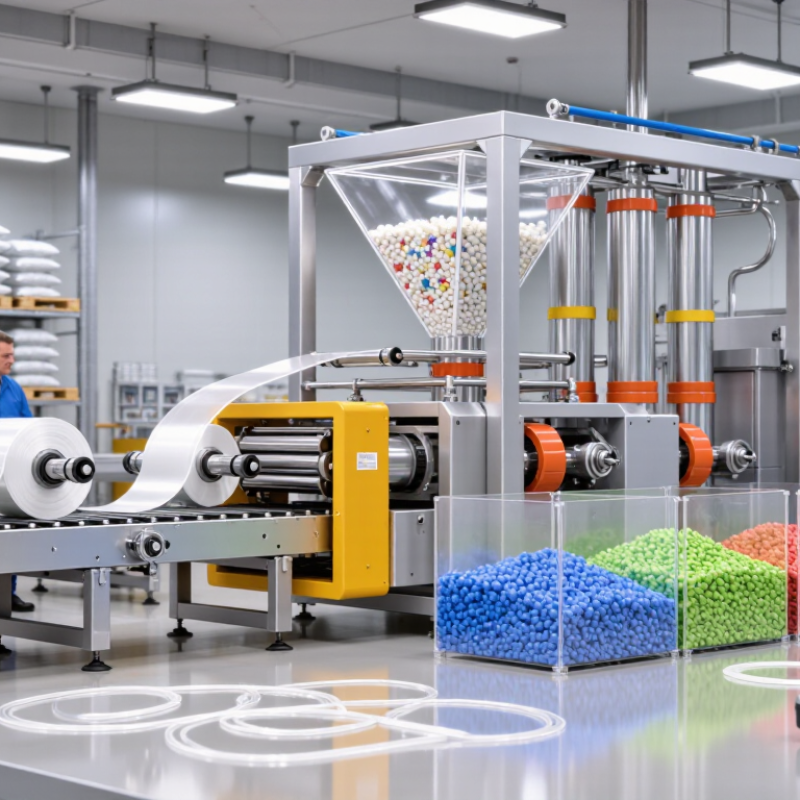
How to Choose Polymer PE Masterbatch in 2026?

Choosing Polymer Pe Masterbatch in 2026 means matching the material to your resin, equipment, and finished product—not simply comparing prices. A grade that performs well in one production line may disperse poorly or change the feel of another product. Start by confirming compatibility with your polyethylene type, such as LDPE, LLDPE, or HDPE. Then review the masterbatch’s carrier resin, pigment or additive concentration, and recommended dosage. Small details matter.

Processing conditions deserve equal attention. Check the recommended temperature range and test the material at your actual screw speed, output, and cooling conditions. Look for even color, smooth film or molding surfaces, and stable feeding. If the application needs food-contact suitability, outdoor durability, or another defined performance, request relevant technical documents and verify that they match your end use. Ask for a recent technical data sheet, safety information, and a representative sample. Run a controlled trial before placing a large order.

There is no universal “best” grade. That sounds obvious, yet selection can still lean too heavily on a low quoted cost or a polished sample. Consider batch consistency, technical support, lead times, and how clearly the supplier explains limitations. Record trial results, including dosage, defects, and processing changes, so comparisons stay useful. A dependable choice is one that performs consistently under your conditions. Even then, review it when your formulation or equipment changes.

How to Choose Polymer PE Masterbatch in 2026?

What Is PE Masterbatch and How Is It Used?

PE masterbatch is a concentrated blend of pigment, functional additives, and a polyethylene carrier. It is supplied as small pellets and mixed with natural polymer during processing. The carrier should suit the base resin, such as LDPE or HDPE, to help the concentrate disperse evenly. Manufacturers use PE masterbatch in film extrusion, injection molding, and blow molding. It can add color or support properties such as UV resistance and slip. The right choice depends on the finished product, processing temperature, and desired dosage. Small details matter.

Tips: Ask for the recommended let-down ratio and check how it is measured. A small trial batch can reveal streaks, weak color, or feeding problems before a full production run. Keep samples and record processing settings. Test before scaling.

When comparing options, consider the application’s needs rather than choosing by color alone. Film may need consistent shade across a wide, thin surface, while a molded part may need better heat stability. Confirm that the masterbatch disperses at your actual screw speed and temperature. A sample that looks uniform in a datasheet may behave differently on your line; that uncertainty deserves attention. Adjusting dosage can help, but excess concentrate may affect cost, appearance, or physical performance. Check the finished product under its intended lighting and use conditions.

How to Define Your Application and Performance Requirements

Define the part before choosing a PE masterbatch. A blown film, pipe, and injection-molded cap place different demands on the material. Record the base resin grade, processing temperature, screw speed, and intended dosage. Then rank the needed properties: color consistency, UV resistance, impact strength, stiffness, or melt flow. Be specific. “Outdoor use” alone is not a performance requirement; note expected exposure time, climate, and part thickness.

Plastics Europe’s Plastics—The Fast Facts 2024 reports global plastics production of 413.8 million tonnes in 2023. That scale reflects many resin types and uses, not one universal formulation. Ask suppliers for test results using your resin and process, and compare samples at the same dosage. Check dispersion, surface appearance, and whether the masterbatch shifts melt flow or mechanical properties. A common planning mistake is prioritizing color before confirming the finished part’s functional needs.

Tips: Write a one-page application brief and request a trial plan against measurable targets. For film, inspect a cut sample for specks and gauge variation. For molded parts, record color, impact, and cycle time. Keep a retained control sample. Small process changes can alter results, and one test may not represent a full production run.

How to Choose Polymer PE Masterbatch in 2026? — Define Your Application and Performance Requirements

Use this qualitative screening chart to compare which requirements to prioritize for common polyethylene applications. Scores are planning guidance on a 1–5 scale, not measured industry data or product specifications. Confirm targets with your material supplier and application-specific testing.

How to use it: Start with the end-use conditions—such as outdoor exposure, processing temperature, and required color or opacity—then verify PE carrier compatibility, dispersion, dosage, and finished-part performance in a production-representative trial.

Which Masterbatch Properties Should You Compare?

When comparing PE masterbatch, start with carrier compatibility and melt flow rate, not the color swatch alone. Ask for the MFR test temperature and load, then compare results with the base resin and processing conditions. PlasticsEurope reported 413.8 million tonnes of global plastics production in 2023 (Plastics—The Fast Facts 2024). At that scale, small formulation differences can affect consistency across large production runs. Check pigment dispersion, color strength, heat stability, moisture, and recommended let-down ratio. Request batch-specific test data, not only a typical value. Small details matter.

For recycled-content applications, ask whether the masterbatch remains compatible with the specific recycled PE stream. The OECD reported that 353 million tonnes of plastic waste were generated globally in 2019, with only 9% recycled (Global Plastics Outlook, 2022). That figure does not predict how a given blend will perform, so test it directly. Compare pellet size and feeding behavior, then measure color variation and output on your own line. A neat lab plaque can still mislead. I would also check whether the supplier’s color and flow data use conditions close to yours; otherwise, the comparison may look precise but miss the production reality.

How to Choose Polymer PE Masterbatch in 2026? - Which Masterbatch Properties Should You Compare?

Use this comparison as a selection checklist, not as a universal product specification. Typical concentrations and processing targets vary by formulation, application, equipment, and supplier; confirm values with the technical data sheet and a production-scale trial.

Property to Compare What to Check Practical Reference Why It Matters
Carrier Resin PE type, compatibility, and suitability for the end-use resin Choose a carrier compatible with the base polymer and process. LDPE or LLDPE carriers are common in film applications; HDPE carriers may suit some stiffer PE products. Confirm compatibility for blends and multilayer structures. A well-matched carrier can support consistent dispersion and reduce the risk of gels, weak spots, or processing issues.
Colorant or Additive Content Concentrate loading and the recommended let-down ratio Concentrations vary widely. White concentrates often use high titanium dioxide loading, while black concentrates use carbon black. Colored and additive concentrates depend on the pigment or active ingredient. Compare the finished-part result at the proposed dosage, not loading alone. Higher loading does not automatically mean better performance; dispersion, formulation, and dosage determine the result.
Recommended Dosage Let-down range by application and target performance Request a recommended dosage for the actual product thickness, color target, resin, and process. Establish dosage through trials and record it as a percentage of total feed. Dosage affects color strength, opacity, additive performance, cost, and sometimes mechanical properties.
Melt Flow Rate (MFR) Test result, test conditions, and relevance to the processing method Compare MFR values only when the test temperature and load are the same. Polyethylene MFR is commonly reported at 190°C; the load should also be stated. Match flow behavior to the base resin and equipment rather than selecting by number alone. Large flow differences can affect feeding, mixing, pressure, surface appearance, and uniformity. MFR may be reported using ISO 1133-1 or ASTM D1238.
Dispersion Pigment or additive distribution, agglomerates, specks, and gels Ask how dispersion is evaluated and request application-relevant samples or test results. Assess finished film, sheet, or molded parts at the intended dosage and screen pack or filtration conditions. Poor dispersion can cause visible defects, uneven color, inconsistent performance, and screen changes.
Color Consistency Color target, measurement method, and batch-to-batch tolerance Agree on a physical or digital color standard, sample preparation method, and acceptable color difference. For instrumental comparison, specify the color space and measurement conditions, such as CIELAB and illuminant. Color readings can vary with substrate, thickness, surface, and measurement setup, so matched test conditions are essential.
Opacity or Tint Strength Coverage, whiteness, blackness, or color strength at the target dosage Test at the intended part thickness and resin. For white concentrates, compare opacity and appearance; for black or colored concentrates, assess the required shade and strength in the actual product. A result in a laboratory plaque may not predict coverage or appearance in thin film or a different geometry.
Thermal Stability Processing-temperature range and resistance to discoloration or degradation Confirm suitability for the full melt-temperature profile and residence time, including expected process variation. Ask for guidance for the specific extrusion, molding, or film process. Insufficient stability can cause color shift, odor, deposits, or reduced additive effectiveness.
Moisture and Volatiles Moisture specification, packaging condition, and drying guidance Request the supplier’s stated moisture or volatile limits and test method. Keep bags sealed and follow the handling or drying instructions; do not assume that every PE concentrate requires drying. Excess moisture or volatiles can contribute to bubbles, surface defects, or processing instability, depending on the formulation and process.
Filterability and Screen-Pack Behavior Pressure build-up, screen life, and compatibility with the production filter Evaluate under representative throughput, screen mesh, temperature, and dosage. Ask for application-specific filtration data where screen changes are a critical cost or quality factor. Filterability can affect line uptime and is influenced by dispersion, contamination, and the concentrate formulation.
Mechanical-Property Impact Changes to tensile behavior, impact performance, elongation, or stiffness Test the finished formulation at the intended dosage against an uncolored or additive-free control. Include the properties that matter to the product specification. Pigments, additives, and carrier differences can affect finished-part properties, particularly at higher addition levels.
Weathering and UV Performance Outdoor exposure requirement, target service life, and test evidence For outdoor products, specify the exposure environment and required performance. Compare relevant weathering data and validate the complete formulation, including pigment, stabilizer, base resin, and part thickness. UV performance depends on the full formulation and use conditions; a general claim or additive loading alone does not establish service life.
Regulatory and Food-Contact Status Intended market, application, restricted substances, and supporting declarations Request current documentation for the exact grade and intended use. Requirements differ by jurisdiction and conditions of use; examples include applicable EU food-contact rules and relevant U.S. FDA regulations. Regulatory suitability is application- and market-specific and should be verified for the finished article, not inferred from a generic statement.
Odor and Migration Organoleptic requirements and potential migration restrictions For sensitive packaging or consumer applications, assess odor and migration using methods appropriate to the intended use and applicable regulations. These properties can affect consumer acceptance and compliance even when the product’s appearance and processing are satisfactory.
Process Compatibility Suitability for blown film, cast film, pipe, sheet, injection molding, or other processes Confirm performance on the intended line, including feeding, screw design, mixing, output, and part geometry. Avoid assuming that a grade proven in one process will perform identically in another. Shear, residence time, cooling, and product thickness differ by process and can change final appearance and performance.
Quality Control and Traceability Batch consistency, certificate of analysis, change control, and lot identification Agree on the critical-to-quality parameters, test methods, and documentation supplied with each lot. Confirm how formulation or raw-material changes are communicated. Documented controls make incoming inspection, troubleshooting, and long-term production consistency easier.
Total Cost in Use Dosage, yield, scrap, line efficiency, and delivered cost Compare cost per kilogram of finished product at the validated dosage. Include color or additive performance, production speed, screen changes, waste, and quality losses. The lowest price per kilogram of concentrate may not deliver the lowest overall production cost.

How to Check Compatibility, Processing, and Compliance

How to Choose Polymer PE Masterbatch in 2026? How to Check Compatibility, Processing, and Compliance

In 2026, start by matching the masterbatch carrier to the polyethylene grade and end-use process. A mismatch can cause poor dispersion, uneven color, or unstable output. Check melt flow rate, density, additive loading, and the supplier’s recommended let-down ratio. Plastics Europe’s Plastics – the Fast Facts 2024 reports global plastics production of 413.8 million tonnes in 2023, underscoring the scale and variety of applications. But volume alone tells you little about a formulation’s fit. Small differences matter.

Run a trial on your own line, using the intended screw speed, temperatures, and film or molding thickness. Watch for specks, die build-up, brittle edges, or changes in cycle time. ASTM D1238 melt-flow testing can help compare resin behavior, but it cannot replace a production trial. Check that technical data and compliance documents match the destination market and application, including any food-contact or restricted-substance requirements. OECD’s Global Plastics Outlook reports that only 9% of plastic waste was recycled in 2019; therefore, ask whether pigments or additives could complicate recycling claims. I would not trust a clean-looking pellet alone.

Tips: Request a small sample and record dosage, temperature, pressure, and visible defects. Test the finished article, not just the concentrate. Keep one result that did not work; it may reveal a process weakness. Recheck documents when the formulation or market changes.

How to Test and Select a Supplier in 2026

Choosing a PE masterbatch supplier in 2026 takes more than comparing prices and color chips. Start with a clear application brief: resin grade, processing method, target dosage, color, and performance needs. Ask for a current technical data sheet and a batch-specific certificate of analysis. Check carrier compatibility and melt flow against your base polymer. Small differences can affect feeding and finished-part consistency.

Then test a production-representative sample on your own line. Keep the resin, dosage, temperature, and screw settings consistent. Record color readings, dispersion, screen-pack pressure, and visible specks. Run more than one batch if possible. One good sample proves little.

Ask the supplier how it controls raw-material changes, lot traceability, and retained samples. Review its testing methods, not just its claims. A neat datasheet is useful, but it cannot predict every line’s behavior. I have seen a promising sample look less convincing at normal production speed. That is worth checking early. Compare results with agreed limits, document any deviations, and confirm that the supplier can explain them clearly before approving regular supply.

Find the Right Repair Product for Your Project

Need to find the most appropriate product for the needs of your project? We can help because we have over 70 years of experience servicing the industry with every kind of project, from Do-it-yourself projects to large skyscrapers. Package Pavement has the experience, the knowledge and the products to help every project succeed.

Quikrete Repair Products
Legend
Package Pavement has two convenient locations in Stormville, NY (Dutchess County) and Ravena, NY (Greene County) to serve the Northeastern Region with bagged concrete, blacktop, mortar, and repair products. This map gives a general idea of where we service and the product lines we offer.
Package Pavement Products
Quikrete Products
Spec Mix Products
map

Our Brands Websites