| A. Capital Cost and Site Preparation |
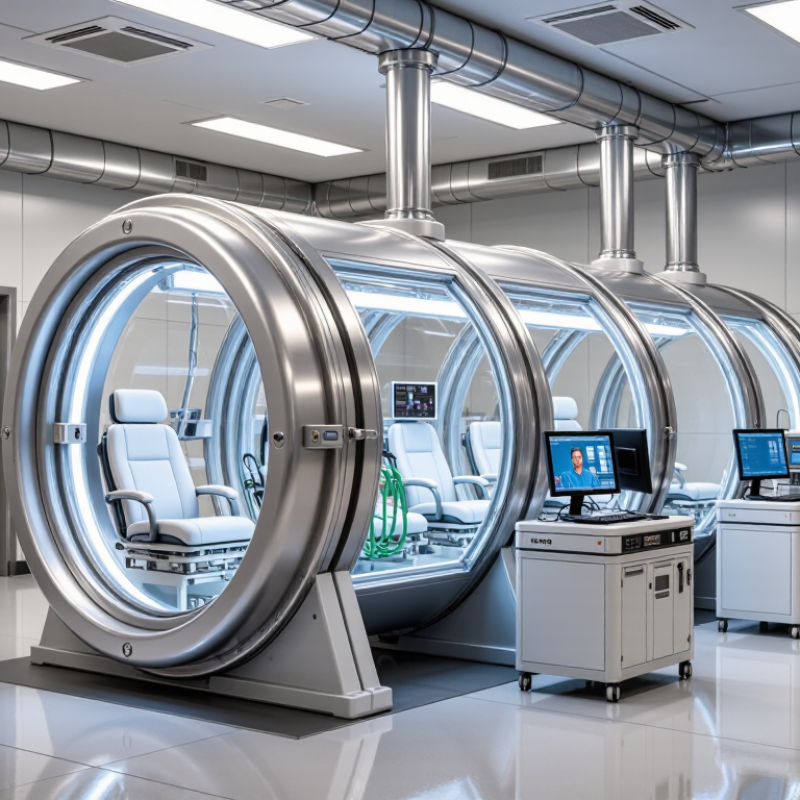
| Chamber purchase | Indicative equipment price | Approximately USD 85,000–250,000 for a multi-place clinical hyperbaric chamber, excluding taxes and site work. | Request a line-item quotation showing the chamber, control system, oxygen-delivery equipment, monitoring equipment, accessories, and warranty scope. | Compare equivalent specifications, not only the headline price. |
| Facility preparation | Room construction and utilities | Approximately USD 10,000–40,000 for structural work, electrical capacity, ventilation, fire protection, flooring, access routes, and medical-gas connections. | Obtain a site survey and confirm room dimensions, floor loading, ceiling height, access width, and utility requirements before ordering. | Make the supplier responsible for written site requirements. |
| International logistics | Freight, insurance, and handling | Typically 3%–12% of equipment value, depending on destination, shipment volume, Incoterms, port handling, inland transport, and insurance. | Compare door-to-door landed cost rather than the factory or port price. | Clarify who pays customs clearance, port storage, local delivery, and unloading. |
| Installation | Assembly, testing, and commissioning | Approximately USD 8,000–25,000, excluding major building modifications and travel-related delays. | Confirm the number of technicians, installation duration, acceptance tests, commissioning documents, and local support arrangements. | Use a signed acceptance protocol before final payment. |
| Training | Operator and clinical training | Approximately USD 2,000–8,000 for initial training, depending on trainee numbers, travel, language, and course duration. | Verify that training covers operating procedures, emergency response, fire safety, patient screening, cleaning, and preventive maintenance. | Require competency records and refresher-training options. |
| B. Five-Year Total Ownership Cost Example |
| Initial equipment | Example purchase price | USD 150,000 | Illustrative mid-range equipment price used for the five-year model. | Replace this value with the supplier's comparable quotation. |
| Initial logistics | Freight and insurance assumption | USD 10,000 | Example assumption equal to approximately 6.7% of the equipment price. | Recalculate using the destination-specific landed-cost quotation. |
| Site preparation | Facility preparation assumption | USD 20,000 | Includes basic construction, electrical work, ventilation, and safety preparation. | Validate through a local contractor's written estimate. |
| Installation | Commissioning assumption | USD 15,000 | Includes installation supervision, functional testing, and commissioning documentation. | Check whether travel, accommodation, taxes, and overtime are included. |
| Training | Initial training assumption | USD 5,000 | Includes initial operator training and basic emergency-procedure instruction. | Confirm the number of included trainees and training days. |
| Maintenance | Preventive maintenance assumption | USD 45,000 over 5 years | Calculated as 6% of USD 150,000 per year for five years. | Request a fixed-price service plan and identify excluded parts and labor. |
| Utilities | Power, ventilation, and gas-related operating cost | USD 12,500 over 5 years | Illustrative assumption of USD 2,500 per year; actual cost depends on treatment volume and local utility prices. | Use local tariffs and expected annual treatment hours for the final calculation. |
| Consumables | Cleaning materials, filters, seals, and minor supplies | USD 5,000 over 5 years | Illustrative allowance of USD 1,000 per year, excluding major component replacement. | Ask for recommended replacement intervals and approved equivalent parts. |
| Five-year ownership cost | Illustrative five-year TCO | USD 262,500 | 150,000 + 10,000 + 20,000 + 15,000 + 5,000 + 45,000 + 12,500 + 5,000 | Use TCO to compare proposals with different service, logistics, and warranty scopes. |
| C. Technical, Safety, and Regulatory Verification |
| Pressure performance | Rated operating pressure and test pressure | Confirm the intended treatment pressure range, design pressure, pressure test procedure, and applicable local requirements. | Review the technical file, pressure-vessel documentation, test certificates, and factory acceptance records. | Do not rely on marketing pressure claims without supporting documentation. |
| Oxygen management | Oxygen delivery and concentration control | Verify delivery method, oxygen concentration monitoring, alarms, ventilation, and emergency oxygen procedures. | Request operating limits, alarm settings, maintenance intervals, and training records. | Match the system to local medical-gas and fire-safety requirements. |
| Emergency systems | Emergency depressurization and patient communication | Confirm emergency release, internal and external communication, backup power, fire response, and patient monitoring provisions. | Witness a documented emergency drill during commissioning. | Make emergency functionality a condition of acceptance. |
| Documentation | Technical and quality documentation | Obtain user manuals, service manuals, drawings, spare-parts lists, risk documentation, certificates, and software records where applicable. | Check that documents are available in the required language and identify the revision number and document owner. | Incomplete documentation increases compliance and downtime risk. |
| Local compliance | Country-specific approval pathway | Requirements may include medical-device registration, pressure-vessel approval, electrical certification, fire approval, building permits, and occupational-safety review. | Obtain written confirmation from the local authority, qualified consultant, or authorized importer. | Confirm regulatory responsibility before signing the purchase contract. |
| D. Global Supplier Selection Scorecard |
| Product suitability | Capacity, configuration, and clinical workflow | Recommended weighting: 20% | Score chamber capacity, patient access, treatment modes, monitoring, cleaning workflow, and upgradeability. | Reject options that cannot support the planned treatment volume. |
| Safety and quality | Risk controls and manufacturing quality | Recommended weighting: 20% | Review design controls, inspection records, traceability, testing, quality procedures, and corrective-action history. | Safety evidence should outweigh a low purchase price. |
| Regulatory support | Documentation and market-entry assistance | Recommended weighting: 15% | Evaluate support for registration, customs documentation, local inspections, labeling, and language requirements. | Prefer suppliers with a clearly assigned compliance contact. |
| After-sales service | Response time, parts, and technical support | Recommended weighting: 15% | Verify service coverage, remote diagnostics, engineer availability, spare-parts lead times, and escalation procedures. | Set maximum response and restoration times in the contract. |
| Warranty | Coverage and exclusions | Recommended minimum target: 12 months; longer coverage may be available by contract. | Check coverage for the pressure vessel, controls, compressors, sensors, software, labor, travel, and replacement parts. | Compare warranty value, not only warranty duration. |
| Delivery capability | Production schedule and project management | Typical planning window: 4–12 months, depending on customization, approvals, and site readiness. | Request a milestone schedule covering design approval, manufacturing, factory testing, shipment, installation, and acceptance. | Use milestone payments linked to objective deliverables. |
| Commercial transparency | Quotation clarity and payment risk | Require a complete quotation in a single currency with tax, freight, installation, training, service, and exclusions shown separately. | Compare at least three technically equivalent offers using the same scope-of-supply checklist. | Avoid decisions based solely on the lowest initial quotation. |
| Supplier stability | Long-term support capability | Evaluate installed-base references, financial continuity, service network, parts availability, and product lifecycle plans. | Request verifiable customer references in comparable countries and operating environments. | Prioritize continuity of support over short-term discounts. |