How to Choose the Best Building Materials for Your Next Project?

Choosing the right building materials is crucial for any construction project. According to the 2022 Global Construction Materials Market Report, the demand for sustainable and durable materials is increasing. This reflects a significant shift towards environmentally friendly practices in the industry. Expert Jack Thompson, a leading figure in building materials research, emphasizes, “The choice of materials can define the longevity and sustainability of any structure.”

Understanding the properties of various building materials is essential. Different projects require different needs. For example, concrete offers strength, while wood adds aesthetic value. However, challenges often arise. Many builders struggle with material procurement, leading to delays and increased costs.

Focus on aligning your material choice with the project goals. Examining local availability can save time and resources. While many options exist, not all materials will suit your specific needs. Regular reviews of your selections can help identify better alternatives. Ultimately, making informed decisions about building materials will ensure your project's success.

How to Choose the Best Building Materials for Your Next Project?

Understanding the Importance of Selecting Quality Building Materials

How to Choose the Best Building Materials for Your Next Project?

When embarking on a construction project, selecting quality building materials is crucial. Poor choices can compromise a structure's integrity. Reports from the National Institute of Standards and Technology show that using subpar materials can lead to significant safety risks and escalating repair costs. For instance, improper insulation can increase energy bills by up to 30%. This highlights the necessity of making informed decisions.

Tips: Always check material certifications. Look for compliance with industry standards. This assures you of quality. Consider environmental impact as well. Sustainable materials not only benefit the planet but can also improve long-term value.

Quality materials enhance durability. They resist weather and wear. However, not all expensive options guarantee superior quality. Some may leave you unsatisfied. For instance, analyzing the lifecycle of cheaper materials can reveal unexpected costs. Choosing the right components requires thorough research and critical thinking rather than quick decisions.

Evaluating Project Requirements and Specifications for Material Selection

How to Choose the Best Building Materials for Your Next Project?

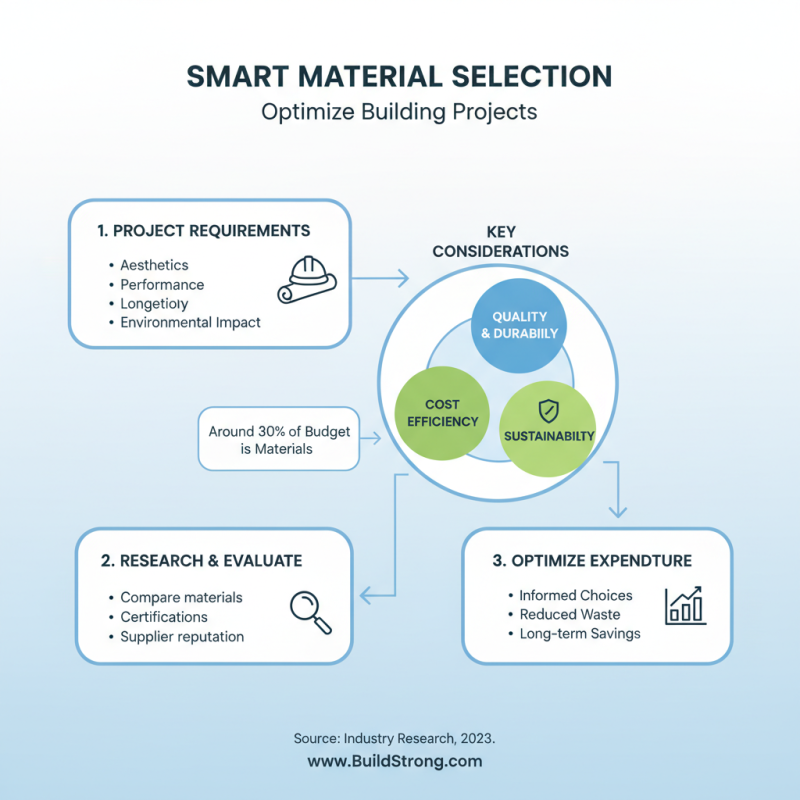
When selecting building materials, evaluating project requirements is crucial. It's not just about aesthetics but performance, longevity, and environmental impact. Research indicates that around 30% of project budgets are spent on materials. Understanding the specific demands of your project can significantly optimize this expenditure.

For instance, projects in coastal areas require materials resistant to corrosion. Using generic materials could lead to increased maintenance costs. A study by the National Institute of Standards and Technology found that poor material choices can lead to over 50% of project delays. This highlights the importance of material specification.

Another factor to consider is sustainability. Reports show that about 40% of global energy use comes from building operations. Choosing energy-efficient materials can lower operational costs and improve project viability. However, achieving the right balance between cost, durability, and environmental impact is often a challenge. Engaging with all stakeholders early can clarify requirements and avoid costly mistakes later.

Exploring Different Types of Building Materials and Their Applications

When embarking on a building project, choosing the right materials is crucial. Various materials serve distinct purposes. For instance, wood is a popular choice for residential homes. It offers warmth and versatility. However, it may not withstand moisture well. Also, it requires maintenance to prevent decay.

Concrete is another common option. Its durability is unmatched, making it ideal for foundations. Yet, it can be heavy and difficult to work with. Labor costs may increase. Metal, on the other hand, provides strength and fire resistance. It’s excellent for industrial structures, but it may require insulation depending on the climate.

The selection process can be overwhelming. Each material has pros and cons. Wood may appeal for its aesthetic, but it isn't always practical. Concrete could last longer, yet it can be costly and time-consuming to install. On the flip side, metal structures are quick to assemble, but rusting can be an issue. Balancing cost, durability, and appearance will lead you to the best choice for your specific needs. Experimenting with different combinations might yield surprising results.

Analyzing Cost, Durability, and Sustainability Factors

Choosing building materials for your project involves careful consideration. Cost, durability, and sustainability play crucial roles. The cost should be within budget, but low price can mean low quality. For instance, cheaper materials may need replacements sooner. It's essential to find a balance.

Durability matters too. Some materials withstand wear and tear better than others. For example, concrete lasts long but might crack over time. Some woods look great but can rot if not treated. Assessing the local climate can also impact durability.

Sustainability is increasingly important. Eco-friendly materials can reduce environmental impact. They might cost more upfront, but savings in energy and maintenance are worth it. Think about the lifecycle of the materials. Will they contribute to a healthier environment? Reflect on these aspects when making your choice.

How to Choose the Best Building Materials for Your Next Project?

Material Type Cost per Square Foot Durability (Years) Sustainability Rating Thermal Insulation (R-value)
Concrete $6.00 75+ 3/5 R-0.1
Steel $8.00 100+ 4/5 R-0.0
Wood $4.00 30-50 5/5 R-1.0
Bricks $7.00 50-100 4/5 R-0.5
Glass $10.00 40-100 2/5 R-0.2

Consulting with Professionals and Suppliers for Informed Choices

Choosing suitable building materials can be challenging. Consulting with professionals helps clarify options. Architects, engineers, or experienced contractors can offer valuable insights. They know which materials work best in different conditions. This knowledge can save time and money.

Suppliers also play a crucial role. They can provide samples and brochures. Discussing specific needs with them can lead to beneficial recommendations. Sometimes, just visiting a supplier can spark new ideas. However, be prepared for surprises. Prices may vary, and unexpected delays can happen.

Every project is unique. Take the time to reflect on your choices. Is the material environmentally friendly? Will it withstand local weather conditions? Engage in discussions that challenge your perspective. This dialogue may lead to discovering better alternatives. There is always room for improvement, even in the planning stage.

Find the Right Repair Product for Your Project

Need to find the most appropriate product for the needs of your project? We can help because we have over 70 years of experience servicing the industry with every kind of project, from Do-it-yourself projects to large skyscrapers. Package Pavement has the experience, the knowledge and the products to help every project succeed.

Quikrete Repair Products
Legend
Package Pavement has two convenient locations in Stormville, NY (Dutchess County) and Ravena, NY (Greene County) to serve the Northeastern Region with bagged concrete, blacktop, mortar, and repair products. This map gives a general idea of where we service and the product lines we offer.
Package Pavement Products
Quikrete Products
Spec Mix Products
map

Our Brands Websites