How to Choose an Aluminum Scrap Melting Furnace in 2026?
Choosing an aluminum scrap melting furnace in 2026 requires more than comparing furnace capacity or purchase price. Scrap quality, energy use, metal recovery, emissions control, and maintenance access all affect the final investment. A furnace that performs well with clean extrusion offcuts may struggle with coated sheets, mixed castings, or oily machining chips.
John A. S. Green, a recognized author and specialist in aluminum recycling, offers a practical warning: “Furnace selection must begin with the scrap stream.” That principle remains highly relevant. Your material determines the furnace design, charging method, melting speed, and refining requirements. Measure the scrap first.
Look closely.
A suitable aluminum scrap melting furnace should match your daily throughput, alloy range, and available fuel or electricity. Rotary furnaces can handle varied and contaminated scrap, while reverberatory designs often suit larger continuous operations. Induction furnaces may provide precise heating and cleaner working conditions, but their economics depend on scrap preparation and electricity costs. These differences matter beside the furnace door, where slag buildup, heat loss, and charging delays become visible.
In 2026, buyers should also examine automation, temperature tracking, burner efficiency, refractory life, and after-sales support. Digital controls sound impressive, but they cannot correct poor scrap sorting. I have seen specifications look excellent on paper, then disappoint during frequent door opening and uneven charging.
The best choice is rarely the biggest model. It is the furnace that delivers stable recovery, safe operation, manageable maintenance, and predictable cost across real production conditions. This guide explores those decisions carefully, including areas where a seemingly efficient design may require a second look.
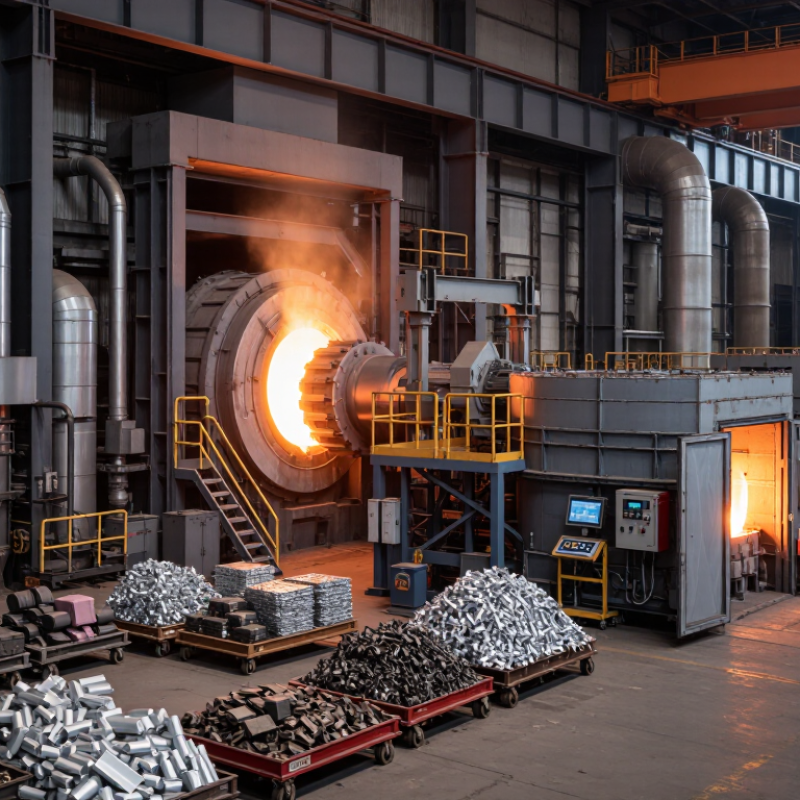
What Is an Aluminum Scrap Melting Furnace?
An aluminum scrap melting furnace is industrial equipment that converts solid aluminum waste into controlled molten metal. It uses heat to melt clean sheets, castings, chips, or used containers inside a refractory-lined chamber. Operators skim dross, monitor temperature, and transfer the melt for casting or further alloy adjustment.
This is not simply a large oven. Its design controls metal loss, fuel use, emissions, and final quality.
The International Aluminium Institute reports that recycled aluminum requires about 5% of the energy used for primary aluminum production. The U.S. Environmental Protection Agency also cites energy savings of roughly 95% for aluminum recycling.
These figures are valuable, but they vary with scrap quality, electricity sources, and furnace operation. Scrap is inconsistent. Paint, oil, moisture, and mixed alloys can increase dross and reduce recovery.
In practical workshops, sorting often matters as much as furnace size.
When choosing a furnace in 2026, match its design to the feedstock and daily batch size.
Rotary furnaces can handle contaminated or mixed scrap, while reverberatory units suit larger, continuous operations.
Induction furnaces offer precise heating, but their economics depend on electricity cost and scrap preparation.
Ask for measured fuel consumption, metal recovery, temperature uniformity, and maintenance records. Check whether the supplier explains dross handling clearly.
I would not select the highest capacity automatically; oversized equipment may waste energy during small batches. A perfect specification is rarely possible, so test representative scrap before signing a purchase agreement.
What Safety and Environmental Features Should You Check?
When choosing an aluminum scrap melting furnace in 2026, safety features deserve close inspection. A reliable furnace should have automatic fuel shutoff, flame failure protection, and clearly marked emergency stops. Door interlocks can prevent operators from opening the chamber during unsafe cycles. Temperature sensors should be positioned near the melt, not only near the burner. Small details matter.
Environmental performance is equally important. Look for sealed charging areas that reduce smoke and metal dust escaping into the workshop. Efficient burners can lower fuel use and reduce combustion emissions. A properly designed exhaust system should capture fumes at the source and direct them through suitable filtration equipment. Ask for measured emission data, not only marketing claims. Local authorities may require additional monitoring.
The furnace should also support responsible dross handling and material recovery. Insulated walls, automatic controls, and heat recovery systems can reduce unnecessary energy loss. Cooling water should operate in a closed loop where practical, with leak detection and temperature alarms. Check refractory condition regularly, because cracks may release heat and increase contamination risks. No checklist is perfect. Operators still need training, protective equipment, written procedures, and realistic emergency drills. A furnace that saves energy but creates difficult maintenance tasks may not be the safest long-term choice. Test the controls before purchase, and leave room for improvement.
How to Compare Costs, Maintenance, and Supplier Support
Choosing an aluminum scrap melting furnace in 2026 requires more than comparing purchase prices. Calculate the full operating cost, including electricity, fuel, labor, refractory replacement, emissions controls, and planned downtime. A low-priced furnace may consume more energy or need frequent repairs. That difference can quietly erase the initial saving.
Maintenance details deserve close attention. Ask how quickly technicians can replace heating elements, burners, thermocouples, and door seals. Inspect the furnace layout before buying. Can workers reach these parts safely without dismantling half the unit? Request maintenance records from similar installations, not only polished performance claims. I have seen attractive proposals fail because spare parts arrived late. That weakness was not obvious during the sales meeting.
Supplier support also affects production stability. Compare commissioning, operator training, remote diagnostics, warranty coverage, and emergency response times. Get each promise in writing. Ask for a clear spare-parts list and realistic delivery schedules. A nearby service team may be more valuable than a slightly lower quotation. Still, supplier reputation is not enough; verify references and speak with actual furnace operators.
Tips: Build a five-year cost model. Include lost production. Test the scrap mix. Review energy data under real loading conditions. Leave room for error; scrap quality changes, and forecasts are rarely perfect.
How to Choose an Aluminum Scrap Melting Furnace in 2026?
Comparing equipment cost, annual energy cost, maintenance, and supplier support
The chart uses typical planning ranges for small-to-medium industrial systems handling approximately 50–500 kg per hour. Costs are shown as representative midpoints in USD and can change with furnace capacity, automation, local energy prices, installation requirements, refractory design, and environmental controls.
Supplier support is scored against practical purchasing criteria: commissioning, operator training, spare-parts availability, remote troubleshooting, and response-time commitments. Request itemized quotations and written service-level terms before making a final selection.