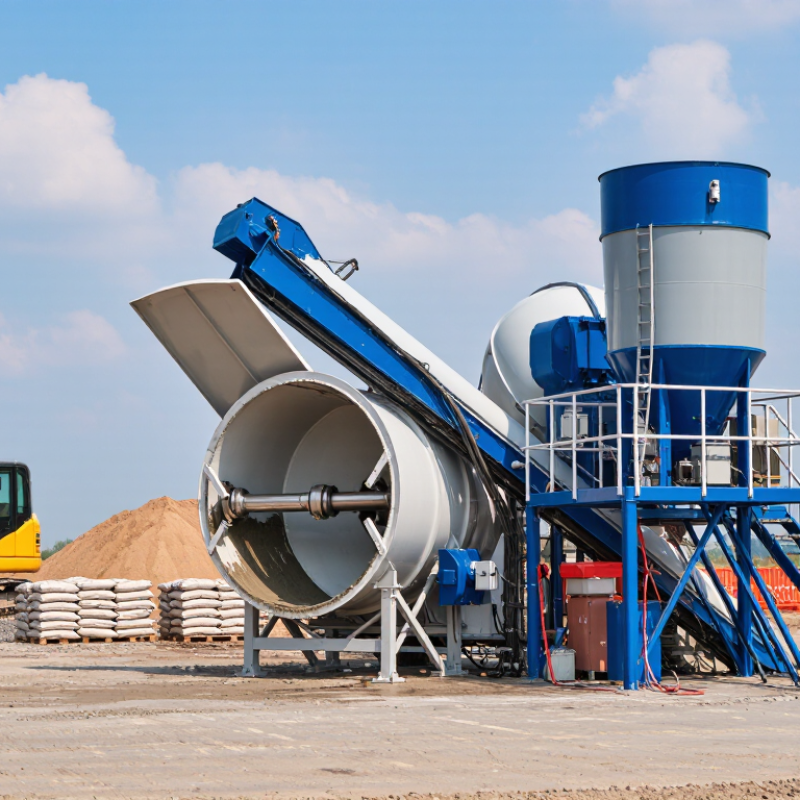
| Equipment Definition | A JS1500 is a horizontal twin-shaft compulsory concrete mixer designed to mix concrete by actively forcing and turning the materials. | It is suitable for applications that require more uniform mixing than simple gravity-drum mixing can normally provide. | Confirm that the mixer uses two horizontal shafts with mixing paddles and a wear-resistant mixing chamber. |
| Nominal Mixing Capacity | 1,500 litres per batch | The figure generally identifies the mixer model and refers to the rated volume of the mixing chamber. | Do not treat nominal volume as the same as finished concrete output. Check the manufacturer’s rated discharge volume. |
| Typical Finished Output | Approximately 1.2 cubic metres per batch is commonly associated with a JS1500-class mixer, depending on the equipment design and loading method. | This capacity is often appropriate for medium- to large-scale batching operations and precast production. | Verify the actual discharge volume, because the usable output can vary by design, material recipe, and operating conditions. |
| Mixing Method | Compulsory mixing: paddles rotate on twin horizontal shafts and force cement, aggregates, water, and admixtures into a consistent mixture. | Forced mixing can improve homogeneity and help process stiff, low-slump, or fiber-containing concrete when the mixer is correctly configured. | Check paddle arrangement, shaft speed, mixing clearance, and the recommended material consistency range. |
| Main Core Function | Uniformly blend aggregates, cementitious materials, water, and chemical or mineral admixtures within a controlled mixing cycle. | A suitable mixer should produce repeatable batches with stable moisture distribution and consistent workability. | Review mixing-cycle recommendations and test the target concrete mix before full-scale operation. |
| Common Applications | Ready-mix concrete plants, precast concrete factories, concrete product production, infrastructure projects, and construction-site batching systems. | The model can support continuous production when paired with an appropriate batching and discharge system. | Match the mixer with the required production rate, aggregate size, concrete grade, and available installation space. |
| Aggregate Size Consideration | Many JS1500-class mixers are designed for normal concrete aggregates, but the allowable maximum particle size depends on the internal clearance and paddle design. | Oversized aggregate can increase wear, reduce mixing quality, or cause blockages. | Confirm the permitted maximum aggregate size in the technical documentation before ordering. |
| Suitable Concrete Types | Common concrete mixes, dry or stiff mixtures, low-slump concrete, and selected fiber-reinforced mixes when approved by the equipment specification. | The twin-shaft compulsory design is generally more versatile than a gravity mixer for demanding formulations. | Check compatibility with moisture content, slump, fiber length, admixture dosage, and cement type. |
| Drive System | Typically powered by an electric motor and reduction drive connected to the two mixing shafts. | The drive system determines starting performance, mixing torque, energy use, and resistance to overload. | Check motor power, voltage, frequency, starting method, gearbox protection, and overload protection. |
| Discharge Design | A hydraulically, pneumatically, or mechanically operated discharge gate is commonly installed at the bottom of the mixing chamber. | Fast and complete discharge helps shorten the cycle and reduces leftover material inside the mixer. | Confirm gate sealing, discharge opening size, operating speed, and access for cleaning. |
| Production-Cycle Factors | Overall output depends on loading time, dry mixing time, wet mixing time, discharge time, cleaning, and the efficiency of the batching system. | A larger mixer does not automatically deliver higher hourly production if material feeding or discharge is slow. | Calculate hourly output using the complete plant cycle rather than the mixer volume alone. |
| Material Contact Parts | The mixing chamber, liners, paddles, arms, shafts, and discharge gate are exposed to abrasive materials and require wear-resistant construction. | Replaceable wear parts can reduce long-term maintenance cost and limit production interruptions. | Review liner and paddle material, thickness, replacement method, and spare-parts availability. |
| Maintenance Access | Inspection covers, cleaning openings, lubrication points, and replaceable liners should be accessible without unnecessary dismantling. | Easy access improves safety, cleaning efficiency, and preventive maintenance performance. | Check whether the design provides safe access to paddles, shafts, seals, bearings, and the discharge gate. |
| Control Requirements | Important controls normally include batch start and stop, timed mixing, discharge operation, emergency stop, and interlocks for access doors. | Automated control can improve batch repeatability and reduce operator error. | Confirm compatibility with the existing batching-control system and verify emergency-stop functions. |
| Installation Requirements | The mixer requires a stable supporting structure, suitable electrical supply, material-feeding equipment, discharge clearance, and service access. | Insufficient structural support or restricted access can complicate installation and maintenance. | Confirm total operating weight, foundation loads, overall dimensions, lifting points, and maintenance clearance. |
| Safety Features | Recommended features include emergency-stop devices, access-door interlocks, protective guards, overload protection, and lockout provisions. | Safety equipment helps prevent contact with moving components and reduces risk during inspection or cleaning. | Check compliance with the safety requirements applicable to the installation location and operating environment. |
| Selection Priority for 2026 | Prioritize verified output, energy efficiency, wear-part life, automation compatibility, safety, serviceability, and lifecycle cost. | The lowest purchase price may not provide the lowest total cost when downtime, power use, and replacement parts are considered. | Compare the complete technical specification, warranty terms, spare-parts plan, maintenance schedule, and total operating cost. |