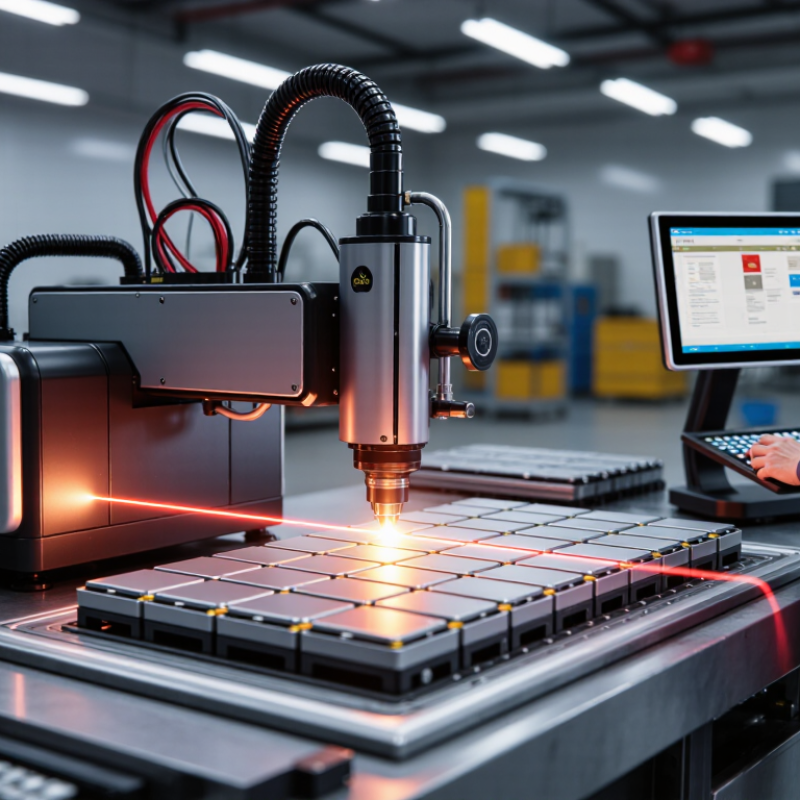
| Laser product classification | Confirm the accessible-emission classification and applicable IEC 60825-1 edition for the product and the destination market. Treat an explicitly Class 4 system as a high-hazard laser installation. | Class 4 beams can cause serious eye and skin injury; hazardous reflections may also need assessment. Classification depends on accessible emission, not simply the laser’s stated output power. | Product classification report, safety documentation, and confirmation of the standards and local regulatory requirements applied. |
| Enclosure and access control | For enclosed operation, inspect the beam enclosure, access panels, viewing windows, and any interlocks. Verify that access during emission is controlled and that interlocks act as intended. | An enclosure can reduce exposure only when its construction and safety functions are suitable for the actual laser, wavelength, and operating conditions. | Enclosure drawings, interlock function test, window specifications, and documented risk assessment. |
| Class 4 operating mode | If the beam is accessible during setup or operation, require a site-specific laser safety program, controlled access, suitable beam termination, warning indicators, and an emergency-stop strategy. | Class 4 controls must address the real installation and work practices. Protective measures should be selected through risk assessment and applicable rules, rather than assumed from a generic checklist. | Laser safety procedures, access-control plan, emergency-stop test results, and appointed safety responsibilities. |
| Wavelength and optical safety | Record the emitted wavelength or wavelengths and pulse or continuous-wave operating modes. Select wavelength-appropriate protective eyewear based on a documented optical-density and exposure assessment. | Laser eyewear is not interchangeable across wavelengths or operating conditions. Enclosure windows and sensors also need suitable specifications for the emitted radiation. | Laser source specification, eyewear marking and assessment, and window or filter transmission data. |
| Laser power and operating mode | Match continuous-wave or pulsed output, pulse energy, pulse duration, repetition rate, and available power range to the joint design and process trials. Do not select on maximum power alone. | Weld penetration, heat input, spatter, and risk of damaging thin battery materials depend on the combined process parameters and joint geometry. | Verified output specifications, parameter ranges, and trial-weld results on representative materials and parts. |
| Battery materials and joint types | Test the actual material combinations and thicknesses, such as copper-to-copper, aluminum-to-aluminum, or dissimilar-metal joints where applicable. Include the production joint geometry. | Reflectivity, thermal conductivity, surface condition, and dissimilar-metal behavior affect process stability and weld quality. Results on one material pair do not establish performance on another. | Sample welds, cross-sections, applicable mechanical or electrical test results, and documented acceptance criteria. |
| Beam delivery and positioning | Check working distance, focus adjustment, spot-size range, scanning or motion system, fixture access, and repeatability at the intended production location. | Reliable positioning and consistent focus help maintain weld quality across cell tabs, busbars, and other battery assemblies. | Layout drawings, positioning specifications, repeatability data, and an application trial. |
| Weld monitoring and traceability | Consider process monitoring for relevant signals, such as reflected light or thermal emissions, and record process settings against part or batch identifiers where required. | Monitoring can help identify process variation, but it does not by itself prove weld integrity. Validation still requires appropriate inspection and testing. | Monitoring description, data-export example, validation plan, and inspection method. |
| Fume and process contamination | Assess extraction and filtration for fumes and particles generated by the specific materials, coatings, and process. Position extraction so it does not interfere with the weld. | Laser processing can generate airborne contaminants; suitable controls depend on the work material and local occupational-health requirements. | Material-specific risk assessment, extraction airflow information, filter details, and maintenance instructions. |
| Production integration and support | Verify utilities, cycle-time capability, fixture changes, maintenance access, training, spare-parts availability, and service response for the intended production volume. | A system that meets weld requirements in a trial may still be unsuitable if it cannot meet production, uptime, or maintenance needs. | Factory acceptance criteria, cycle-time trial, maintenance schedule, operator training plan, and service terms. |