| Motor Power and Supply | Rated motor output, voltage, phase, frequency, and full-load current. | A 7.5 kW motor is approximately 10 hp. Confirm that the electrical supply and protective devices match the compressor nameplate and local electrical requirements. | What are the rated voltage, phase, frequency, and full-load current? What starting method and electrical protection are required? |
| Air Delivery and Pressure | Delivered airflow at the required working pressure—not motor power alone. | Compare free air delivery (FAD) at the same pressure and under the same test conditions. Capacity varies by design, pressure, and operating conditions, so use the supplier’s documented performance data. | Can you provide the FAD at my required pressure and explain the test standard or measurement conditions? |
| Duty and Operating Pattern | Daily operating hours, demand fluctuations, ambient temperature, and required air quality. | Match the compressor to measured demand. Check whether the proposed unit is suitable for the expected duty cycle and whether a receiver, dryer, or filters are needed. | What operating conditions and duty cycle is this model designed for? What air-treatment equipment is recommended for my application? |
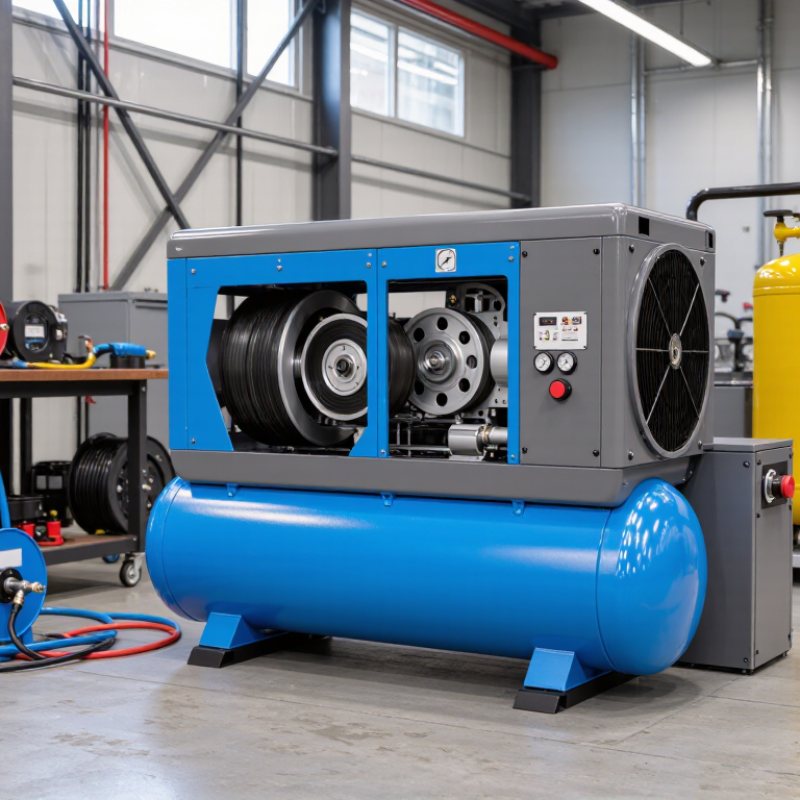
| Belt-Drive Maintenance | Belt condition, tension, alignment, guards, and access for inspection. | Allow space for safe belt inspection and adjustment. Follow the equipment manual for inspection intervals and tension settings; incorrect tension can increase wear or affect performance. | Are belt-tension tools or instructions supplied? What inspection and replacement guidance is stated in the manual? |
| Routine Service Items | Air filter, oil filter, lubricant, oil separator element, and condensate management. | Service intervals depend on the model, lubricant, operating hours, and environment. Use the manual’s schedule rather than assuming a universal interval, and include consumables in the ownership-cost estimate. | What are the service intervals under my operating conditions? Which parts are routine consumables, and what are their part numbers and prices? |
| Warranty Coverage | Warranty duration, start date, covered parts and labor, exclusions, and claim process. | Compare the written terms, not just the headline duration. Check requirements for installation, approved service, maintenance records, and use of specified parts or lubricants. | What is covered, what is excluded, and who pays for labor, travel, and freight during a valid warranty claim? |
| Supplier and Service Support | Local technician availability, response arrangements, troubleshooting, and spare-parts access. | Confirm support arrangements for the installation location and obtain response expectations in writing. Ask how urgent breakdowns and after-hours service are handled. | Who provides commissioning and repairs? What are the service hours, typical response arrangements, and process for ordering spare parts? |
| Installation and Total Cost | Delivery, commissioning, ventilation, noise, drainage, electrical work, and required accessories. | Compare the complete installed cost and expected maintenance costs, not only the purchase price. Provide adequate ventilation and follow applicable requirements for pressure equipment and condensate disposal. | What is included in the quotation, and what site preparation, installation, or commissioning costs are excluded? |
| Documentation and Acceptance | Operating manual, maintenance schedule, wiring information, performance data, and parts list. | Request documentation before purchase and define acceptance checks, such as correct rotation, pressure, leaks, and operation of safety controls, with qualified personnel performing the checks. | Will the complete documentation be supplied in English, and what commissioning or acceptance records will be provided? |