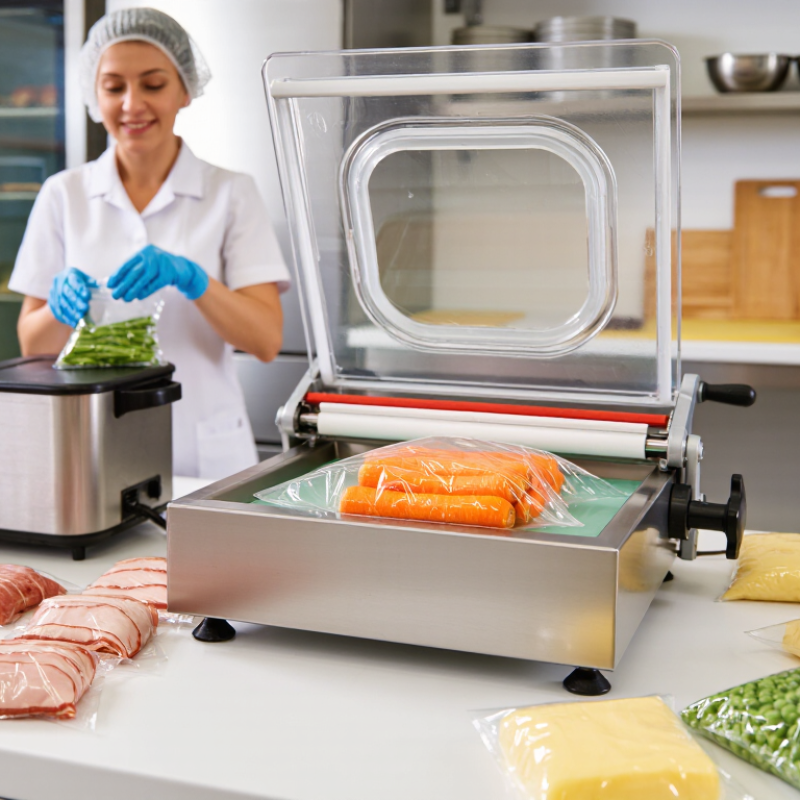
| Machine type | Chamber vacuum: the bag is placed inside the chamber. External-suction: the open bag remains outside the machine. | Chamber machines can handle liquids more readily because pressure is reduced around the whole bag. External-suction machines are generally suited to dry or low-moisture products and compatible textured bags. | Test the machine with the actual food, bag type, and portion size before purchase. |
| Capacity and workflow | Check chamber dimensions, seal-bar length, number of sealing bars, cycle time, and the number of packages needed per shift. | The usable chamber and seal area determine package size and how many bags can be processed per cycle. | Confirm that the largest intended pouch fits without obstructing the seal bar or lid. |
| Seal quality and controls | Look for adjustable vacuum and seal settings, consistent sealing, accessible seal bars, and readily available replacement parts. | Food, bag material, and pouch thickness can affect the seal. A vacuum-packed product is only protected by an intact, properly formed seal. | Inspect sample seals for gaps, wrinkles, food or liquid in the seal area, and leaks. Follow the pouch and machine instructions. |
| Food-contact suitability and cleaning | Choose equipment and food-contact packaging suitable for the intended use. Check whether food-contact surfaces can be cleaned and sanitized as required. | Food-contact materials and equipment must be managed in accordance with applicable food regulations and the manufacturer’s instructions. | Review cleaning instructions, inspect surfaces for damage, and include the machine in the facility’s cleaning schedule. |
| Cold holding: 41°F (5°C) or below | Have reliable refrigeration and a way to monitor food temperature. Under the FDA Food Code model, cold-held time/temperature control for safety (TCS) food is generally maintained at 41°F (5°C) or below. | Vacuum packaging does not replace temperature control or make perishable food shelf-stable. The FDA Food Code is a model code; local requirements and adoption can vary. | Use an appropriate, calibrated food thermometer and verify actual product temperatures. Follow local food-code requirements. |
| Reduced-oxygen packaging (ROP) controls | Before packaging TCS food under reduced-oxygen conditions, confirm which rules apply to the process, food, storage temperature, and intended use. | ROP can create conditions in which certain hazards, including growth of Clostridium botulinum or Listeria monocytogenes, require specific controls. The FDA Food Code includes requirements for certain ROP processes, which may involve a HACCP plan, a variance, or specified conditions. | Consult the regulatory authority and qualified food-safety personnel before starting an ROP process. Do not assume vacuum packing alone establishes a safe shelf life. |
| Service, training, and records | Consider operator training, maintenance support, spare-part availability, and simple written procedures for packaging and temperature monitoring. | Reliable operation and consistent procedures help staff identify failed seals, equipment problems, and temperature deviations. | Keep maintenance and required food-safety records according to your facility’s procedures and applicable local regulations. |