| Small fixed window | Measure the visible glass width and height at three points and use the smallest measurement. | Up to approximately 1.2 m × 1.5 m; size varies by product. | A single-piece film is usually easier to align and produces fewer visible seams. | Leave a narrow perimeter clearance if required by the product instructions; keep the glass clean and flat. |
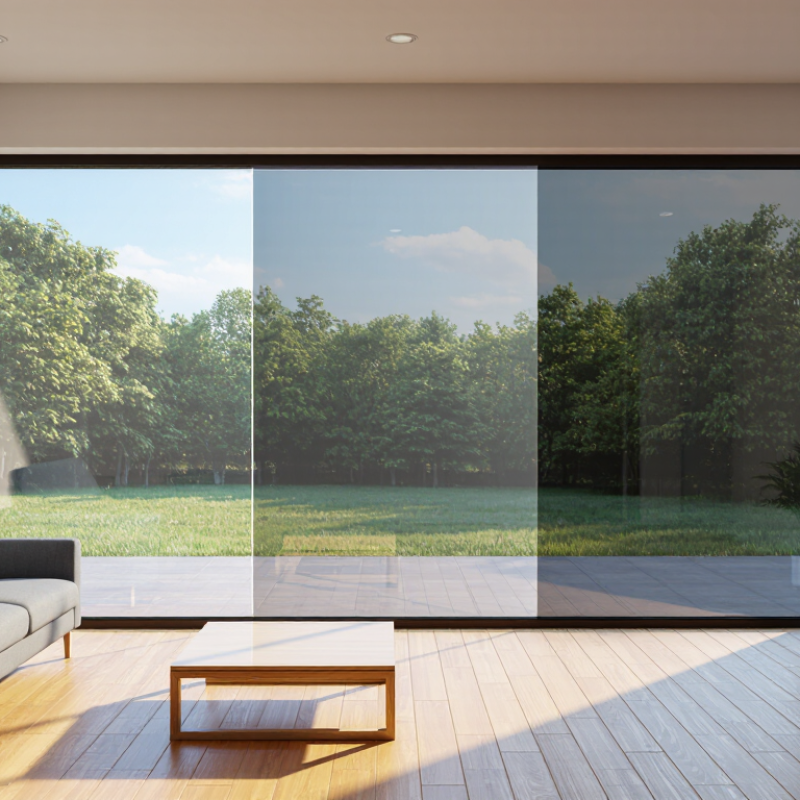
| Large picture window | Record the total glass area, maximum width, and maximum height. Check whether access allows a one-piece installation. | Often wider than standard film rolls; large panels may require multiple sections. | Use a product available in the required width or plan vertical seams outside the main viewing zone. | Two installers may be needed to prevent creases, trapped air, and misalignment during application. |
| Sliding glass door | Measure each moving panel separately, including the glass height below the frame. | Common panels are approximately 0.7–1.0 m wide and 1.9–2.4 m high, but site dimensions vary. | Choose a durable film compatible with frequent door movement and edge contact. | Keep the film clear of rollers, handles, seals, and frame channels; test door operation after installation. |
| Casement or awning window | Identify the opening direction and measure the glass without including the sash, gasket, or frame. | The sash moves outward or inward and may have limited clearance around the perimeter. | Select a thin, flexible film only when the product is approved for operable windows. | Maintain clearance from hinges, handles, weather seals, and locking hardware. |
| Single-pane glass | Check whether the glass has one visible layer and inspect it for chips, scratches, or loose glazing. | Common in older buildings; thermal performance is generally lower than insulated glazing. | Verify that the film is rated for the glass thickness and expected solar exposure. | Do not install over damaged glass; repair glazing defects first and follow thermal-stress guidance. |
| Double- or triple-glazed unit | Look for a sealed spacer between two or three panes and check whether the film is approved for interior or exterior use. | Insulated glazing has sealed air or gas spaces and is more sensitive to incompatible surface films. | Use only a film with documented compatibility for insulated glass units. | Confirm warranty conditions and solar-heat specifications before installation; avoid unapproved dark films. |
| Tempered or laminated glass | Check construction documents or ask a qualified glazier; visual inspection alone may not be conclusive. | Tempered glass is heat-treated; laminated glass contains a plastic interlayer. | Choose a film specifically tested for the glass construction and intended exposure. | Use professional installation for safety glazing, overhead glazing, or large panes. |
| Clear glass | The glass has no visible tint, coating, pattern, or reflective appearance. | Usually the simplest substrate for optical switching or light-responsive film. | Select the desired clear-state light transmission and dark-state privacy level. | Clean with a residue-free solution and remove dust before bonding or mounting. |
| Low-emissivity or tinted glass | Look for a visible tint, reflective coating, energy label, or documentation identifying a low-E surface. | Existing coatings alter heat absorption, reflection, color, and visible light transmission. | Choose a compatible low-absorption film and confirm the film-glass combination is permitted. | A glass-performance review is recommended to reduce thermal-stress and seal-failure risks. |
| Film operating method | Decide whether darkening should respond to sunlight, a wall switch, a sensor, or an automated control system. | Photo-responsive films need light exposure; electrically switched films need a power supply and controller. | Choose the technology according to the required response time, privacy mode, and control method. | Plan sensor location, wiring routes, controller access, and electrical protection before fitting the film. |
| Power and control access | Locate the nearest safe power point and determine whether the window is fixed, hinged, or sliding. | Electrical films may require a low-voltage transformer or controller; requirements vary by system. | Select a system with suitable voltage, switching capacity, and fail-state behavior. | Electrical connections should be completed by a qualified person and kept protected from moisture. |
| Moisture and exterior exposure | Determine whether the film will be installed indoors, outdoors, in a bathroom, or near condensation. | Humidity, water, ultraviolet radiation, and temperature changes can shorten service life. | Use a sealed, moisture-resistant product for wet areas and an exterior-rated product for outdoor exposure. | Seal exposed edges where specified and prevent water from reaching electrical connections. |