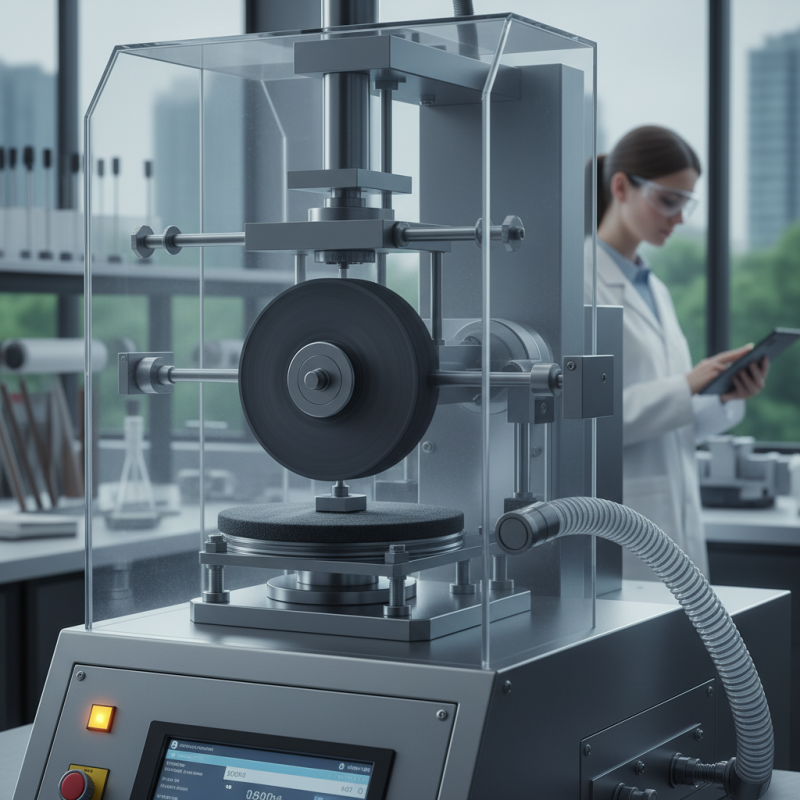
Why Choose an Abrasion Testing Machine for Your Products?

In today’s competitive market, the durability of products is paramount. Companies are increasingly turning to the Abrasion Testing Machine to ensure their offerings meet industry standards. According to a recent report by the Material Testing Institute, 78% of manufacturers improved product longevity through routine abrasion testing. This highlights the machine's vital role in quality control.

Dr. Emily Rogers, a prominent expert in material science, stated, “Using an Abrasion Testing Machine provides insights into the wear performance of materials, guiding manufacturers to make informed decisions.” Her expertise emphasizes the need for reliable testing methods. The abrasiveness of materials can vary significantly, impacting product life and customer satisfaction.

Failure to properly test can lead to significant repercussions, including increased returns and damaged reputations. Companies must be proactive rather than reactive in their testing methods. The Abrasion Testing Machine not only helps mitigate these risks but also enhances product quality. It ultimately contributes to maintaining a competitive edge in a fast-evolving market.

Why Choose an Abrasion Testing Machine for Your Products?

Importance of Abrasion Testing in Product Development

Abrasion testing plays a crucial role in product development. It assesses how well materials can withstand wear and tear during use. By simulating real-world conditions, manufacturers gain insights into their products' durability. This helps identify potential failures before they reach customers.

Implementing abrasion testing allows companies to refine their designs. It reveals weaknesses in materials or construction methods. Teams can use these insights to make informed adjustments. Striking the right balance between cost and durability is often challenging. Some products may look good on paper but fail under testing.

Additionally, understanding abrasion resistance can enhance customer satisfaction. A product that lasts longer ultimately protects a brand's reputation. However, not all companies prioritize thorough testing. This oversight can lead to dissatisfied customers and costly recalls. It's essential to approach testing with rigor, ensuring that every product meets high standards before entering the market.

Types of Abrasion Testing Machines Available in the Market

When selecting an abrasion testing machine, it's essential to understand the types available. These machines serve various industries, from textiles to coatings. Common types include rotary platform testers and taber testers. Each offers unique features tailored to specific applications. For instance, rotary platform testers are versatile, allowing for multiple sample tests at once. They can simulate real-world wear under controlled conditions.

Data from industry reports indicate that the demand for abrasion testing machines is growing. The market is expected to reach $3.5 billion by 2027. With advancements in technology, machines now provide more accurate and repeatable results. However, not all machines are created equal. Some may lack essential features or may not meet stringent testing standards. Users must critically assess their testing needs and ensure the machine’s tailored features align with those.

In practical applications, considerations like sample size and material type affect test outcomes. A rotary tester may not be suitable for fragile materials, leading to inaccurate readings. Additionally, the calibration process is often overlooked, impacting test reliability. A machine malfunction could compromise entire testing results. Regular maintenance and user expertise are vital to maximizing a machine's potential for precise and reliable abrasion testing.

Why Choose an Abrasion Testing Machine for Your Products? - Types of Abrasion Testing Machines Available in the Market

Type of Abrasion Testing Machine Key Features Applications Price Range (USD)
Taber Abrasion Tester Precision testing, customizable weight options Textiles, coatings, plastics $5,000 - $15,000
Crockmeter Ease of use, portable design Leather, fabrics $1,000 - $3,000
Wear Testing Machine Multiple test methods, automated cycles Automotive parts, industrial materials $10,000 - $30,000
Martindale Abrasion Tester High precision, multiple sample capability Carpets, textiles $7,000 - $20,000
Impact Abrasion Tester Simulates real-world impact conditions Construction materials, plastics $4,000 - $12,000

Key Features to Look for in an Abrasion Testing Machine

When selecting an abrasion testing machine, certain key features stand out. A reliable machine should have adjustable testing parameters. These include speed, pressure, and testing time. Flexibility in settings ensures that various materials can be tested effectively. This adaptability is crucial for obtaining accurate results.

Another important feature is ease of use. A user-friendly interface, including clear displays and straightforward controls, makes operation smoother. Look for machines that provide detailed test data and analysis. This capability helps in understanding results better. It’s worth noting that some machines may have more complex functions. This can lead to confusion during operation, highlighting the need for good design.

Tips: Always assess the machine's calibration process. Regular calibration helps maintain accuracy. It also ensures the testing process reflects true material performance. Consider machines with robust build quality. A sturdy design can withstand rigorous testing environments.

Moreover, review the safety features that a machine offers. Automatic shut-off mechanisms can prevent accidents. It's essential to prioritize safety, even during routine tests. While pricing is a factor, investing in a quality machine pays off in the long run. This choice enhances reliability and trust in your product's quality.

Benefits of Using Abrasion Testing for Quality Assurance

When it comes to ensuring product quality, abrasion testing is essential. This method quantifies a material's resistance to wear and tear, providing valuable data for manufacturers. According to recent studies, nearly 30% of product failures in various industries stem from inadequate abrasion resistance. Implementing stringent abrasion testing can significantly reduce the likelihood of these failures.


Using abrasion testing machines provides multiple advantages. For instance, they help maintain compliance with industry standards, which often require specific endurance levels. This process enhances customer satisfaction by ensuring that products withstand daily use. In a 2022 report, 72% of experts surveyed agreed that products tested for abrasion resistance have a higher market acceptance. Investing in these machines is not merely a trend but a necessity for quality assurance.


Yet, even with advanced machines, challenges persist. Some materials behave unpredictably during testing. Factors like humidity and temperature can influence results, leading to inconsistent data. Understanding these variables is crucial for accurate assessment. Manufacturers must continually refine their testing methods to address these complexities. Failure to do so can jeopardize product reliability and reputability in a competitive market.

How to Choose the Right Abrasion Testing Machine for Your Needs

Choosing the right abrasion testing machine is crucial for product quality. Various factors influence this decision. First, understand your testing standards. Products in industries like textiles, automotive, and packaging may require specific abrasion tests, such as ASTM or ISO. Manufacturers should align their machine capabilities with relevant standards.

When selecting a machine, consider its versatility. Some machines can test multiple materials, while others are designed for specific applications. Machines with adjustable settings allow for tailored tests. This flexibility may enhance testing efficiency but requires proper calibration. A miscalibrated machine could yield inaccurate results, leading to costly errors.

**Tips:** Determine your main materials and seek machines capable of handling them. Regular maintenance ensures accurate testing. Additionally, always request calibration reports from suppliers. Having verifiable data enhances trust and ensures compliance with industry standards. Industry reports indicate that about 30% of product failures stem from inadequate testing, underscoring the importance of selecting the right machine. Adjusting to evolving norms and innovative materials is vital. Embrace new technologies; it might seem daunting but can prevent future setbacks.

Importance of Abrasion Testing Machines

This chart illustrates the abrasion resistance of various materials, measured in milligrams of loss per 1000 cycles. Choosing the right abrasion testing machine is essential for ensuring product durability across different material types.

Find the Right Repair Product for Your Project

Need to find the most appropriate product for the needs of your project? We can help because we have over 70 years of experience servicing the industry with every kind of project, from Do-it-yourself projects to large skyscrapers. Package Pavement has the experience, the knowledge and the products to help every project succeed.

Quikrete Repair Products
Legend
Package Pavement has two convenient locations in Stormville, NY (Dutchess County) and Ravena, NY (Greene County) to serve the Northeastern Region with bagged concrete, blacktop, mortar, and repair products. This map gives a general idea of where we service and the product lines we offer.
Package Pavement Products
Quikrete Products
Spec Mix Products
map

Our Brands Websites