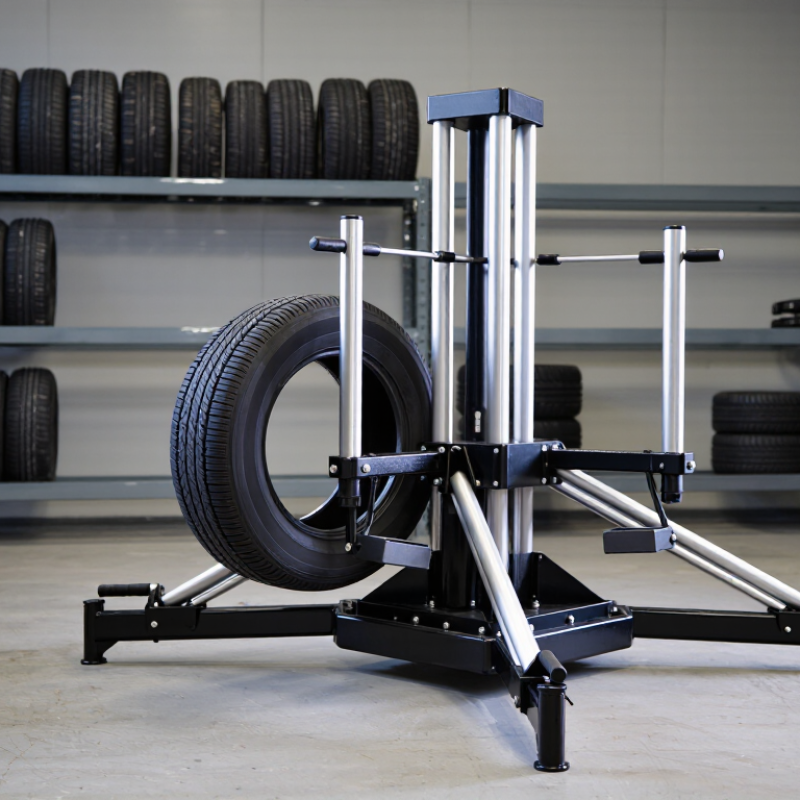
| What a tyre spreader does | A tyre spreader holds an unmounted tyre and separates its beads to expose the inner liner and sidewalls for inspection, repair, or preparation. | Used with tyres removed from the rim; it is not a wheel-balancing machine or a tyre changer. |
| How it works | The operator positions the tyre on the support, secures it, then uses a hand-operated, pneumatic, or powered mechanism to move the supports and open the bead area. | Opening force and movement should be controllable, with suitable supports for the tyre size and construction. |
| Passenger-car applications | Choose a model intended for passenger tyres and the workshop’s expected range of tyre widths and diameters. | Common passenger-car rim diameters are approximately 13–22 inches; confirm the machine’s actual compatibility limits with the seller. |
| Truck and commercial-tyre applications | Heavy-duty models generally need a stronger frame, larger supports, and a higher load rating than passenger-car models. | Commercial tyres vary substantially in size and construction. Verify compatibility for each tyre type rather than relying on rim diameter alone. |
| Manual operation | A hand-operated spreader can suit lower-volume shops that value simple operation and do not need powered adjustment. | Usually the lowest-cost configuration; check operating effort, stability, and adjustment range. |
| Pneumatic or powered operation | Powered adjustment can reduce manual effort in higher-throughput settings. Pneumatic models require a suitable compressed-air supply. | Ask for required air pressure and consumption, electrical requirements if applicable, and the machine’s rated capacity. |
| Indicative China price planning | Prices depend on capacity, drive type, materials, included accessories, order quantity, and shipping terms. | Obtain current written quotations. Compare like-for-like specifications and confirm whether the price is EXW, FOB, or includes freight; no single price applies to all models. |
| Frame and stability | Inspect frame construction, weld quality, base footprint, clamping points, and whether the unit remains stable while a tyre is opened. | Request drawings, rated load information, and clear photographs or a video of the exact configuration being quoted. |
| Safety and tyre condition | Follow the machine instructions, secure the tyre correctly, and keep hands clear of moving parts. Do not use the spreader to force open a damaged or unsuitable tyre. | Use appropriate protective equipment and follow applicable workshop safety procedures. |
| Before placing an order | Confirm supported tyre types and dimensions, adjustment method, included accessories, spare-part availability, warranty terms, packaging, and delivery schedule. | Ask for a specification sheet and a demonstration using a tyre similar to those in your workshop. |
| Price comparison note | Compare total landed cost, not only the equipment price. Freight, import duties, taxes, installation, and after-sales support may affect the final cost. | All price and capability details should be confirmed in a current supplier quotation before purchase. |