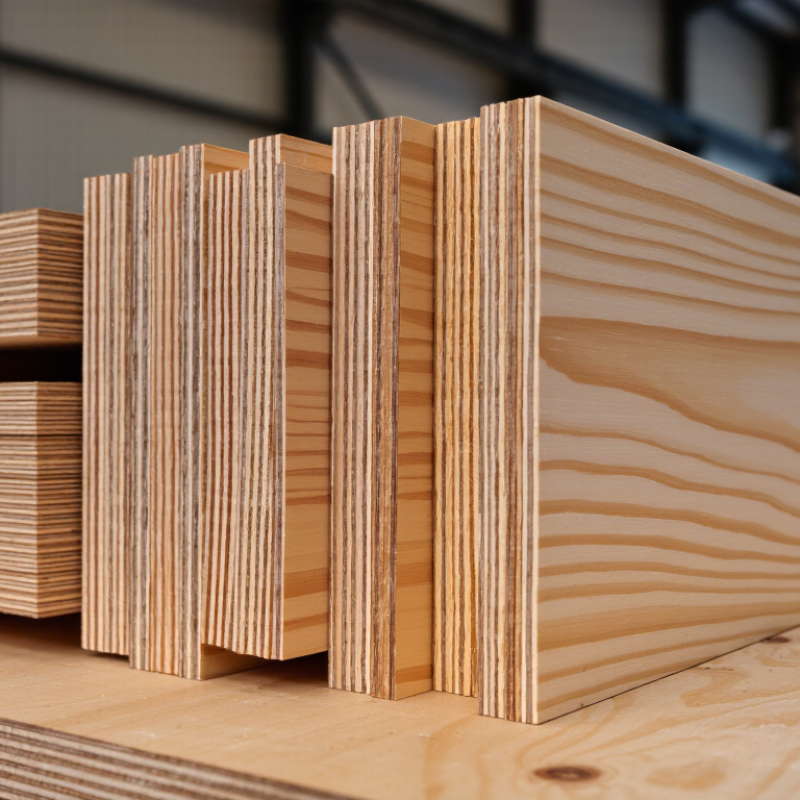
| 1 | Grade and panel marking | Confirm the face and back veneer grades, panel construction, and the grading standard stated in the specification. “CDX” is a common trade description; request the actual grade stamp and product standard. | Clear photos of panel stamps, the product data sheet, and the applicable grading or compliance documentation. |
| 2 | Bond classification | Check the specified bond classification. In common North American usage, CDX generally refers to C-D plywood with an Exposure 1 bond classification; Exposure 1 is not the same as a guarantee of permanent outdoor or waterproof performance. | Written confirmation of bond classification and the standard or test method used for the product. |
| 3 | Wood species and veneer sourcing | Verify the declared pine species or species group, veneer composition, and whether the core uses the same species as the face veneers. “Pine” alone may not identify a single species. | Species declaration, bill of materials, and traceability documents where required by the buyer or destination market. |
| 4 | Thickness and tolerance | Compare the nominal thickness, actual measured thickness, and permitted tolerance. Common nominal options include 1/2 in, 5/8 in, and 3/4 in, but availability and actual dimensions vary by specification and market. | Order-specific tolerance statement and sample measurements taken with a calibrated thickness gauge. |
| 5 | Panel size and squareness | Specify length, width, edge condition, and dimensional tolerances. A 4 ft × 8 ft panel (about 1220 mm × 2440 mm) is a common format, not a universal requirement. | Dimensioned product specification and inspection results for length, width, and diagonal measurements. |
| 6 | Appearance and repair quality | Agree on acceptable knots, splits, patches, surface defects, and edge defects for the stated face and back grades. Grade expectations should be documented rather than judged from the “CDX” label alone. | Reference samples, written defect limits, and pre-shipment inspection photographs. |
| 7 | Bond integrity and test records | Ask how the supplier verifies glue-bond performance and which test method and acceptance requirements apply to the ordered product. Do not treat a general factory certificate as proof that every shipment meets the order specification. | Recent batch or production-lot test reports, with the method, results, and product identification shown. |
| 8 | Moisture and storage control | Set any moisture requirements in the purchase specification and check that panels are protected from rain, ground moisture, and condensation during storage and transport. | Moisture inspection records, warehouse-storage photos, and details of moisture-resistant wrapping. |
| 9 | Quality management and traceability | Check whether the supplier can trace production lots and link inspection results to the goods shipped. Assess certificates against their scope, validity, issuing body, and the specific product covered. | Current certificates where applicable, lot identification, inspection procedures, and a sample quality-control report. |
| 10 | Packaging and export readiness | Confirm bundle count, pallet protection, container-loading method, shipping marks, and destination-market documentation. Packaging and import requirements depend on the route and destination. | Packing specification, loading plan or photos, draft shipping marks, and document checklist for the destination market. |