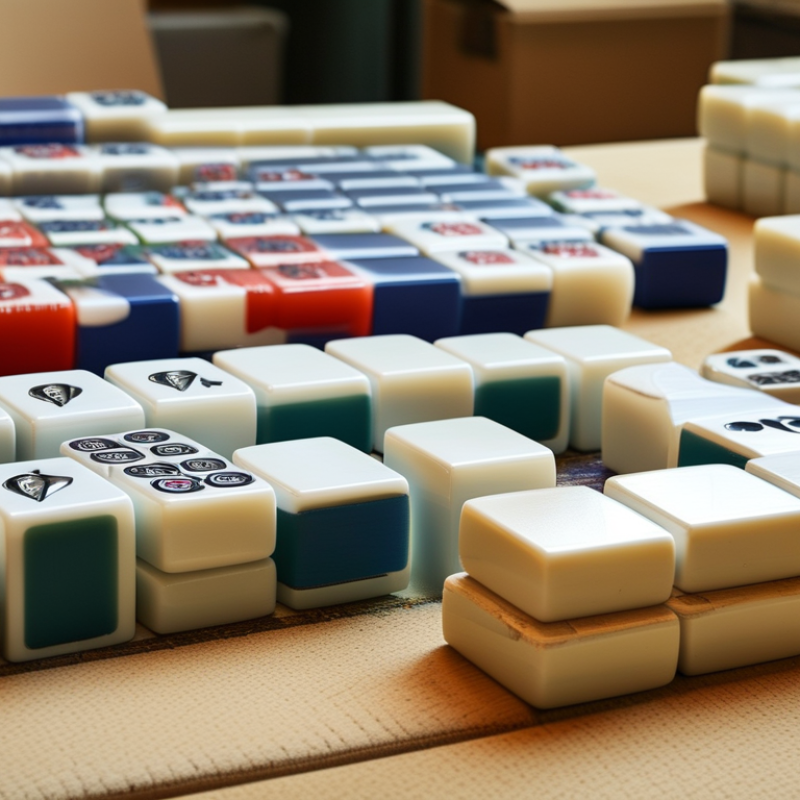
China Top Plastic Mahjong Racks for Global Buyers?

For global buyers, choosing China-made Plastic Mahjong Racks requires more than comparing product photos and quoted prices. These racks look simple, yet their quality affects table comfort, tile organization, and long-term customer satisfaction. A dependable supplier should explain material selection, mold accuracy, edge finishing, packaging, and production capacity clearly. This guide explores why China remains a major sourcing market and how buyers can identify manufacturers with consistent standards. Not every low-priced rack is a real bargain. That matters.

From practical sourcing experience, small details often reveal factory discipline. Buyers should check whether racks use durable ABS or polypropylene, whether the surface feels smooth, and whether each section remains stable on a flat table. Samples can expose weak joints, sharp edges, uneven colors, or unpleasant odors before bulk production begins. Factory audits, pre-shipment inspections, and documented quality procedures provide stronger evidence than attractive brochures. Still, inspections are not perfect. A single approved sample cannot represent every carton.

The discussion also considers customization, private labeling, carton protection, minimum order quantities, and communication during production. Clear drawings and written specifications can reduce misunderstandings between overseas buyers and Chinese manufacturers. Export experience is valuable, but it should be supported by practical records, responsive service, and realistic delivery commitments. Buyers may also compare packaging efficiency, because oversized cartons increase storage and freight costs. The best supplier is not always the largest one. Sometimes, a smaller factory offers closer attention and better flexibility. However, that possibility requires careful verification, not assumptions. This introduction sets a practical path for evaluating China’s top Plastic Mahjong Racks suppliers with confidence, evidence, and reasonable caution.

China Top Plastic Mahjong Racks for Global Buyers?

What Plastic Mahjong Racks Are and How They Are Used

Plastic mahjong racks are lightweight holders that keep tiles upright during play. They usually have a long channel, a stable base, and raised ends. Players place their concealed tiles inside the channel, allowing quick viewing without exposing the faces to others.

In practical use, a rack sits along the player’s edge of the table. Its length should fit a standard hand without crowding. A slightly textured surface helps tiles stay in place, especially on smooth tables. High-quality plastic should resist bending, cracking, and color fading after repeated cleaning. I also check the edges by hand. Rough molding can scratch fingers or damage tile surfaces.

For global buyers, material consistency matters more than attractive packaging. Polypropylene or ABS plastic can offer useful strength, but the final performance depends on thickness and molding accuracy. Buyers should request samples, measure the inner channel, and test several tile sizes before placing a large order. A rack that fits one set may feel too narrow for another. This detail is easy to miss.

Some players prefer taller supports for clearer viewing. Others want a low profile for easier tile movement. Drainage openings can simplify washing, although they may collect dust. Factory inspection should include load testing, surface checks, odor review, and carton protection. Small flaws appear later. That is where many purchasing assumptions fail.

Key Features of High-Quality Plastic Mahjong Racks

China’s plastic mahjong racks can serve global buyers when quality is checked beyond appearance. High-quality racks usually use durable, non-toxic plastic with consistent thickness. The surface should feel smooth, without sharp edges, cracks, or strong chemical odors. A stable base matters. It keeps the rack steady when players arrange several tiles. I have found that slightly flexible plastic can resist breaking better than brittle material. Still, excessive softness may reduce support.

Useful racks have evenly spaced slots and practical dimensions for common mahjong tiles. Each slot should hold tiles firmly without scraping their faces. Color consistency also suggests careful production, although it does not prove durability. Buyers should request samples before placing large orders. Test the rack on a flat table. Check its balance, slot width, weight, and recovery after gentle bending. One overlooked detail is packaging. Weak cartons can cause bent edges during international transport.

Tips: Ask for material details, size tolerances, and inspection records. Compare samples from different production batches. Confirm whether the rack remains stable after repeated use. Do not rely only on product photographs. They can hide uneven molding. A small smell may disappear, but it still deserves investigation. Buyers should also consider storage temperature and humidity during shipping. Perfect results are unlikely every time. Careful testing reduces unpleasant surprises.

Types of Plastic Mahjong Racks for Different Mahjong Sets

Plastic mahjong racks are not one-size-fits-all. Their best design depends on tile count, tile thickness, and playing style. For standard Chinese sets, choose long racks with deep channels. They should hold 13 or 14 tiles without crowding. A raised front edge keeps faces hidden and reduces accidental movement. For American sets, racks often need extra length for larger hands and optional jokers. Some players prefer divided sections for clearer counting. This helps during busy games, but it may slow quick rearrangement. The practical choice depends on table habits.

Japanese riichi sets usually use compact racks. Their shallow profile suits smaller tables and supports 13-tile hands. Travel sets benefit from lightweight, stackable racks with rounded ends. Adjustable racks offer broader compatibility, yet moving joints may loosen over time. In repeated handling tests, rigid plastic feels more dependable. However, an overly hard surface can scratch glossy tiles. A smooth channel and stable base matter more than decorative color. Buyers should compare rack length with actual tile width, not advertised set names. Small differences can matter. Fit matters.

Tips: Request a sample before bulk purchasing. Place a complete hand inside the channel. Check for wobbling, sharp edges, odor, and uneven molding. Test racks with standard and oversized tiles. Ask for material details and production tolerance. Do not assume every “universal” rack fits every set. That label is sometimes too optimistic.

How to Evaluate Chinese Suppliers and Product Quality

China’s plastic mahjong racks can look identical in catalog photographs. Their quality may differ sharply in daily use. Global buyers should inspect resin consistency, mold precision, surface finish, and packaging protection.

The OECD Global Plastics Outlook reports that plastic production reached 460 million tonnes in 2019, more than double the 2000 level. This scale makes traceability important. Ask suppliers for material specifications, batch records, and recent inspection reports. Request samples from current production, not only showroom pieces. Check rack dimensions with calipers. Load each rack with a full tile set for 24 hours. Look for bending, stress whitening, sharp edges, and unstable feet. Test several colors, because pigments can affect appearance and sometimes surface consistency. A perfect sample can still hide weak process control.

Tips:

Use a written quality agreement. Define acceptable warping, color variation, odor, scratches, and carton damage. Independent pre-shipment inspection should follow a documented sampling plan, such as ISO 2859-1. Confirm that the supplier can repeat the same results across batches. Ask for factory photos, equipment details, and corrective-action records. These answers reveal more than low pricing. No checklist is perfect. Small defects may escape even careful inspection, so reserve samples and retain production records for comparison.

Global Buying, Customization, Packaging, and Shipping Considerations

Global buyers often start with price, but plastic mahjong racks deserve closer inspection. A reliable supplier should provide material details, dimensions, load testing, and production photos. Ask whether the rack uses rigid ABS, PP, or another suitable plastic. Request a sample before approving a large order. Small differences in slot width can affect tile stability. I have seen attractive samples fail after rough handling. That lesson matters.

Customization may include color, private packaging, dimensions, surface texture, and carton labeling. Keep drawings simple and measurable. Confirm tolerances in writing, especially for nested racks and moving parts. A pre-production sample can expose warping, sharp edges, or poor fit. However, buyers sometimes over-customize too early. That increases tooling costs and slows approval. Start with functional changes. Add appearance upgrades after testing.

Packaging must match the shipping route. Individual sleeves protect surfaces, while dividers reduce scratches inside export cartons. Use moisture-resistant cartons for long sea journeys, and confirm carton weight before palletizing. Shipping quotes should separate product cost, inland transport, freight, insurance, and destination charges. Check carton marks, packing lists, and commercial documents carefully. Errors create delays. I would also request drop-test photos, though photos cannot replace inspection. Lead times may shift during peak seasons, so keep a small schedule buffer. Not every promise survives the port.

China Top Plastic Mahjong Racks for Global Buyers? - Global Buying, Customization, Packaging, and Shipping Considerations
Category Data Dimension Typical Specification or Market Range Buyer Consideration Verification Point
Product Design Rack length Approximately 430–470 mm for a standard four-player rack format. Confirm compatibility with the tile size, table width, and the intended regional mahjong format. Request a dimensioned drawing or pre-production sample.
Product Design Rack height and depth Commonly about 25–45 mm high and 20–35 mm deep, depending on the profile. A taller profile can improve tile support; a deeper profile may increase packed volume. Check stability with the actual tile set rather than with empty racks.
Material Plastic type PP and ABS are frequently used for plastic game accessories. PP is generally lighter and more flexible; ABS is generally more rigid. Select the resin according to rigidity, appearance, impact resistance, and target price. Request the material declaration and confirm whether recycled content is included.
Material Surface finish Gloss, matte, textured, or color-matched finishes are commonly available. Matte or lightly textured surfaces can help reduce visible scratches and fingerprints. Approve a physical color and surface sample before bulk production.
Function Edge and corner safety Rounded or softened edges are preferred for repeated handling and tabletop use. Reduce sharp edges, flash, and burrs that could affect comfort or damage table surfaces. Include visual inspection and hand-feel inspection in the quality checklist.
Function Load and stability test The rack should support a complete row of tiles without visible bending, sliding, or tipping under normal use. Test with the buyer’s actual tile dimensions and approximate tile quantity. Define the test method, loading time, and acceptable deformation before production.
Customization Color customization Custom colors can usually be matched against a physical standard or a recognized color reference system. Color consistency can vary between production batches and different plastic resins. Approve a signed color sample and specify an acceptable color tolerance.
Customization Logo and marking options Common methods include molded-in marks, pad printing, screen printing, laser marking, and adhesive labels. Molded-in marks are durable; printed marks may require additional abrasion testing. Confirm artwork format, print position, mark size, and intellectual-property authorization.
Customization Tooling requirement A new rack shape generally requires a dedicated injection mold; simple color changes normally do not. Tooling affects lead time, initial cost, maintenance, and ownership terms. Clarify mold ownership, storage period, revision charges, and release conditions in writing.
Quality Control Dimensional tolerance Injection-molded dimensions require a product-specific tolerance; a commonly discussed starting point is about ±0.2–0.5 mm for small non-critical features. The final tolerance depends on resin, mold design, part size, and measurement method. Use an approved technical drawing and calibrated measuring equipment.
Quality Control Visual inspection Inspect for warping, short shots, sink marks, flash, cracks, color variation, contamination, and printing defects. Define critical, major, and minor defects before the final inspection. Use an agreed inspection level and an approved sample limit.
Packaging Individual protection Polybag, paper sleeve, molded insert, or recyclable paper separation can be used according to the product and sales channel. Retail presentation requires more protection than bulk commercial packaging. Check abrasion, deformation, moisture exposure, and unpacking convenience.
Packaging Export carton configuration Typical export cartons may contain approximately 24–100 rack sets, depending on unit size, inner packaging, and carton weight limits. Higher carton quantities reduce packaging cost but increase handling weight and potential damage risk. Confirm units per carton, net weight, gross weight, carton dimensions, and carton marks.
Packaging Carton strength Use a suitable corrugated export carton and verify compression and drop performance for the selected shipping route. Long-distance sea transport requires protection against stacking pressure, vibration, and humidity. Perform a pre-shipment carton and drop test using the final packed configuration.
Shipping Recommended transport mode Sea freight is generally suitable for larger orders; air freight or courier service is suitable for samples and urgent small shipments. Compare total landed cost, delivery time, dimensional weight, and customs requirements. Request freight quotations based on the final carton count and packed dimensions.
Shipping Incoterms® 2020 Common quotation terms include EXW, FOB, FCA, CIF, and DDP, depending on the transaction structure. The selected term determines which party manages transport, insurance, customs, and delivery risk. State the named place or port and confirm whether import taxes are included.
Customs Product classification Plastic mahjong racks may be classified under a national tariff heading for plastic articles or game accessories; the correct code varies by importing country. Incorrect classification can cause delays, reassessment, or additional duties. Confirm the tariff code with the destination customs authority or a licensed customs broker.
Compliance Material and chemical documentation Depending on the market and intended use, buyers may request a material declaration, test report, restricted-substance statement, or safety documentation. Requirements differ between adult recreational products, children’s products, and promotional merchandise. Identify the destination-market rules before finalizing materials and coatings.
Commercial Terms Minimum order quantity Stock colors and standard designs generally allow smaller quantities; customized colors, printing, or new molds usually require higher quantities. MOQ should be evaluated together with tooling, packaging, and inventory costs. Obtain separate quantities for samples, stock production, custom production, and repeat orders.
Lead Time Production planning Standard items are normally faster than custom molded items. New tooling adds design, sampling, mold-making, testing, and approval stages. Allow additional time for public holidays, color approval, packaging approval, and inspection. Request a milestone schedule covering artwork, sample, tooling, production, inspection, and dispatch.
Sustainability Recyclability and packaging reduction Single-material plastic parts are generally easier to sort than products combining several bonded materials; paper-based packaging can reduce plastic packaging use. Recyclability depends on local collection and recycling infrastructure. Ask for resin identification, recycled-content details, and packaging material specifications.
Buyer Note: The ranges shown are typical planning references for plastic mahjong racks and should be confirmed against the final drawing, material specification, packaging configuration, destination-country customs rules, and approved pre-production sample.
Find the Right Repair Product for Your Project

Need to find the most appropriate product for the needs of your project? We can help because we have over 70 years of experience servicing the industry with every kind of project, from Do-it-yourself projects to large skyscrapers. Package Pavement has the experience, the knowledge and the products to help every project succeed.

Quikrete Repair Products
Legend
Package Pavement has two convenient locations in Stormville, NY (Dutchess County) and Ravena, NY (Greene County) to serve the Northeastern Region with bagged concrete, blacktop, mortar, and repair products. This map gives a general idea of where we service and the product lines we offer.
Package Pavement Products
Quikrete Products
Spec Mix Products
map

Our Brands Websites